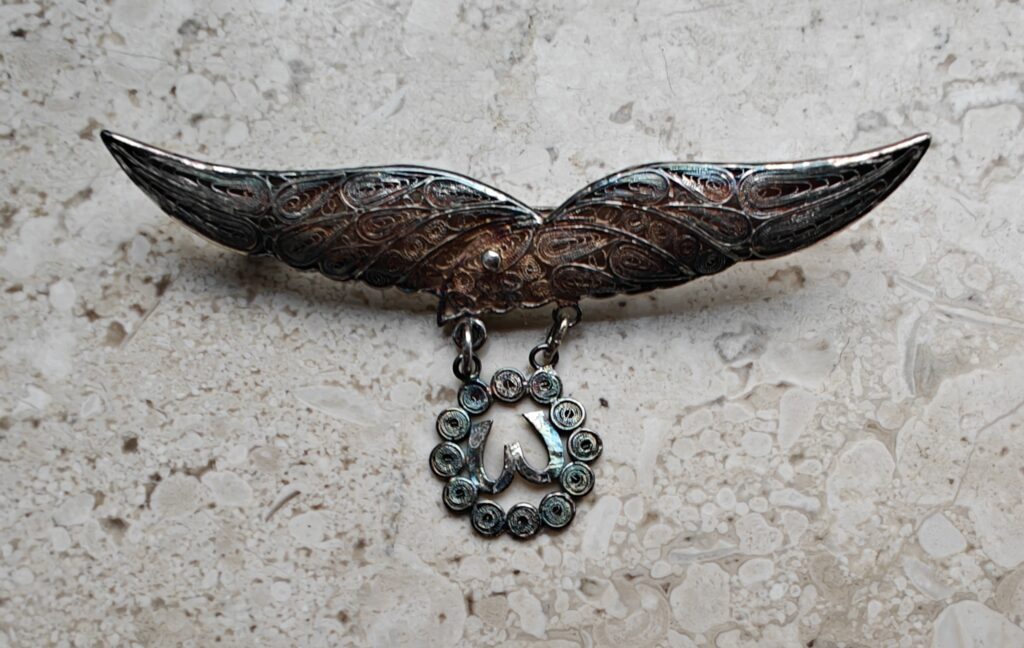
The Rongyos Garda – freely translated as “ragged guard” – was a paramilitary group of Hungarian volunteers. The name was based on the chosen uniform, consisting of a simple civilian coverall and a Swiss style cap.
In 1938 they were used to pressure Czechoslovakia during the negotiations in which Hungary sought to regain territories that were lost during the Trianon treaty. These were not all territories that were lost but those mainly inhabited by ethnic Hungarians.
The Guard was used to do some commandolike clandestine actions in southern Slovakia and in the Carpathian mountains. They created unrest in the area. The Hungarian state could use “military” pressure with the Guard without using their official army. Use of the army might have ended in a war as the French and English were still heavily involved in the regional politics next to Germany of course.
Some members of the Guard were killed and also some were captured. The captured ones were not treated as prisoners of war as the were not officially military and would not treated as such.
The negotiations with Czechoslovakia were concluded with the support of Germany and Italy and it became known as the 1st Vienna Award. As a result of the treaty a large part of Southern Slovakia was returned to Hungary in 1938.
The Rongyos Garda participants were awarded the same medal for their activities as their military counterparts. The rather common 1938 medal for the “Liberation of Southern Slovakia”. The only difference I have been able to establish is in the paperwork.
In this specific case the man received two different award papers from the Hungarian army for the same award. One from the Honved (Army) Headquarters, 5th department and one from a unit (in which he did not actually serve during the actions).
Although research is now possible into the actions of that period (which was impossible during the Russian occupation period) obviously not much is left to go by as these actions were “unofficial” but clearly supported by Hungary. So an interesting period with little hard information to research.
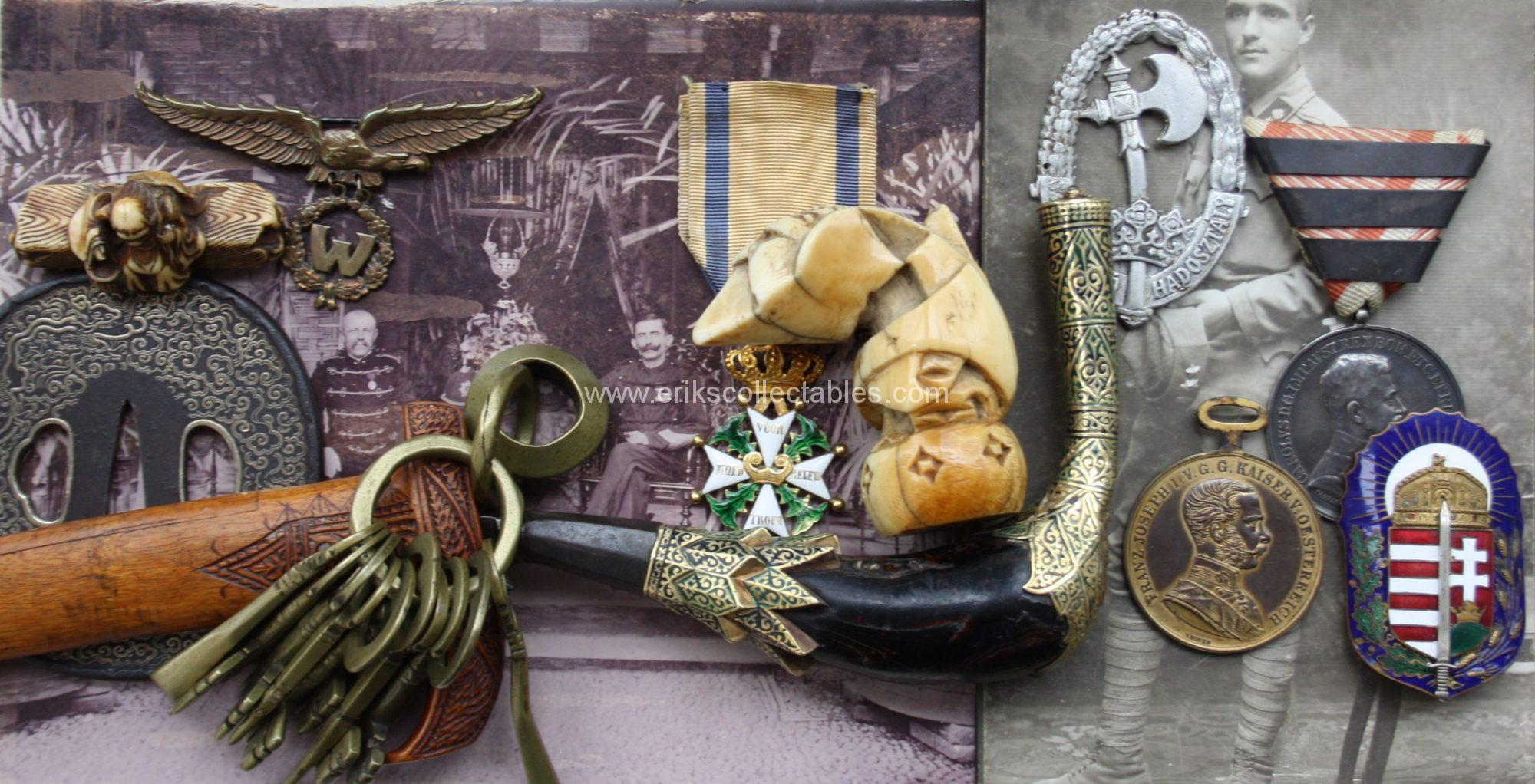
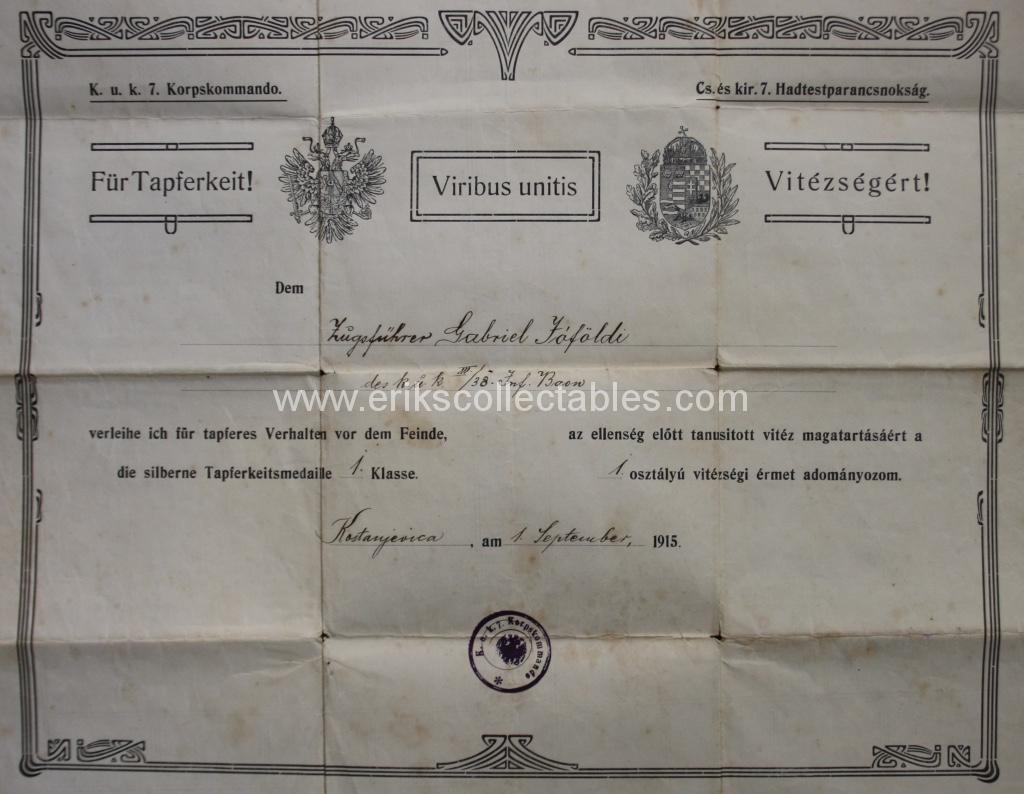
Medal and paper group for a Rongyos Garda man (only one of the two documents for the 1938 Liberation of Southern Slovakia medals is framed top right).
And below the second award document awarded by the Army HQ, 5th department. From what I understood from a Hungarian researcher in this theme is that all Rongyos Garda men received this specific version of the award document for the 1938 action. It is dated November 22nd 1939 where the other document is dated December 6th of that year. Quite surprising they did this as it obviously left a paper trail and made the action at least semi official.
The Ragged Guard saw no further action as such during the Horthy government, most men became part of the regular army that was allowed to grow again in the years leading up to the second worldwar.
Those who travelled to the Dutch East Indies and had enough money and private space on board often had a private chest made in that region to transport their most precious belongings.
The form, decoration and size would depend on both period (fashion/style) and the owners taste. Most often this would be the captain or a high ranking officer of the vessel. Most vessels traveling to the East Indies in the 18th century would be owned by either the VOC, the United (Dutch) East Indies (trading) Company, or the Dutch navy. Hence the common name for such chests are either VOC/Compagnies chest or Captains’ chest. In later periods the ships became larger and more people could bring on freight items leading to more and simpler variations of chests in the later 19th and 20th century.
This is an example of such a chest from the end of the 18th or early 19th century with some special variations that make it a rare example of an already rare item. Also the provenance is of interest.
The chest itself is made of tropical hardwood with brass fittings as is usual. This type of wood was called Djati in the East Indies and nowadays is more commonly described as teak. The brass fittings are interesting as all parts end in a stylized Fleur de Lys – the French national symbol. This is not a common treat on such chests. This seems to have been in fashion in the ruling classes in the Netherlands only by the end of the 18th and very early 19th century. The period from 1795 up to 1815 (Waterloo) in which the Netherlands were occupied and ruled by the French. We will come back to that a bit later as we come to the provenance. Below is a similar example in the collection of the Kennemerland museum. This also comes from a noble Dutch family and is dated there as 1790 – 1800 so also from the French period in the Netherlands.
The example above from the museum Kennemerland has also the Fleur de Lys
The second interesting part of the chest is the lid side of the lock plate. The top is in the form of a crown. Although crowns are often only seen as the headdress of kings and their likes in heraldry they are a sign of the rank of nobility. In this case not a Kings crown but that of a Dutch Earl (graaf) with a stylized Fleur de Lys in the middle and two halves on the outsides with pearls in between.
These crowns in their various forms are often applied to other personal items from plates and silverware to swords, rings and clothing.
Below an example of a similar but somewhat smaller and simpler chest in Slot Zuylen, the castle that belonged to the noble family Van Tuyll van Serooskerken (Baron). The chest also features the “fleur de lys” and a crown on top of the lockplate!
Below the heraldic crown that was used for the noble title Baron and a picture of the lock plate with indeed a similar type of crown.
Many of such Captains’ chests are in Museum collections and there is also an antiques dealer in Utrecht that has sold quite a few of these over the years, also several Auction houses sold such chests. They together function as my reference base for this limited research (I have not found any other good reference sources yet).
Now to a third interesting part, the base. This is different than most which either do not have one or if they have it is an integral part of the chest. In this case it is a loose table with standup sidings on which the chest can be placed. This base is made of (tropical?) wood that has been colored black to make it look like ebony. The base again has brass wheels that were only added in the early 20th century when it stood in the hall of the families country house in Vorden.
The brass fittings of the chest run over the entire underside like they do on the top and all sides are also covered by the fittings which is not standard on most chests either. It protects the chest very well when handled more roughly. A last interesting feature can be seen on both sides of the chest. It has an additional brass fitting that stops the lid around the 90 degree angle, it can not go further than that which prevents it from damage or even breaking the lid. The handles to lift the chest are well made and also have a Fleur de Lys decoration. They are also designed to stop at a 90 degree angle as a safety device for the hands.
Provenance Van Hogendorp noble family.
The Van Hogendorp family has a history that traces back to the 16 century where the first traceable member was counselor in the High Council of Holland. Many family member held important positions both in civilian as in military and naval careers. The family entered nobility during the French reign as Comte de L’Empire (equivalent of Earl or in Dutch Graaf) and a little bit later into the Dutch nobility as well with both Earl and Baron as titles. Some family members had important civilian ranks (Regent of Buitenzorg e.g.) in the East Indies both under French and Dutch royal ruling. Later in the 19th century family members had important careers in the Dutch navy achieving even the rank of admiral and receiving the Military Order of William. It now comes from the estate of a Baron van Hogendorp, a high ranking officer in the Dutch army and from a longer line of Dutch officers.
So far within, the Van Hogendorp family, there seems to be only one likely candidate as the original owner of the chest, Dirk van Hogendorp:
Sometimes as a collector you find unexpected treasures. Years ago I bought some paperwork with which came a group of namecards from the Pehm family. Going through the cards one stuck out:
Feldmarschallleutnant Arthur Freiherr Giesl v. Gieslingen
Based on the rank the card dates between November 1907 and Oktober 1912. He used this card as a quick thank you note/letter to a Pehm, referring to him and other students he comes across in the field and that are doing well. He was the commander of the Theresian Officers Academy between 1905 and 1910 so this must refer to his activities there where this Pehm (and a Krainz he mentions) were his students.
In the collection there are two Pehms with officers ranks so I am not sure which one is adressed here?
Mayerling and Redl
Von Gieslingen had a long career but two incidents are notable. He was attached to Crownprince Rudolph at the moment he commited suicide in the Mayerling hunting lodge. The whole affair was handled by Von Gieslingen.
His impact in the Redl affair could be even greater. He brought Redl as a young Russian speaking officer into the Evidenz bureau (Military Intelligence) of which Von Gieslingen was the commander at that moment. Later he made him his Chief of Staff of the 8th Corps in Prague. Redl as spy for the Russians probably gave all detailed plans for war to the Russians. The poor handling of the Redl case might even have been a main reason for the extremely poor performance of the AH army in the first war year. The plans most likely fell in the hands of the Russians but were not altered as Von Gieslingen claimed they had not been compromized. His own relieve of command in 1914 due to poor performance might have been a result of this too.
A great short bio about Von Gieslingen can be found here:
Three earlier blogs now combined into 1 complete blog covering medals, paperwork, amounts awarded and equivalents.
History before WW1
The basis for this medal was made in 1789 in the form of the Ehren-Denkmünze für Tapferkeit (honor remembrance coin for bravery) by the Habsburg emperor Joseph II. In its original form it had two classes, gold and silver, for ranks below officer who had distinguished themselves in combat. In 1809 by Emperor Franz II the form was changed to make it a wearable medal that was also renamed in Tapferkeitsmedaille – Bravery Medal. Then again in 1848 the silver class was split into two classes. Next to the original Silver class (40mm in diameter) a second class was added that was smaller in size (31mm in diameter). Emperor Franz-Joseph I in Februari 1915 added a Bronze class with the same size as the silver medal 2nd class (also 31mm in diameter).
The four classes with FJI with his last variation of the observe
A last change was made by Emperor Karl in 1917 in making the Golden class and the Silver 1st class medal available to officers. Until then officers had no specific gallantry medals apart from the Military Maria Theresia order that was only very rarely awarded for extreme examples of gallantry. Most officers received the regular medals that were available for officers that were awarded for gallantry but also other other forms of distinguished service.
Three classes with Emperor Karls’s head
In all these periods the medal would have the ruling Emperor of that moment on the observe and the words “Der Tapferkeit” (The Bravery) on the reverse. Karl would change the text on the reverse to the Latin text “FORTITVDINI” as that language was neutral in an empire where the first languange of many people was not German.
The two reverse variations
The Bravery medal in WW1
With two emperors during the war there were also two versions of all medals from gold to bronze with either Franz Joseph I and from 1917 onward Karl on the observe of the medal. Franz Joseph had 3 versions of his head on the medals during his very long reign. The third version was the regular one for WW1 but the 2nd and even the 1st version could still be awarded if available. This was mainly the case with early awards of the Golden Bravery Medal.
A novelty in WW1 was that all classes could be worn next to each other. Before that period only the highest award of the medal would have been worn. For each next award in the same class a clasp (introduced in October 1915) could be worn on the medal ribbon with 4 bars as the maximum (which obviously was extremely rare in any class).
Version of a single and triple bar (so for second and fourth award)
As officers also could get an award of the Golden and 1st class Silver medal from late 1917 onwards a difference had to be made. This was done in the form of a capital K letter on the triangular ribbon. These existed in both gold (gilded) and silver. An officer could wear both medals of the same class, one with the K device and one without the K device (so awarded as an officer and nco for different occasions).
The official announcement of the K device for officers bravery Medals
As all officers in training went through the non-commissioned ranks before becoming commissioned they were during this training period also eligible for the Bravery Medals. So WW1 Austro-Hungarian officers groups often have Bravery Medals in the group. This is just a sign that the officers was not yet commissioned when he received the medal. The ones with the K on the ribbon are much rarer.
Nice selection of Bravery Medals to officers (all without K device)
Payment
The winners of the Gold and both classes of Silver medals also received an additional monthly payment. The Bronze class was excluded from this so it was also of financial interest to soldiers to receive the highest possible level of Bravery Medal as the payment was doubled for each higher class. Only the highest class was paid and only for one instance of the award. Multiple awards did not multiply the amount received.
Announcement of the amount paid per class
Variations
Before WW1 all medals would have a fixed eye for the ribbon. Only during the war this was replaced with the more standard moveable eye for the ribbon fixture. The only exception to this would be the Golden Bravery Medal that would remain using the fixed (Henkelöse) version. This makes it relatively easy to recognize the non official version of the Golden version. Private/non-official versions of all medals would be made during and after the war. These are not “fake” but bought examples of these medals. Especially real Golden Bravery Medals were often sold for the gold value in the post war period and replaced with a privately purchased gilded version.
Well worn example of the Golden Bravery Medal (gilded bronze, stamped BRONZE on rim. The majority of FJI examples were gold (14/15), the majority of Karl examples were gilded bronze (17/18). Gold versions of Karl are the rarest and gilded bronze versions of FJI (16/17) are the second rarest.
The official versions can also be recognized by the name of the artist below the head of the Emperor. On most private versions this name was not copied! Three names can be found. Two for the FJ versions: Tautenheyn and Leisek. The Karl versions all have Kautsch. The official silver versions would be marked with an A in a circle on the rim (for the Vienna Mint).
Below an example of a private production version of the Gold Bravery Medal without the artists name Kautsch below Emperor Karl. Interbellum period replacement for Horváth János.
From 1916 onward the Golden version became to expensive to be awarded. A gilded bronze version was made that would have BRONZE stamped in the rim of the medal. These medals were planned to be exchanged for real gold after the war. As the war was lost this never happened nor would the winners get their additional payment for the new Governments in the countries that would come into being after the war. Karl was on the front often, also for award ceremonies. He only handed out real gold versions. These Karl examples in real gold are the rarest variation of the Golden Bravery Medal.
It was also possible to replace the golden medal when lost or to get a second version. These are marked with the HMA (Hauptmunzamt) stamp next to the material stamp.
Award Certificates and other paperwork
The Austro-Hungarian army was well organized in its paperwork. Each request for a medal would go through the hierarchy and be kept in the personal record when awarded. It would depend on the level of the medal in which stage of the hierarchy the decision would finally be made. For the Golden Bravery Medal a separate register was kept that still is available as a reference in the Vienna Military Archives.
After the medal was awarded the person would receive an award paper (Legitimation) confirming the award which should be worn on the person (to be able to proof the medals that were actually worn in the field). The standard place to keep these papers were the small ID capsules each person would wear. This made it necessary to make the documents very small. Here are some examples.
Bronze
Silver IInd Class
Silver Ist Class
Some units made more elaborate documents available for their men in a larger size. These are not standard and not official but relatively rare and desirable.
Full size award paper for a Ist Class Silver Bravery Medal
Personell files were partially lost in the 2nd world war and also these were split between the different states that resulted from the end of the Austro-Hungarian empire. The Honvéd related files are mostly in the Hungarian Military Archives in Budapest and most others in Vienna and some in the other states. Here an example of Bravery medal related request as found in the Hungarian archive.
An interesting secondary source for Hungarian WW1 bravery medals related info are the Vitezi rend yearbooks in which also medal lists are published.
Amounts awarded and exchange with the German Iron Cross
The German Iron Cross is probably the most iconic award in the world. As part of the same coalition an exchange agreement between Germany and Austro-Hungaria was made for their armies. Were the German award system is the same for all ranks this is not the case in the Austro-Hungarian (AH) award system were there are specific medals for officers and different medals for the nco ranks. For the Germans the Iron Cross was the most general medal for gallantry so a good basis for exchange. But this would not fit the AH system. Therefore the choice was made to make the German Iron Cross only available to the officers in the AH army. The 2nd class for troop officers and the 1st class only for high ranking officers which can be seen in the extreme low amounts awarded. This only began to change slightly in the last year of the war.
For the ranks below officer a different solution had to be found. This came in the form of the Prussian Warriors Merit Medal (Krieger Verdienstmedaille) that always had been intended for foreign soldiers of ranks below officer. It was worn on the same ribbon as the Iron Cross which made the distinction between officers and men a bit more tolerable.
The Iron Cross could be awarded to the lowest rank of officer (Fahnrich) and also to Officer replacements. Most officers that became an officer during the war had gone through the nco ranks as part of their officers training and often had been awarded medals for the nco ranks in that period. As soon as they were officers they would be eligable to receive the German Iron Cross. So in mixed groups (officers that had been a nco before) both officers and nco medals can be found. This often leeds to the misunderstanding that the German Iron Cross could be awarded the nco’s as well in the AH army – which is not the case.
Officers medals, Bravery Medals for NCO and Iron Cross in a mixed NCO/Officer group
Statistics
The award criteria for gallantry medals are very different in each country as is the structure of the army and the processes to award medals. So a comparison of “level” is not possible. But a comparison of relative numbers of awards should be possible.
To do this I have taken some data from online sources and combined those. I have taken the number of men mobilized between 1914 and 1918. Further I have taken the number of awards per class and compared these with the number of mobilized men. Both as an percentage and as 1 decoration awarded per how many mobilized men.
There are several reasons why this comparison is not “fair”. The AH Bravery Medals were aimed at the men below the rank of officer. No other gallantry medals could be given to them. The German Iron Cross in the German army was open to all ranks. Next to this there were many other awards for gallantry/bravery from the different states within Imperial Germany. Those facts are not taken into account – it is a simple, straightforward comparison of numbers only!
Nevertheless I have made the comparison in numbers and found to my surprise that even the total relative amount of Iron Crosses is way bigger than that of Bravery Medals. Even the “unpopular” Bronze Bravery Medal is relatively rarer than an Iron Cross 2nd Class. And the Silver Bravery Medal 1st class can be compared to the Iron Cross 1st class in relative amounts.
The last part of the statistics show the numbers I have taken from the reference below and state the amount of German Iron Crosses (IC) and Prussian Warriors Merit Medals (WMM) that were awarded to members of the Austro-Hungarian army.
The overview below is based on the information from the website of Dr. János Szentváry-Lukács, see the reference below. It gives the specific amounts for the Bravery Medals to the Honvéd part of the Austro-Hungarian army!
The award was continued after the war in Hungary (could be worn on the uniform) and a new version with Regent Horthy also came into existence. You can read more about those in this blog.
Reference: Steiner, J.C. (2010) Heldenwerk 1914-1918. Vienna, Austria
OK this is a stretch for me as a researcher. I like to stick to facts only. Not that I cannot enjoy a nice conspiracy theory related movie or book but for historical publications it is not my “thing”. In this case I have a working hypothesis that may raise some eyebrows.
What I will do is state facts that have been published before. The limitation to facts is difficult in this specific case as the most relevant archives have either been destroyed or will not be open to public for a long time to come. So I will add some interpretation of information as well. Anything that is not a fact comes in the last part of the article and is clearly stated as such!.
So please read and judge for yourself and if you have facts to add please feel free to contact me!
This story is about some paper materials from the estate of Chris Navis. Some I bought, others I received as a gift through a collecting friend (thanks again Henk-Willem) in 2010. The materials came on the market when a house was cleared out, probably that of the late Chris Navis. The stack of papers were very diverse. Before the war Navis was an officer. During the war he had an important role in the Dutch resistance against the German occupation. And after the war he was an officer again, now in the Dutch East Indies. The papers cover a period from the late 1930s into the 1950s and relate to different themes. From congratulations upon his receipt of the US Medal of Freedom with Palm but also buying an officers saddle and some strange papers that are the reason for this article.
For his work in the resistance he received the Military Order of William 4th class (MWO4). The highest Dutch decoration for (military) bravery. A true rarity and one of my main research interests. So reason for me to be very happy with this paperwork that I am now the custodian of.
His citation for the MWO4 is an interesting but somewhat difficult text, even in my native Dutch, so I have tried to translate it here to the best of my ability:
“Has distinguished himself during the German occupation by showing excellent deeds of courage, conduct and loyalty by, from August 1941 to September 1944 at first for a paramilitary resistance group and so for the Interior Forces (Binnenlandse Strijdkrachten, the national resistance), fully independently and across the country with great risks as a consequence of frequent enemy infiltration and because he was wanted by the Gestapo, to make and activate the indispensable contacts for the building of the interior military resistance. Due to his uncommonly great experience and critical insight has been able on multiple occasions during his dangerous travels and meetings to barely escape arrest, and on the other hand has been able to warn many for imminent threats and thereby diminishing the vulnerability of the internal connections within the underground resistance.
Thereby and specifically by his outstanding conduct he has highly contributed to the building of a widely extended and safe resistance, that contributed in the fields of espionage and sabotage and other important services to the allied warfare,
Despite his seriously detoriated health as a consequence of his restless activity, tension and starvation, he completed in September 1944 an important mission by moving south and make contact with the Commander of the Interior Forces, the Intelligence Service and the Chief of Staff of the Military Authority.
He was an example of the never selfsparing spirit of resistance.”
Stay Behind network in the Netherlands – not Gladio!
Gladio is a name that rings a bell to many people. Few know exactly what it was but it became a synonym for all Stay Behind networks in Europe. In fact it was the name of the Italian Stay Behind organization that received very negative publicity. Similar Stay Behind networks in other countries also received a negative name due to this and often were wrongfully attached to the same name. I will discuss some basic information regarding the Dutch Stay Behind organization here. My text is based on both the academic and the state publication mentioned in the sources so “facts” not “conspiracy theory” as there seem to be many of these as soon as the Gladio name comes up. These publications only mention names of the leadership of the related organizations who already have passed away and whose names were already known to the public. Names of other members for as far as they have been archived were secret and remain so.
After WW2 the fear for another war was widespread both in Europe and in the US and the risk of a war with Russia was seen as realistic. Experiences in Europe with the resistance, espionage and counter espionage (such as the infamous Englandspiel that caused many casulties) had a strong impact on the steps that would be taken as a precaution for that anticipated war.
As early as 1946 the Dutch Intelligence community started with, what later would be known as, the Stay Behind organization that would be active up to 1992. Most of that period the existence was largely unknown to the general public and kept out of the papers.
In 1946 a main person of the Dutch resistance Dr. Henk Veeneklaas (also knight MWO4!) contacted Prince Bernhard as head of the Interior Forces regarding the forming of a Stay Behind network. The Prince brought him in contact with L. Eindhoven the head of Dutch Intelligence who was soon convinced of the use of such a network. The network would, in case of an occupation by presumably the Russians, be the foundation of the new resistance, espionage and sabotage. No such organization was in place at the start of the German occupation despite plans to do so dating from before the war. The complete resistance, communication etc. had to be organized during the war from scratch by people like Navis. They did so at great personal risk and with many casualties in the process.
Veeneklaas was backed by the Dutch Minister President of that moment and started the training of new agents for this new organization. For the organization he sought mainly agents and instructors that had participated in the resistance in occupied Holland. The organizations official name would, like its Anglo-Saxon counterparts, be an acronym I&O, for Intelligence and Operations (Inlichtingen en Operaties).
Chris Navis – I&O /Stay Behind agent or instructor?
The above mentioned characteristics would have made Navis a very fitting candidate for a role as agent and/or instructor in the new I&O / Stay Behind organization. Reading his MWO4 citation he was an accomplished agent during the war with loads of actual experience that only a few survivors could boast and on top of that a military background and training.
The names of the agents and instructors of this organization are still secret today and unfortunately most documents were destroyed and not archived so the question of who were part of the I&O organization may never be fully answered.
But there are some documents in this group of papers that caught my interest. To be honest I did not know what to think of them at all until I started reading about the Dutch I&O / Stay Behind organization a few years later.
My working hypothesis is that Navis was an agent/instructor in the I&O organization
So from here onward it is speculation, based on a few documents that were part of this larger group of papers. No hard facts but only circumstantial information!
So let’s start with reviewing some of these papers. First two small letters signed by a person named Van Eyk. They indicate some sort of working relationship that existed between March 30th 1951 and February 2nd 1953.
The first is the planning of an appointment. The second letter states that this Van Eyk is sorry for the loss of energy spent by both sides (he indicates the receipt of a letter, probably a resignation) but that the content of the statement made on March 30, 1951 (the date of the meeting in the first letter) will be unabated applicable to him.
Ok any significance? Maybe. Van Eyk was the alias Veeneklaas used during the WW2.. Based on the Pivot report (see sources) he continued to use this name during his role in the post war Stay Behind operation. So is the Van Eyk of these letters Dr. Veeneklaas or is the name just a coincidence? And what is the statement Navis will be held to, one of secrecy?
And than the typewritten text below:
“You will sit on the given date at 20.00 hrs in the 2nd class restaurant of the Central Station in Utrecht. In front of you on the table you will have a copy of ELSEVIER while you are reading a copy of LIFE yourself, of which the cover will be clearly folded outward.
You will be spoken to with the words “Have you been waiting here long?” on which you will reply “four minutes”.
You will use an alias.”
Ok any significance? Maybe. The text is not for a normal meeting I would say. And it is not a wartime text either as LIFE was not available in German occupied Holland. It sounds like a secret agent type of meeting. Maybe training? If I had found this paper outside of this Navis collection I would probably have laughed about it because of this stereotype spy text. Maybe not so stereotype yet in the 1950s?
Next two letter covers. Of what they exactly are I have no clue.
Ok any significance? Maybe. What I found interesting is that both were sent from Utrecht Central Station. The location of the meet up above. And who sends letters from a Railway Station anyway? Not the most regular location. You write a lettercover with a typewriter (at home or in an office) and then you carry it to the railway station to send it away? It is a neutral location in a big city so not traceable, very spylike again?
And what is going on with the material of these envelopes? Made of maps? Wartime surplus stock maps recycled? I honestly do not know. I do know I have not seen such covers before or after and none of the other period covers in the group are like this or have a railway station stamp.
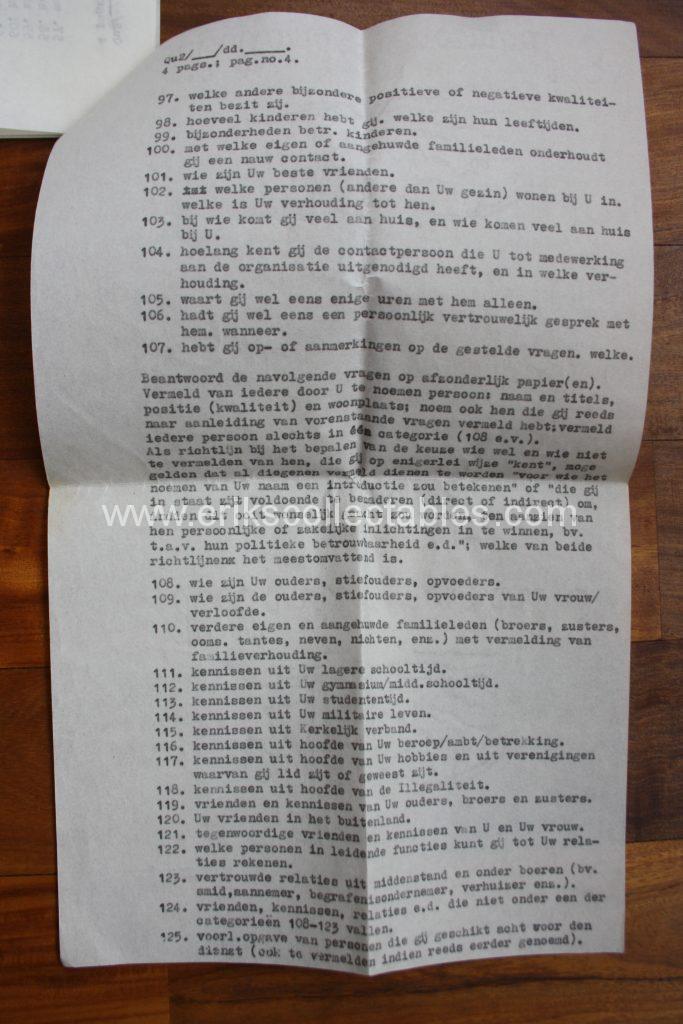
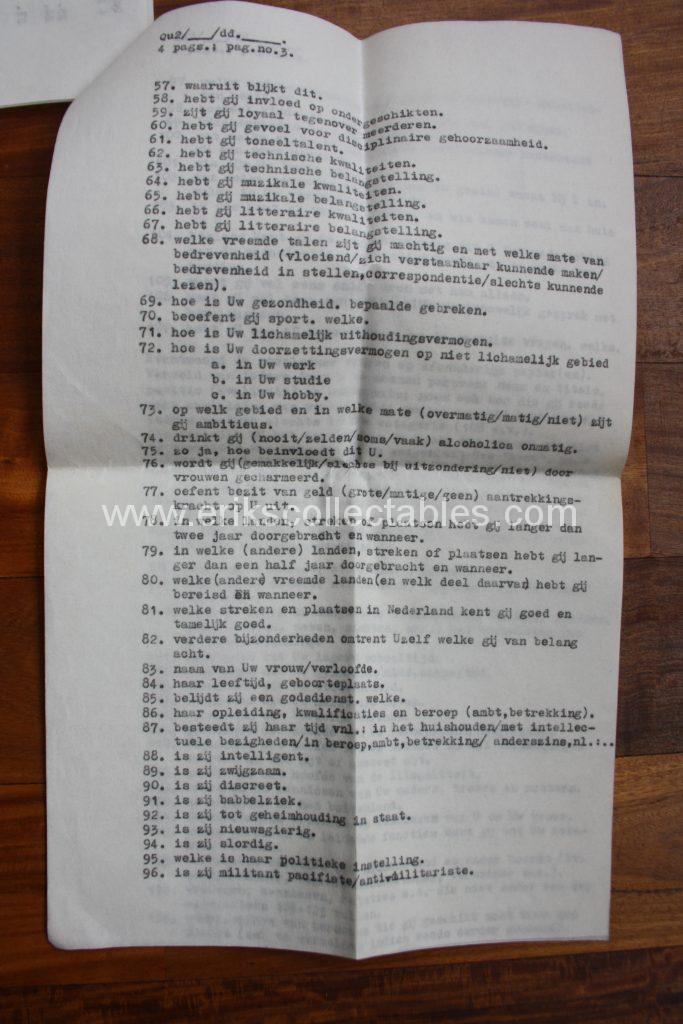
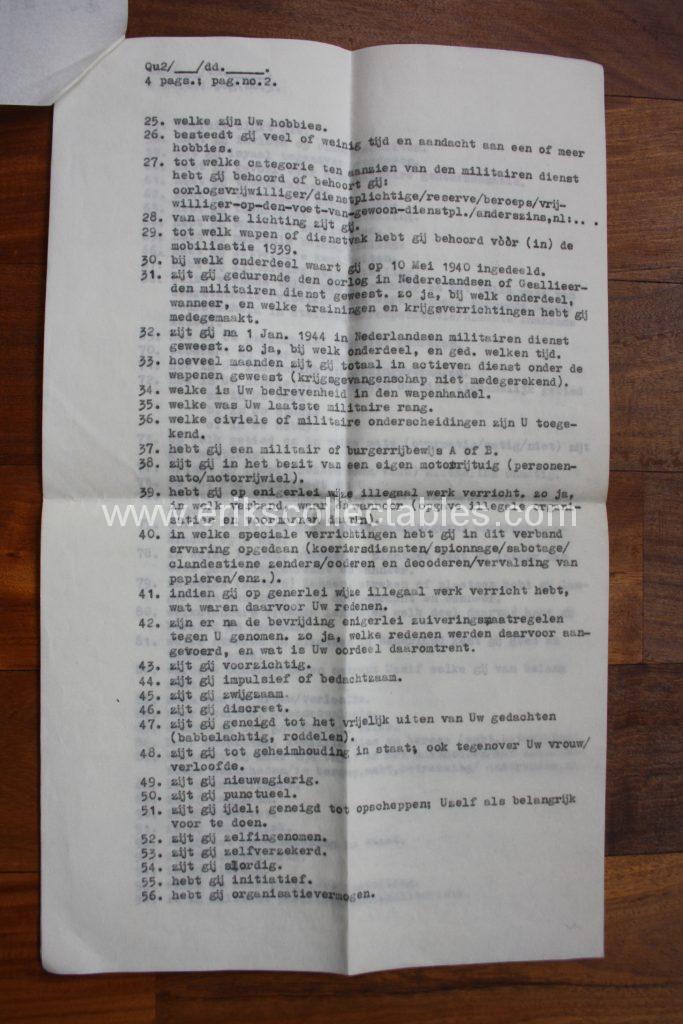
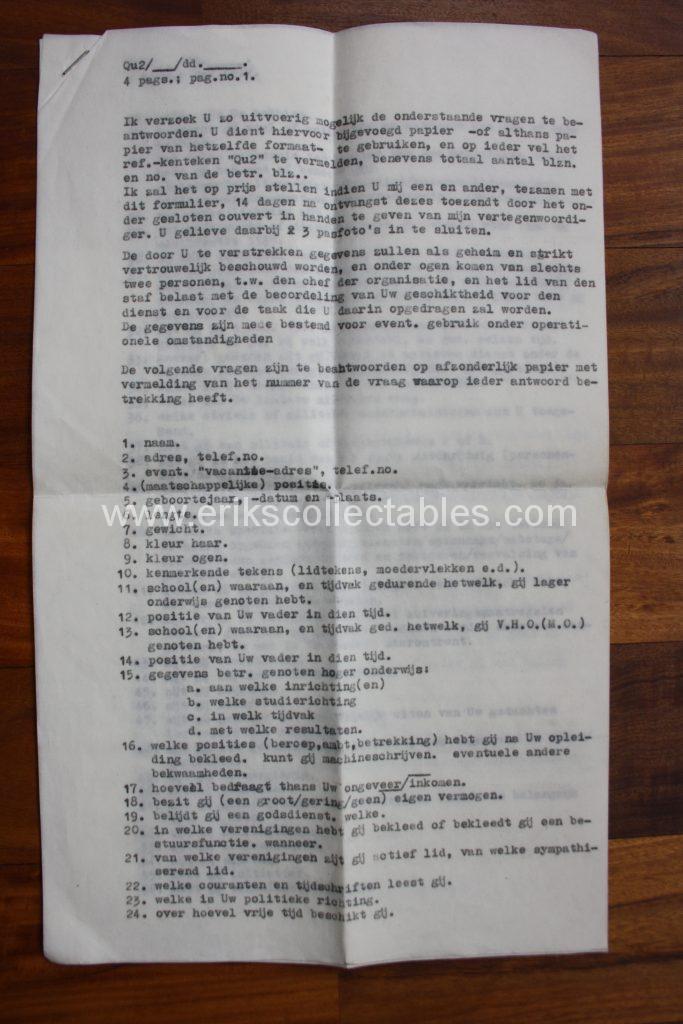
And finally a 4 page questionnaire with the most amazing questions. Way to much to translate but with questions that I cannot place in any regular environment apart from a secret organization. And the heading is clearly very organized too.
A quotes from the starting text:
“The information you will give will be considered secret and be viewed by 2 persons only, namely the boss of the organization and the memeber of the staff that will review if you are qualified for the service and for the task that you will recieve there. This information is also aimed at use in the case of operational circumstances”
The organization – without naming it that is a bit peculiar, right? Secret and only viewed by 2 people, that does not seem to be for a regular job interview? And what are operational circumstances? After that loads of questions regarding military service and resistance work like below:
39. have you in any way done resistance work. if so in which form and when.
40. in which special operations have you, in regard to this, had experience (courier/espionage/sabotage/coding/falsifying papers etc)
Questions about personality, spouse and her personality, family etc etc. totaling to 125 separate questions.
Conclusion?
No conclusion – but my working hypothesis remains that Navis was a member of the I&O / Dutch Stay Behind organization in the 1950s.
His wartime experience would have made him an ideal candidate, the timing fits with the building up phase of the I&O organization and these additional papers seem to hint at such a type of organization. Together they make it a distinct possibility. And so far no facts have come to light to dismiss the hypothesis…..
What do you think? Do let me know!
Sources:
Herman Schoemaker: Een geheime organisatie in Beeld, De Nederlandse stay-behind-organisatie, geheim, onafhankelijk en zelfstandig? Published in 2013 as a thesis assignment. Can be found on:
Although Machine Guns were not new in the beginning of WW1 they were still quite rare in the Austro-Hungarian army with only 2.700 pieces in the entire army.
During the war the importance of the machinegun became clear and many new machineguns were produced and deliverd to the infantry but also to cavalry units (that often became dismounted) during the war and of course the mountain troops. By the end of the war more than 40.500 machineguns would be in use!
Badges of the Machinegun Units
Machine gun units could be recognized by the specific collar badge as can be seen above (left and right). It depicts a three headed dragon spraying fire in all directions. The specific cap badge for machine gun units can be seen in the middle between the rank stars.
Badges as mounted on a photo album by the original owner.
The official announcement for the above badges
There was a proficiency badge for machinegun markmanship. The badge also with the dragon. It could be worn on the right breast above the pocket.
Below pictures of the actual badges on the photo album being worn by the original owner who was part of the Machinegun Company II of KuK IR 51.
Below examples of Machinegun collar badges being worn on different uniforms of men of several different units!
The back from the postcard above right, also part of Honvéd Huszar unit!
Cavalry: KuK Dragoons and Honved Hussars
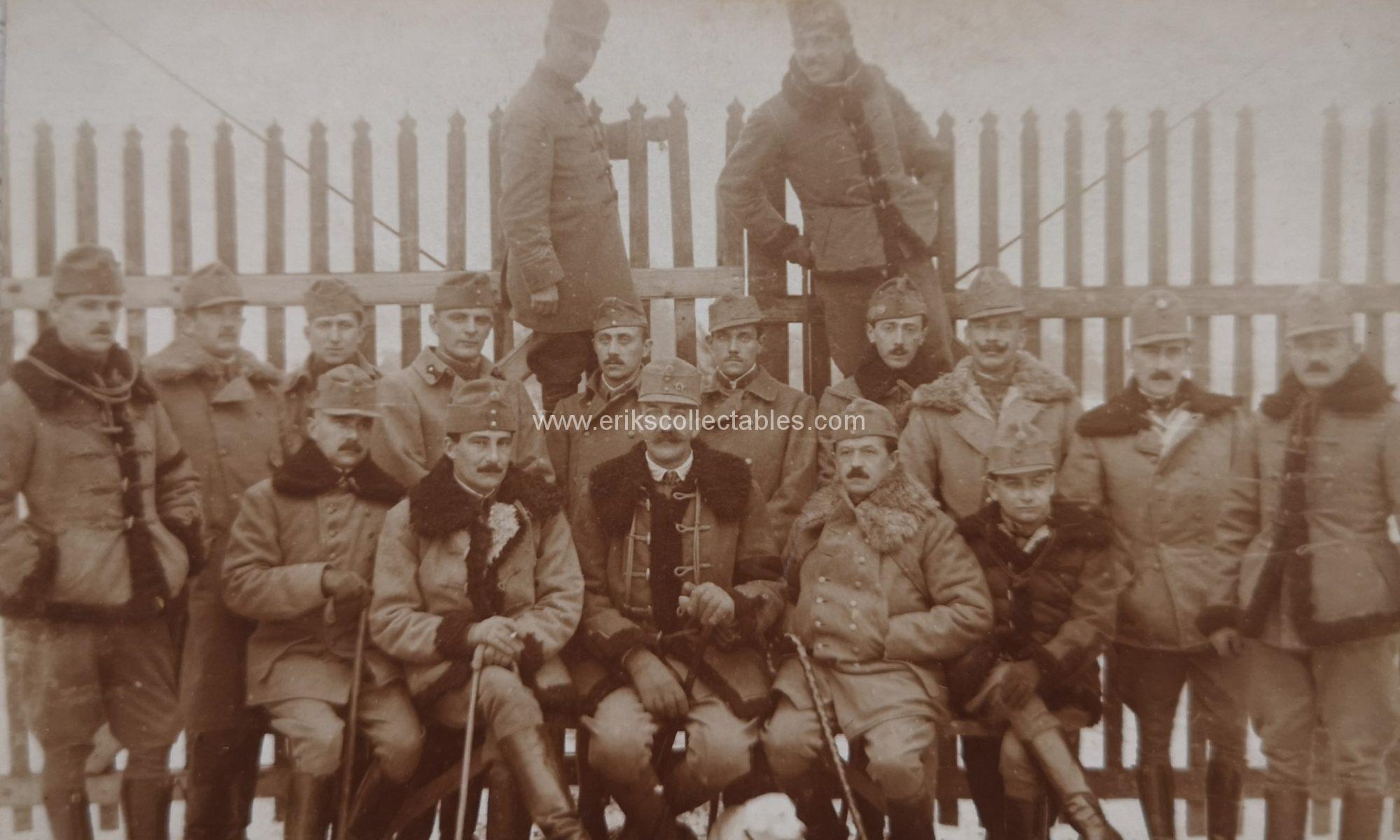
The cavalry units that became dismounted during the war and most often acted as regular infantry. They also had machinegun detachments in their regiments. The collar badge was the same as can be seen with the Huszar in the photo above. But the clothing could be different, specifically the jackets had some different versions.
Honved Cavalry Machinegun detachments Field Grey Fur Jacket being worn in the photo above and next to it a photo from the book The Emperor’s Coat describing this type of coat.
Dragoon officer of a Machinegun detachment with the regular Dragoon’s fur coat with white lambskin and not the black version.
Cavalry Machine Gun unit with a nice variation of all of the coats shown and discussed above! Both the Honvéd and the regular KuK cavalry versions
Photo probably of Husaren Regiment 14, HR14 based on the Kappenabzeichen of the officer in the middle (recognized by Hermann Attila)
KUK IR 48 – Machinegun Instruction detachment
And a document from my collection the Belobende Anerkennung (Bronze Signum Laudis medal equivalent) or honorable acknowledgment for the Commander of a Machinegun Instruction unit of KuK Infantry Regiment 48. He received the document upon his leave of this command.
Machineguns in the field. All period pictures and the paperwork are part of my collection.
These are pictures of an officer from Trautenau who volunteered (1 year volunteer) and became an officer in BH2 together with several of his friends or familiy members. The earlier pictures in this blog came from the same album!
Photo while still as an aspiring officer (so NCO in rank, training as an officer) in 1916
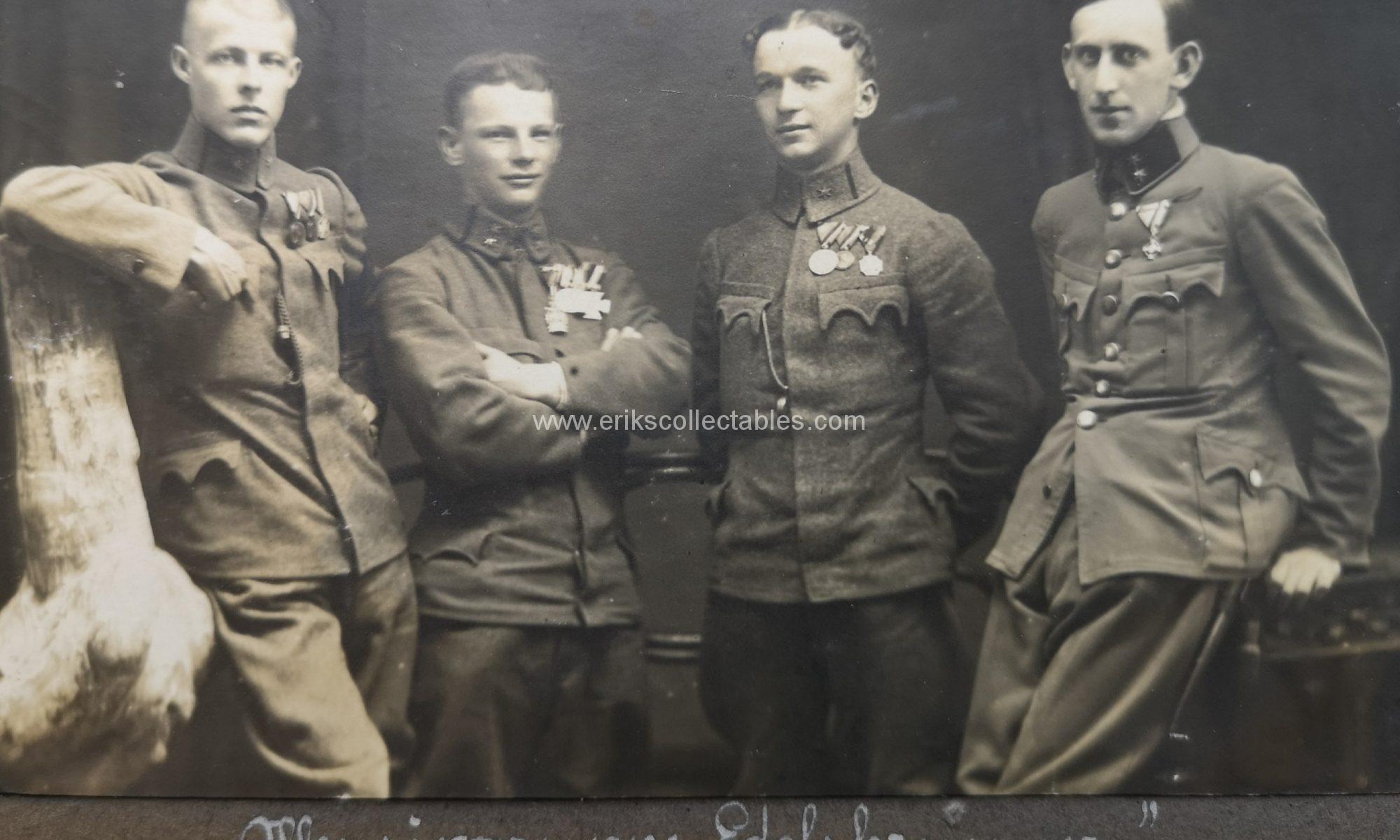
Sitting in the middleBack row, second from left, now as a decorated officer (in training)On the right side Almasi, on the left Erben (GBM) and the third from left Edelsbrunner with EK2Edelsbrunner left, Almasi right
And as a decorated officer in 1918
Both Almasi brothers at the back, Edelsbrunner front?
The older brother on the left was an artillery officer and of him I will make another blog!
Bosnia Herzegovina became part of the Austro-Hungarian empire only in 1878. Nevertheless its capital Sarajevo would be the scene of the start of World War 1 in 1914, by the assination of Archduke Franz-Ferdinand.
The AH regimental system was regional, each regiment would get men from a specific region. This way four Bosnian Herzegovian Infantry Regiments were formed. Officers (on purpose) would come from a different region. The Bosnian regiments were numbered BH1 through to BH4.
Golden Bravery Medals
Despite the fact that the Bosnians had been linked to the Austro Hungarian empire for only a very short time or maybe even because of this the 4 Bosnian Herzegovian Infantry Regiments that were formed in WW1 would get the highest number of gallantry (Golden Bravery) medals in the entire AH army.
The average of these Golden Bravery medals was around 10 per regiment but the BH2 Infantry Regiment would get the highest amount of all, 42! The runner up regiment would get 36 Golden Bravery medals. There was even a saying in the AH army – “The Bosnians are coming” which would bring fear to the enemies as they were seen as fierce fighters.
More about the bravery medals can be found in my earlier blog.
Officers in BH2
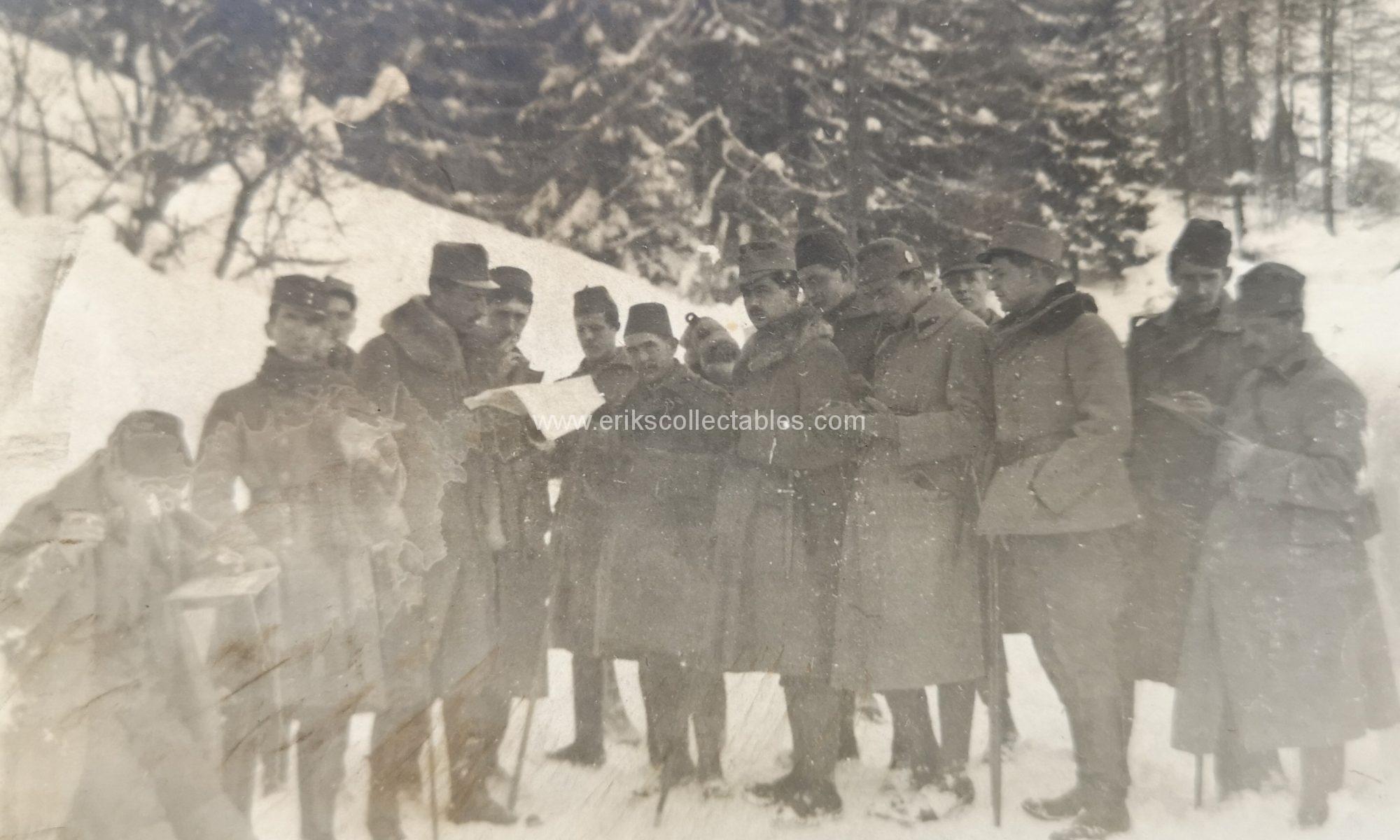
As a large part of the Bosnians were Islamic the Fez was worn as the standard headgear in these units for all men, independend of their belief! Officers not being from the same region could choose if they would wear “standard” officers headgear or also the Fez like in the picture below.
An album in my collection has photo’s from several related (two brothers with family name Almasi) and befriended officers coming from the same “German” city of Trautenau in the current Czech Republic.
It seems they al went as volunteer (1 year) officers to the war. Several of them becoming officers in BH2. Below Leopold Erben from Trautenau who also, as an officer in training, would earn a Golden Bravery medal for BH2 in 1918!
Leopold Erben GTM, BH2
Offensive Group Edelsbrunner
One photo has the caption of “Offensivgruppe Edelsbrunner” named after its leading officer, Edmund Edelsbrunner, also from Trautenau! He was also one of the 42 people in BH2 who was awarded the Golden Bravery medal.
He would receive it during his training period as an officers (so still NCO for the awarding of medals) in 1915. During the rest of the war he would remain very active even getting an Iron Crown order 3rd class as a lieutenant. This is very rare for such a junior officer. Almost only flight aces would get that honour.
A specific event is mentioned in the book “Die Bosniaken kommen” by Werner Schachinger. In the book his group is mentioned as a “Nachrichten” or reconaissance group. The part is about his role in the 12th and decisive Isonzo battle. Probably this is the action for which he received the Iron Crown order!
“After the arrival of the main group of BH2 1st Lt Edelsbrunner and his men detached themselves again and went north. Two companies of BH2 were involved in heavy streetfighting in the city of Forgaria at that moment. In the meantime Edelsbrunner circled around the city and went straight for Anduin capturing an Italian Artillery unit in the process. He captured 7 pieces of artillery, 12 machineguns and other materials but also 600 Italian soldiers. The struggle for the bridge of Cornino was over after this. He earned the title of “Ramssurimann of Anduin” for this from the men of BH2″
Erben (GBM), ?, Edelsbrunner (GBM), Almasi
See for more picture from the same album my other blog!
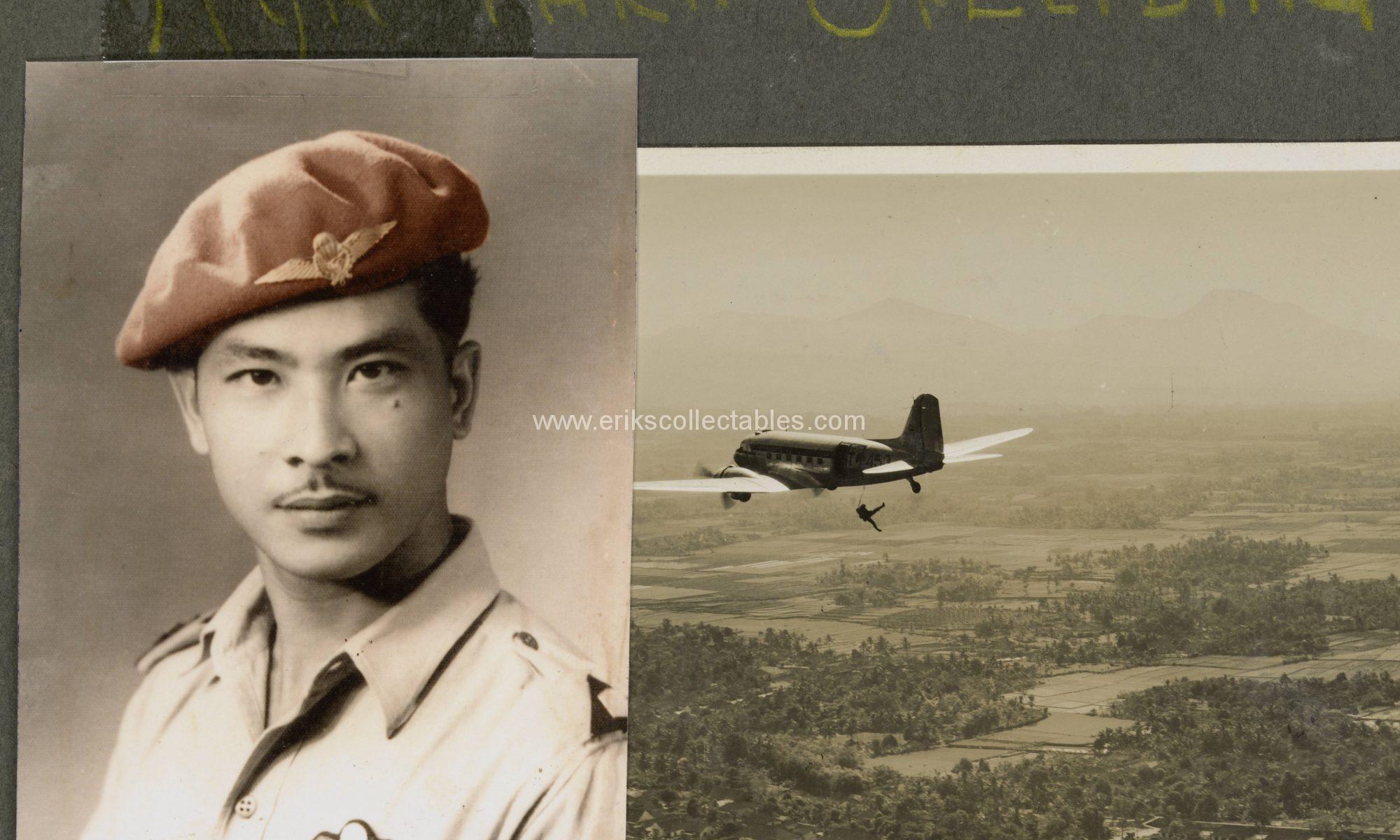
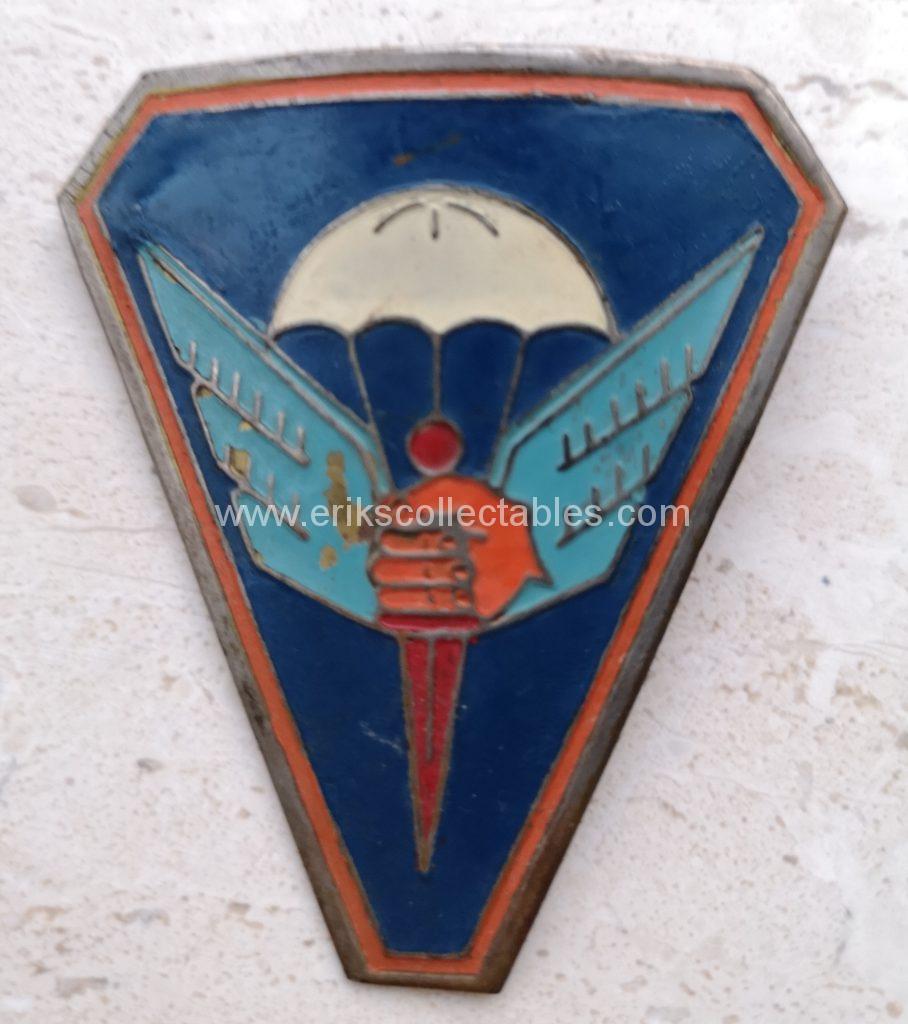
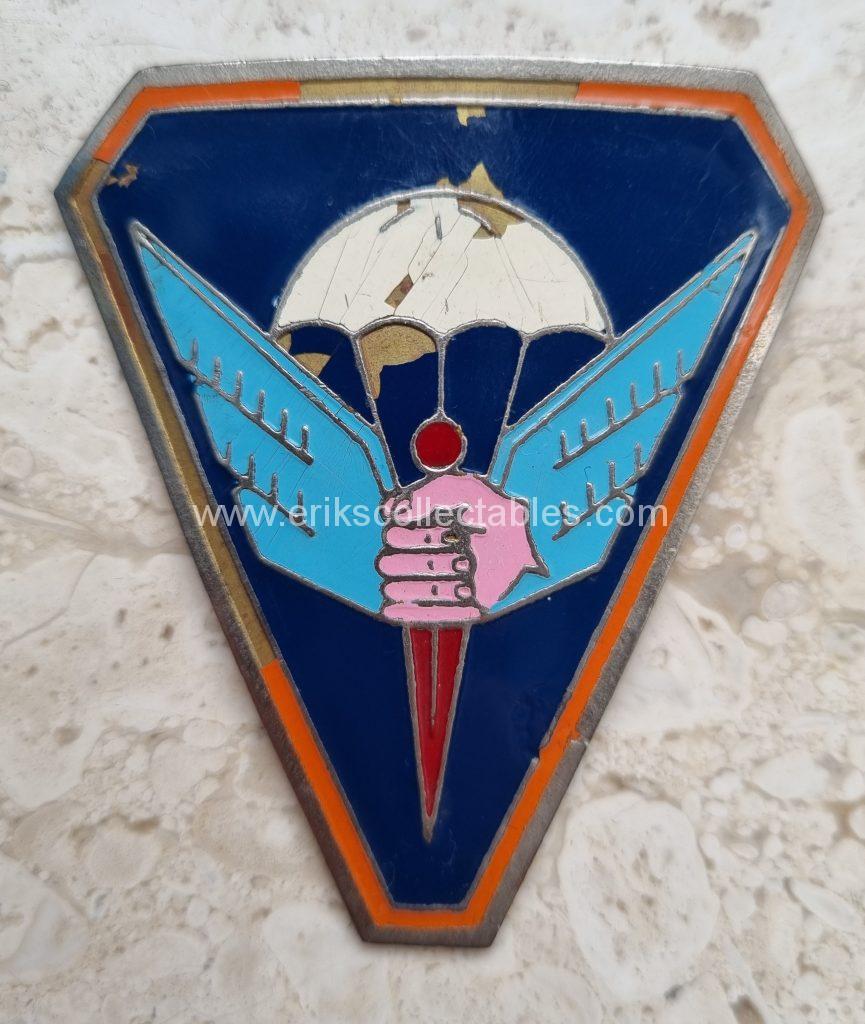
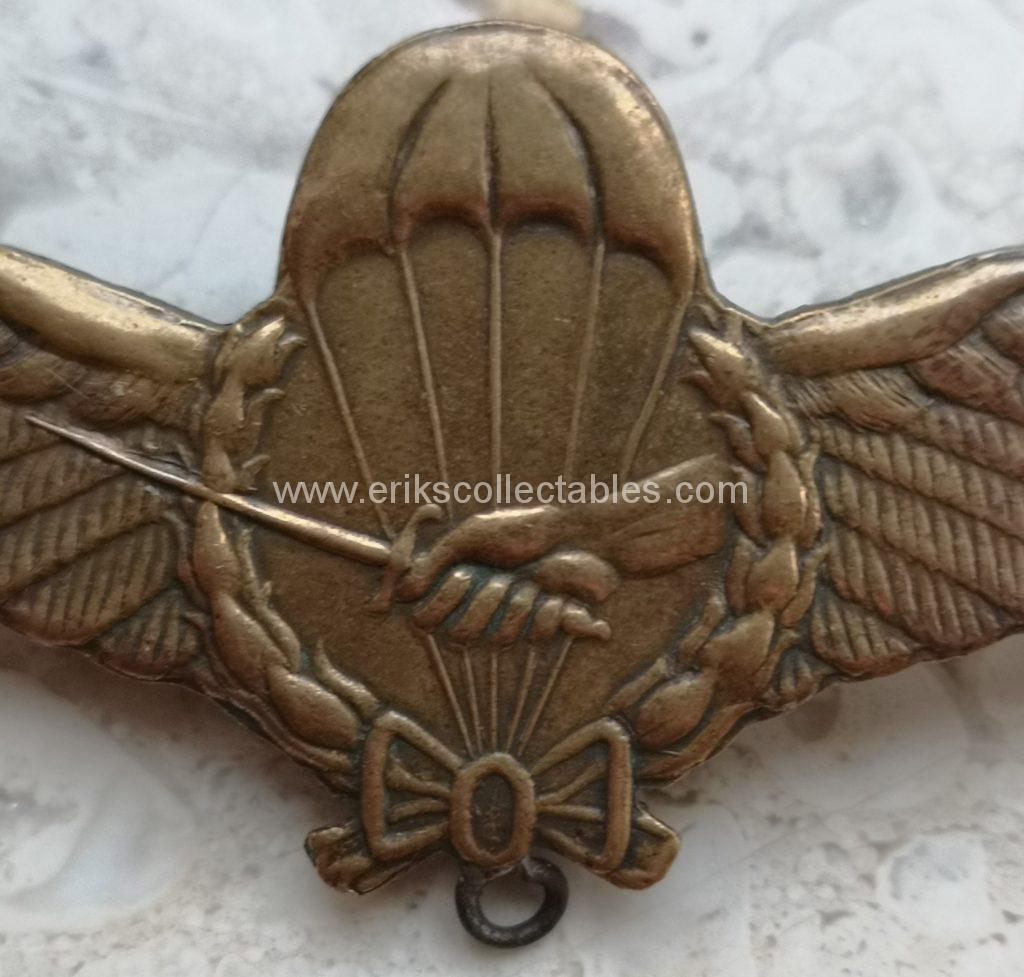
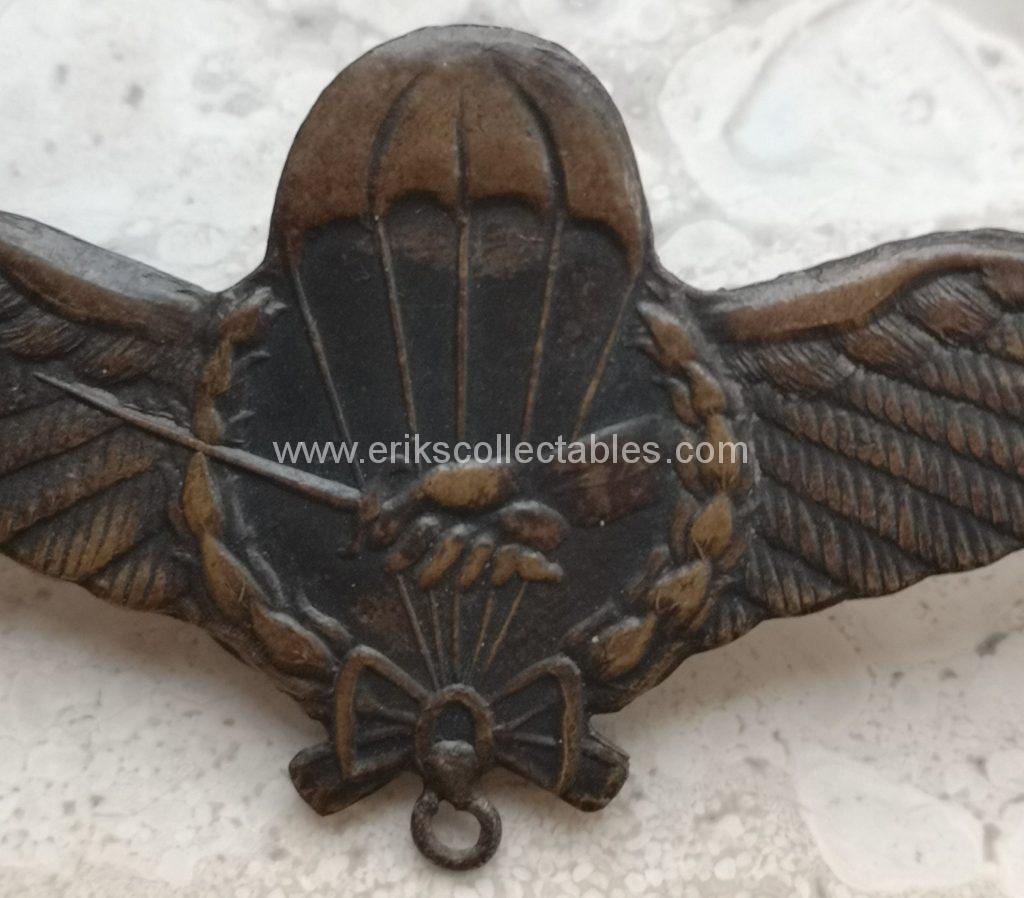
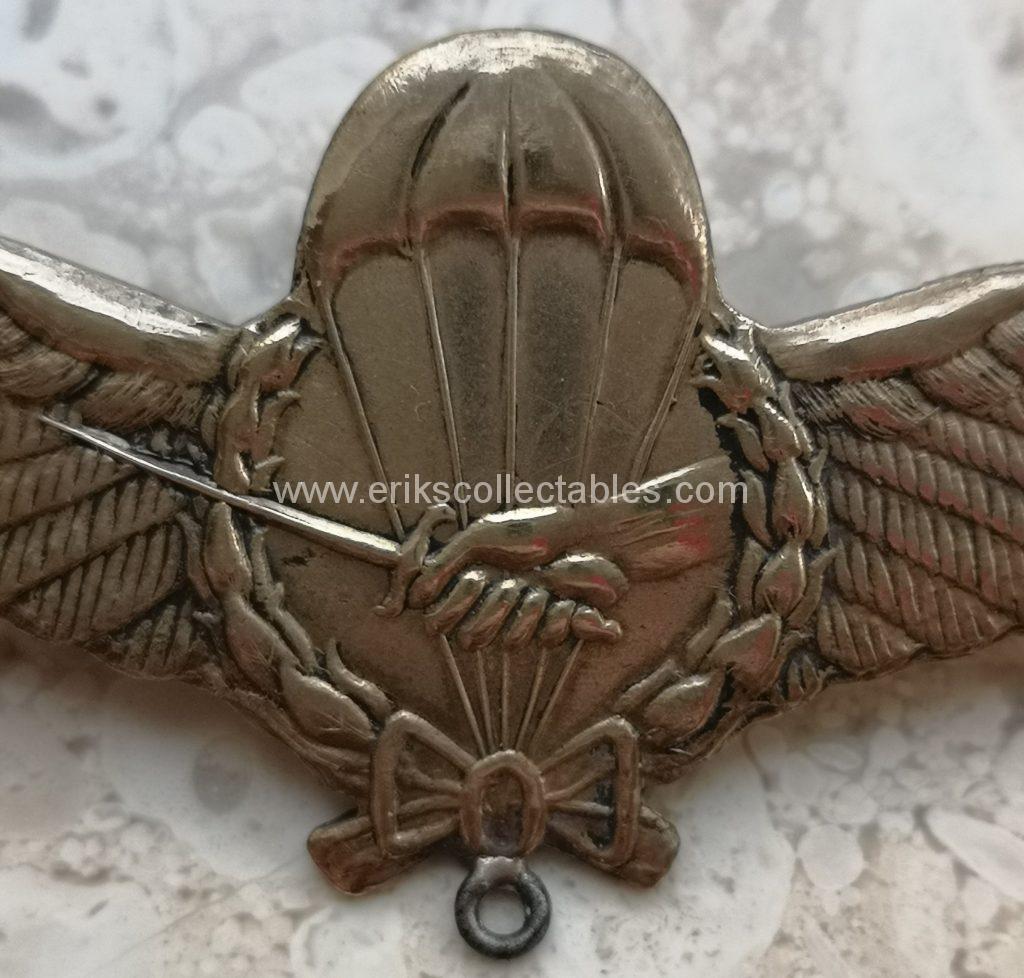
The Netherlands East Indies Army Special Forces made four combat jumps in december 1948 and early 1949. A special wing to commemorate this was designed and worn in 1949/50.
Photo: collection Theo Jacobs through S. Postma
An action wing like the one seen above
Djokjakarta
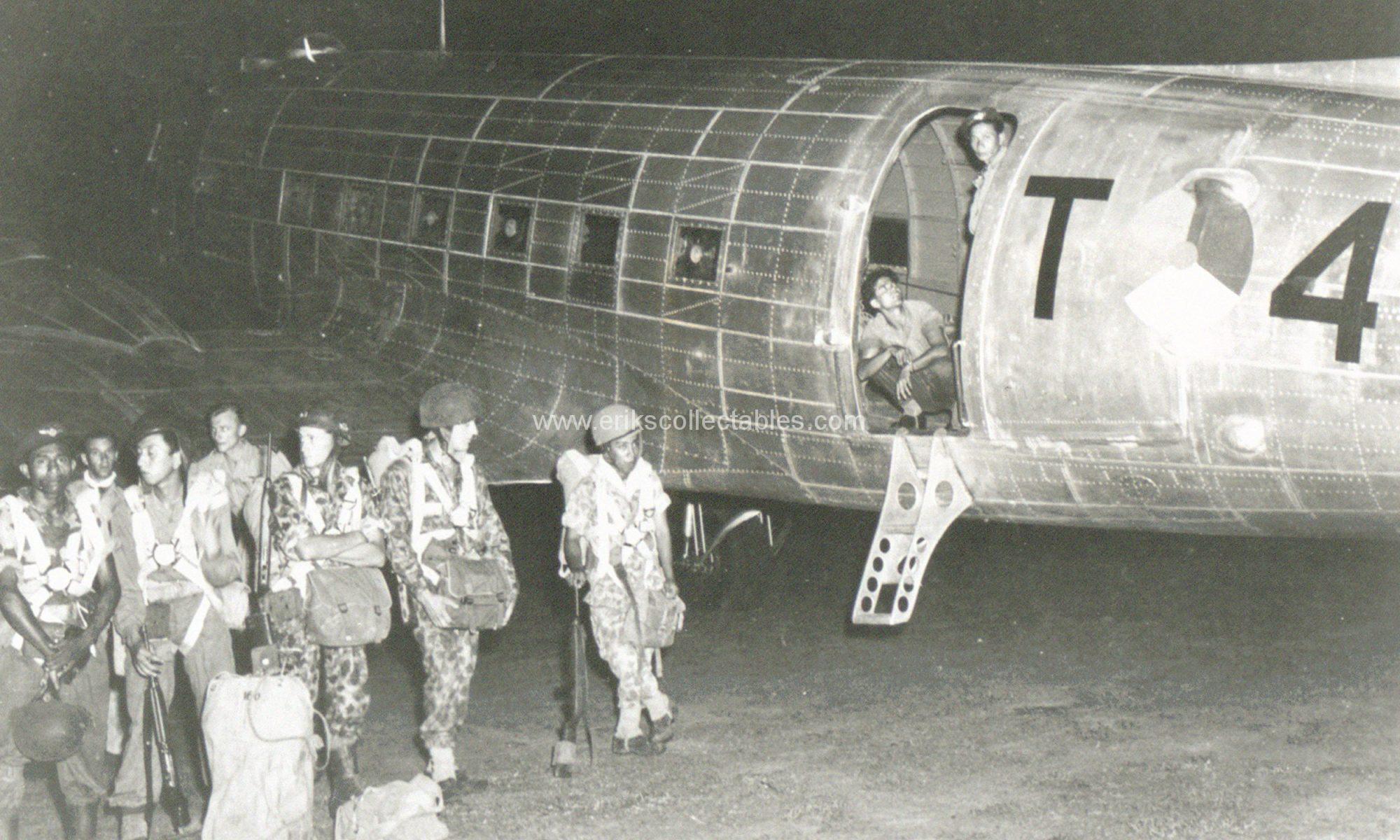
The first and most important combat jump was part of the so called 2nd Politionele Actie. A large scale military action against the Indonesian army. The military aim was to reclaim Djokjakarta that was in Indonesian hands. The action started with a combat jump by the Para Battle Group of the Speciale Troepen on the airfield Magoewo close to Djokjakarta. The action started on December 19th 1948.
Photo from the NIMH collection
The preparations for “Operation Crow” as this large scale airborne operation was called had already started in january of 1948 when the 1st Para Company (app 250 men including the staff of the Airborne School, SOP) was combined with the 2nd Para Company (app 150 men) of the Korps Speciale Troepen. The unit was renamed in Para Battle Group (para gevechtsgroep of app 400 men) and led by Captain Eekhout. After the airfield was taken from the Indonesian army, planes with the commando’s of the Korps Speciale Troepen and 2 infantry units were flown in to take the whole city of Djokjakarta back.
Museum Bronbeek, inventarisnummer: 2007/06/04-3/1
The Airborne troops were transported in 16 Dakota C-47 planes and a total of 370 para’s made this combat jump. A very extensive description of the further action can be found in the sources (in Dutch).
Photo Lt. Castelein estate
Djambi
Shortly after this action the men had to make a second combat jump. This was already on December 29th 1948, only 10 days after the first combat jump. This time the action was on the Island of Sumatra to secure the oil fields of Djambi.
Photo Kloër estate
Rengat
Soon again a 3rd combat jump would be made during “Operation Mud (Modder)” in Rengat, again protecting oil fields in Sumatra. This time only the 1st Para Company would make the jump.
In a period spanning less than 3 weeks 3 combat jumps were made by approximately 370 men in total (not all men in all three jumps).
Photo Kloër estate
Gading
March 1949 was the last of four combat jumps. This one was on Java again and aimed at a large group of resistance fighters. After the jump it turned out the intelligence was outdated and the group had already left the region.
Photo Kloër estate
Qualification Wing – with golden laurel for combat jumps
The wing that was used as a qualification wing in 1947 was redesigned in 1949 for those who had particiapted in one or more of these combat jumps.
Two examples of the regular qualification wing
Captain Eekhout wearing a qualification wing during an action. Photo Kloër estate.
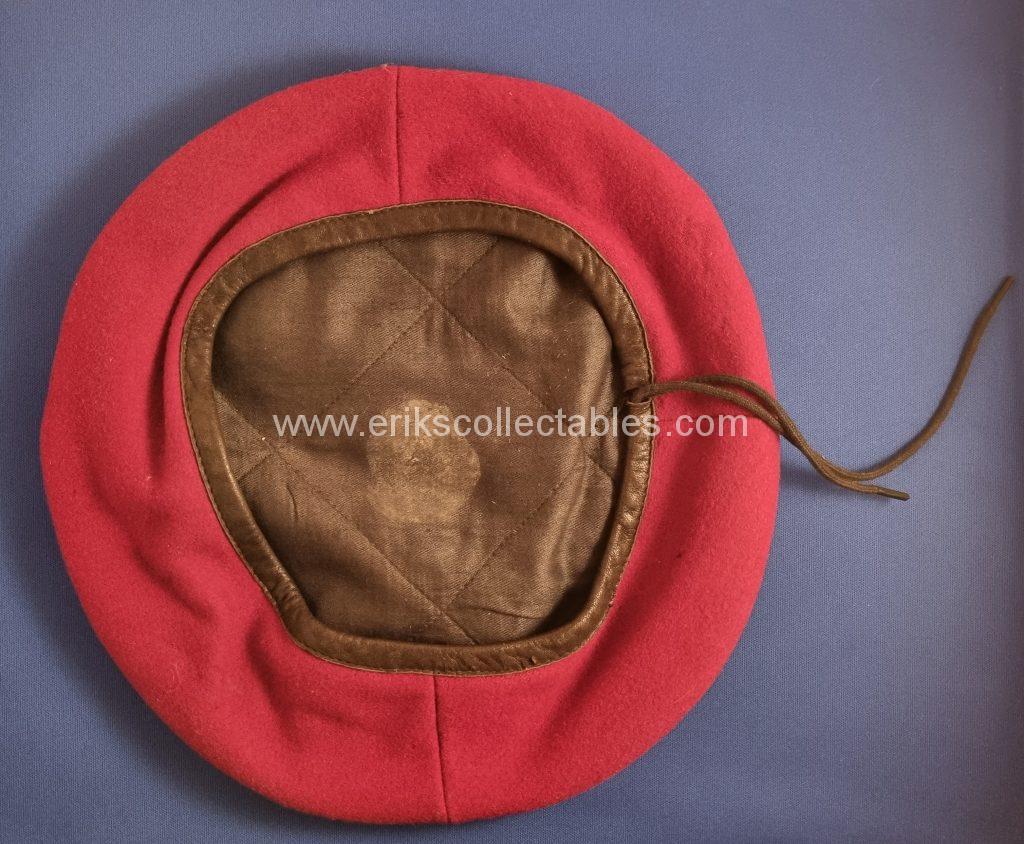
A golden laurel (as in the beret wing) was added to the basic design of the qualification wing. As with all badges in the Netherlands East Indies there were metal and cloth versions. The metal versions of the badges were only made and worn in the Netherlands East Indies Army in 1949 and early 1950. Of those only around 400 (all men of the para battle group, 370, that made combat jumps and the staff of the SOP that also participated in the combat jumps) were ever made.
The 1949 Action Wing in metal
Many para’s of Indonesian descent chose to remain in the new Indonesia but the wing could no longer be worn/shown as they were seen as signs of the colonial oppression! The metal version could no longer be worn in the Netherlands only cloth wings were officially allowed to be worn on the uniform. This type of metal wing is now very rare and highly collectable!
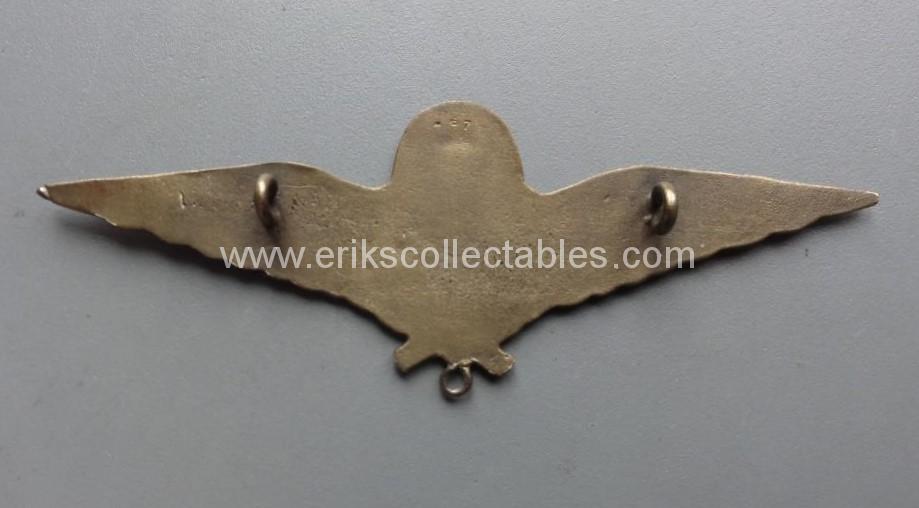
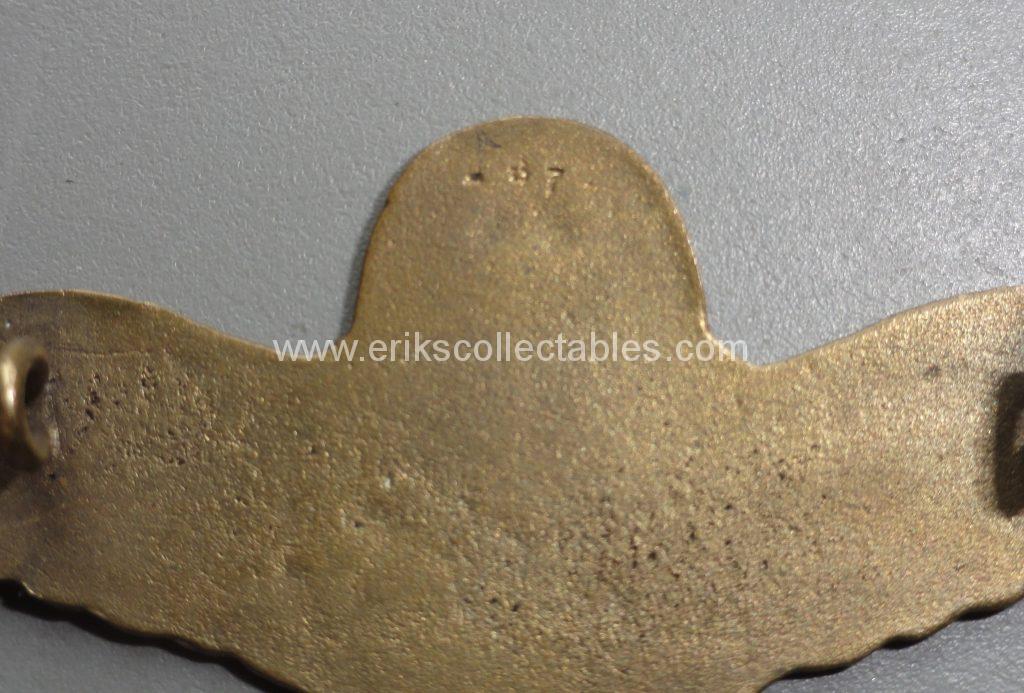
Reverse of the Action Wing in a very good condition
There are two versions of this metal wing the one shown below (both same type) is the larger of the two variations. It has been thinly painted (most often worn off) and it has a non standard closure on the back. This seems to be the official version.
And a well worn version of the same wing where the paint is worn down (typical for this variation)
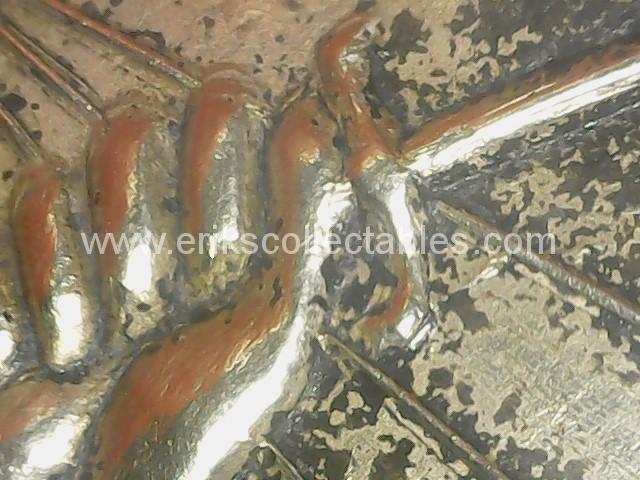
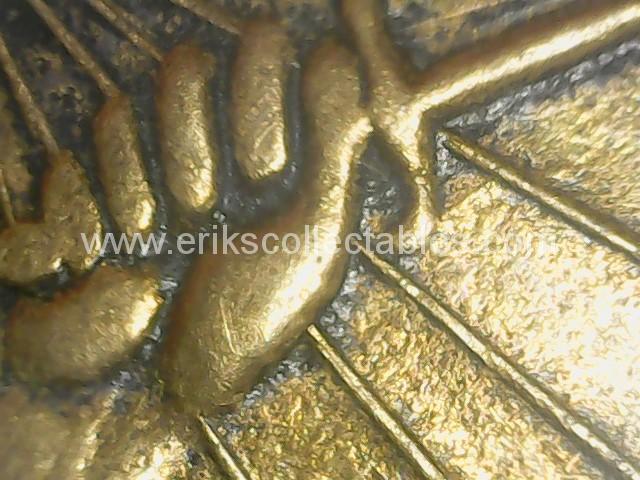
The other type is in the Cordesius style both with the closure and the thicker enamel style painting that chips but does not wear down so much and a less shiny type of metal is used. It is much rarer so probably a privately purchased item.
The difference between these two wings can mainly be seen by the size and paint quality. And of course the type of closure. Below the standard type of closure that is used on the smaller version (not my collection).
Variation 2 which is slightly smaller and has a different metal and closure
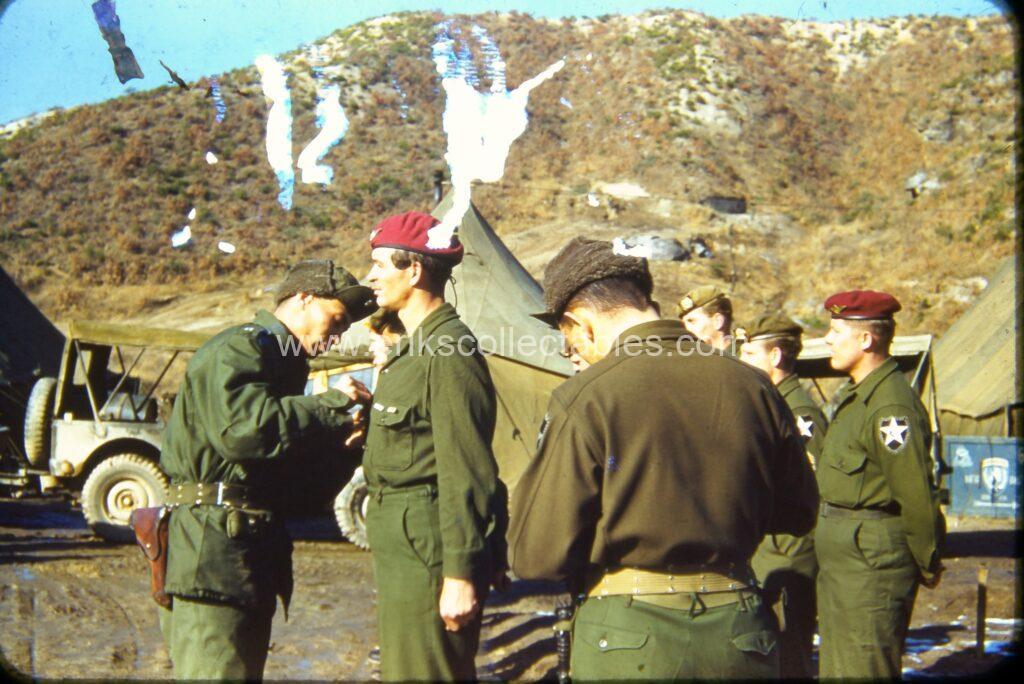
Below a period photo’s of the metal wing for combat jumps being worn.
Here two versions of the cloth action wing, both from the estate of an officer of the 1st Para Company with thanks to the Castelein family for allowing to show them here! These badges were made and worn in the Indies and not after (the officer left the service upon return to the Netherlands).
Version with golden laurel but no silver wire. It is filled with a pin on the back for easy removal from the uniform as was customary in the Indies.
Slightly different from the version above as this one has silver wire surrounding the chute and wings.
SMI Kloër with his action wing (Photo Kloër estate)
Upon return to the Netherlands “standard” insignia were worn by all on the battle dresses. Here an example of such a wing from the same Castelein estate as the two other cloth wings shown before.
Lt Castelein upon his return to the Netherlands in 1950 with the wing shown below.
This type is not filled like the versions which were worn in the Indies but these worn directly sewn onto the Battle Dress. They were made in Indonesia for use on the BD.
Two more examples of this type of wing worn on the battle dress. This photo was taken on the ship to the Netherlands (photo collection Museum Bronbeek).
A miniature version of the action wing was also made in Indonesia (in metal). Here is an example worn by Lt. Castelein in 1950 after his return to civilian life.
If you have additional info please let me know so I can update my blog!
Photo Kloër estate
If you have an example of this wing for sale or trade please do contact me at info@erikscollectables.com with a photo and the relevant info!
Hans Ulrich (Boy) Kloër was a Sergeant Major Intructor for the Netherlands East Indies Army Special Forces Airborne School (SOP) and served as a commando before that within the Korps Speciale Troepen (KST).
Photo: Kloër estate
All personell of the School for Airborne Training (SOP – School Opleiding voor Parachutisten) also were active in the large scale operations of the Special Forces and most importantly directly involved in the three combat jumps that were made by the Airborne Troops.
Before….
Photo Kloër estate
and after the jump….
Photo: Kloër estate
Estate
As an Airborne School (SOP) Sergeant Major Instructor he was in charge of the beret wings and he was one of the last SOP staff members in Indonesia. He took in surplus wings in 1950 from indigenous troops who did not want to go to the Netherlands after the colonial army was disbanded.
Para company II (KST). Photo Kloër estate
The para’s who remained in Indonesia had to hand over all their surplus materials, uniforms and badges. He kept these wings during all his life, never touching them again untill he passed away in 2006.
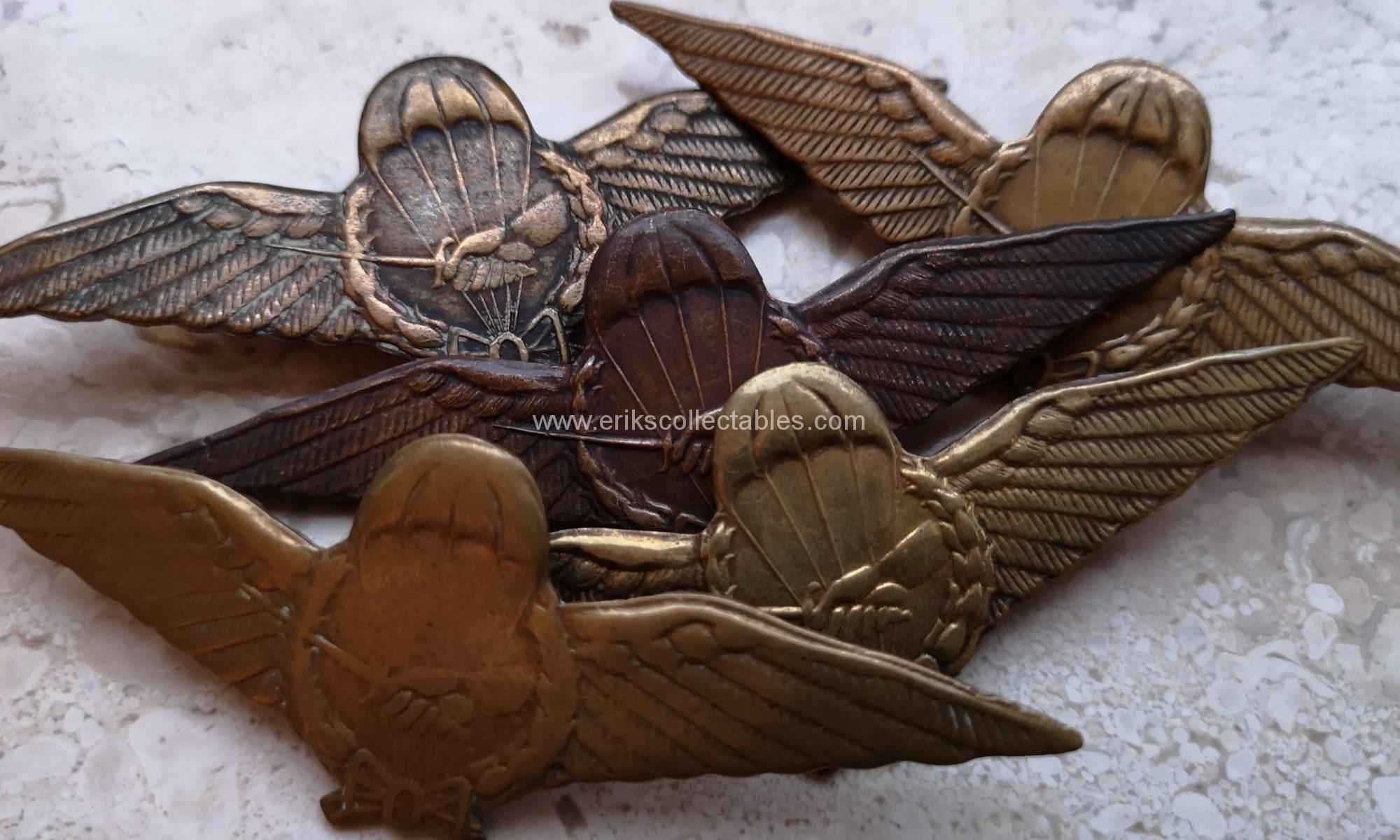
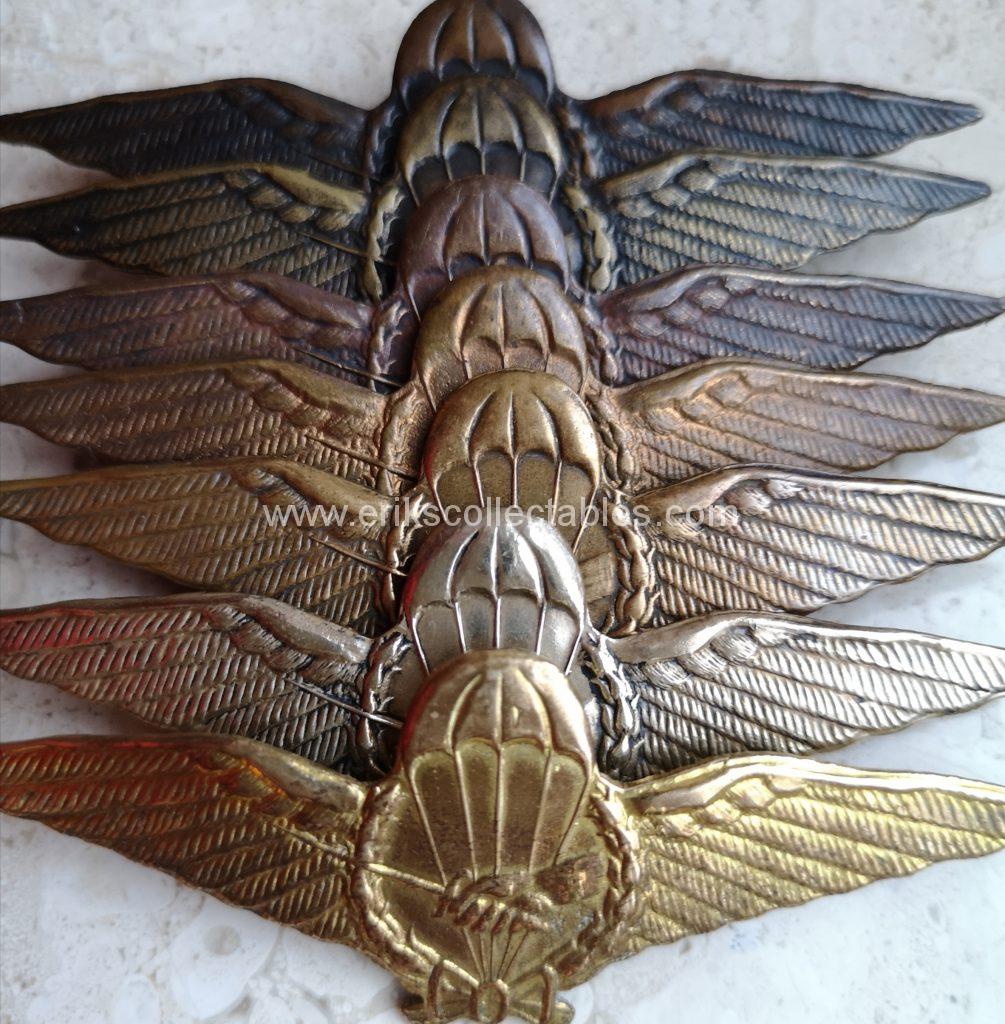
From his estate several wings have come to the market and I have been able to buy some of these for my collection. You can see all three period (silver, bronze and brass) variations of of the first model wings but in different conditions. Some have been higly polished during a longer period of time, others are bend to slightly curve in the form of the beret or have period repairs and some are still in great and complete condition.
The unique provenance of these wings make them very interesting to the collector as these are all worn originals from the active period in the Dutch East Indies and give a perfect overview of what was in use at that moment. It is a time capsule!
An overview of the subtle colour variations in this group. From gilded, real silver to brass, copper and bronze colours!
Bronze Lion
Kloër was decorated for his role in these combat jumps with the Bronze Lion, the second highest decoration for Gallantry in the Netherlands! Between 1944 and 1963 only 1211 were awarded and more recently for actions in Afghanistan is has been awarded a few times again.
Medal group of Kloër
Awarded by Royal Decree No 25 of December 9th 1949:
Has distinguished himself by very brave and faithful service in the face of the enemy.
Photo Kloër estate
After having distinguished himself by his cool and brave performance as Commander of a group Airborne Troops on December 19th 1948 by, after having landed on the Magoewo Airfield (Djokjakarta), breaking the enemy resistance and capturing a large quantity of arms and ammunition, after which on December 29th 1948 and January 5th 1949 again participated in an exemplary manner during the capture of the oilfields of Tempino (Djambi) and Rengat.
Photo Kloër estate
Due to his brave and resolute performance the drill towers and pumping stations fell into the hands of the Airborne Troops unharmed, although a large and fanatic group of enemies tried to prevent this. Singlehandedly Kloër disarmed the explosives on several of the drill towers. In less than 3 hours 108 drill towers in a range of 1 to 2 kms and also stations for pumps, radio and electricity were saved from destruction and fire and the city cleansed from hostile elements.
Photo Kloër estate
Again after the landing on Rengat he showed himself as a brave and persistent leader, who, after breaking the enemy resistance with his Airborne Troops, capturing the electricity plant and without hesitation by himself extinguish the already lit fuses of bombs just in time before exploding.
Many thanks to the family for allowing me to use these photo’s! All materials apart from the wings are still part of the family estate.
Photo Kloër estate
Source: Erik Müller, 1944-2016 De Bronzen Leeuw. Voor bijzonder moedige en beleidvolle daden