Gerrit spent the first half of the ’60s in Greenland working at the BMEWS base, one of the coldest parts of the world. You can read more about him in part 1, the earlier blog about him. The second half of the ’60s he spent in tropical Vietnam working official US (Army) related contracts. Probably 5 years in total between 1965 and 1970 but exact starting and ending dates are unknown. Only one passport survives has his 1969 Vietnam dates in it and some other paperwork from around 1969 survives but not much. All earlier paperwork has been lost over time.
As he passed away I am not sure I will ever know what he did there exactly. He worked in some capacity for RMK-BRJ the largest building conglomerate active in Vietnam during the war. You can read more about their history here: RMK-BRJ wiki
He had some form of medical education in the US and he worked in some medical capacity it seems, probably in the line of Health and Food safety for RMK-BRJ.
Below a photo of his kit-bag (his original Dutch one, not a US version!): GHM Medical Department / Facilities & Operations RMK BRJ / 6th Division Vietnam
Photo of his kit-bag (his original Dutch one, not a US version!): GHM Med.Dep. (Medical Department) / F&O (Facilities & Operations) RMK BRJ / 6(th) Div (Division) VN. (Vietnam)
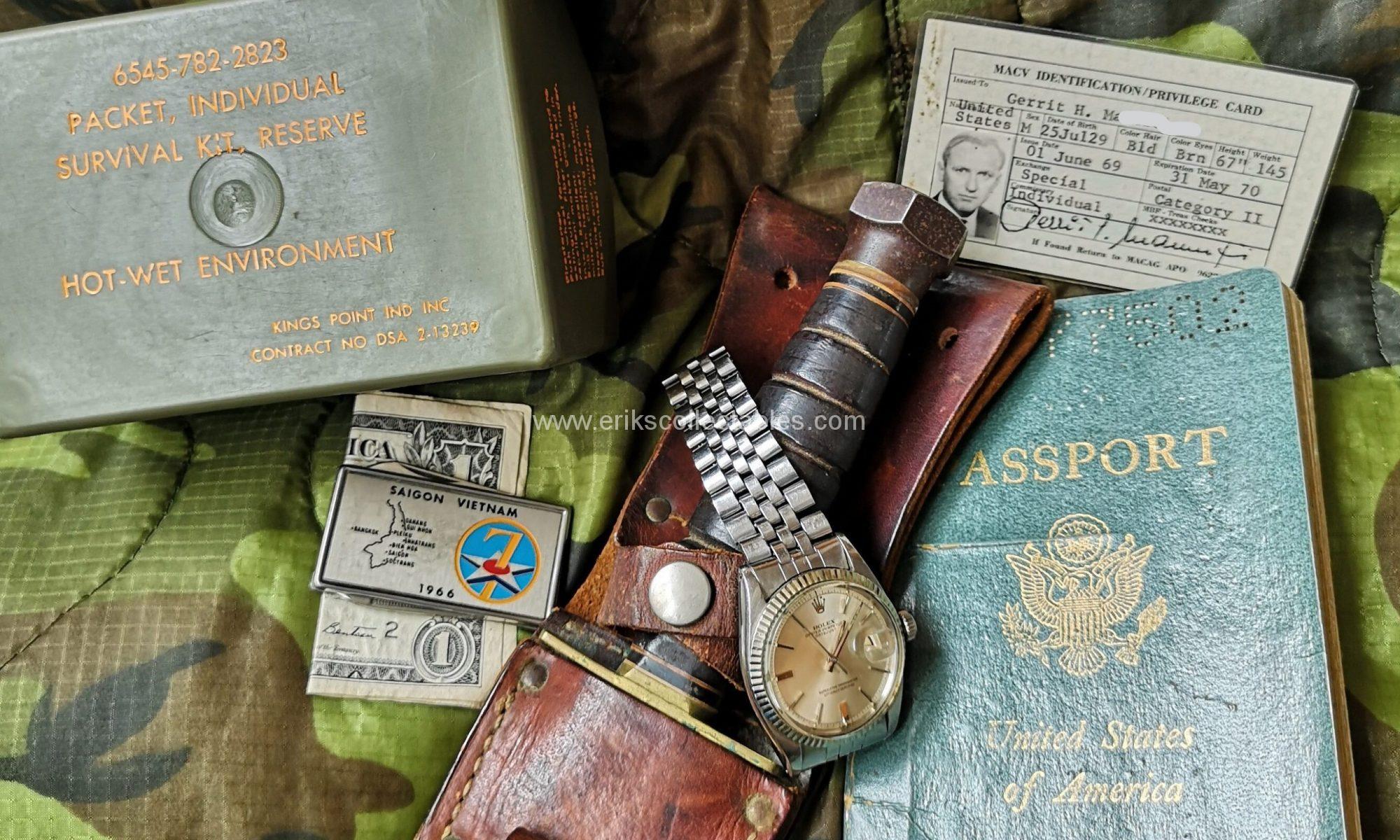
His late war MACV ID Card (Military Assistance Command Vietnam)
As he spent a long period in Vietnam he witnessed most of the war and not always from a safe distance! On several occasions he risked his life in the line of duty. As can be read on the Wiki regarding RMK-BRJ more than 52 employees were killed in those years.
I’ll share here some of my favourite pictures from his collection (these are mainly prints I took from the slides he made) there are many more!
Some local forces:
Do you see something bulbing inside his white shirt? He told me he always carried a grenade there for safety reasons, but not visible…. not sure how that would work….
As a civilian who drove military vehicles (in this case a navy truck) he needed a local drivers license:
Including a Vietnam roadsign test!
This white truck appears on several photo’s so I assume it was his! RMK-BRJ worked on a Navy contract so the Navy car does make sense.
It seems as a civilian he needed to organize his own private health care!
Driving a river boat, he went with the river forces (riverines) on patrols on several occassions, just for fun and he spoke French fluently so he could help out in communications too.
After a request on the US Militaria forum I learned the ship must have been part of River Patrol Section 532 based on the patch visible on one of the pictures!
Above shooting a M-79 grenade launcher (for fun?) and below driving the boat himself.
Patch of River Patrol Section 532 as I have learned!
With the Marines he had a Dutch friend there too, recently emigrated to the US unfortunately no names of these people are known.
I think his white truck can be seen on this photo!
And some random photo’s. A forget me not club, location unknown and with a Tiger Stripe boonie hat.
It also seems he became a freemason during his time in Vietnam!
Some of the items he collected during this period:
The Marbles pilots survival knife he already got in Greenland and brought to VN.
The Rolex Datejust he bought for his Birthday during R&R in Bangkok in 1967! It can be seen on the stairs of a friends house in Saigon. He is guarding the house with his M1 with double (taped together) banana magazines.
A relatively rare item among his military gear are these: Military Survival Kit – Hot Wet environment. Mainly issued to Special Forces in Vietnam. For more info see this page
You cannot hide your heritage, reading a newspaper from Deventer, the Netherlands, in Vietnam!
Missiles in Greenland, war in Vietnam, problems in Persia…..
During my teens in the early ’80’sof last century I got to know Gerrit. He was an acquaintance of my parents. He had stories and photo’s of countries and places where nobody else I knew had ever been. He was a bit of an adventurer so there was much to tell. Being only a kid much of this information was lost over time.
In this small series of blogs I will share some of these photo’s and items from his travels in the 60s, mainly his life in Greenland and Vietnam. In both locations he was working as a civilian contractor for the US military.
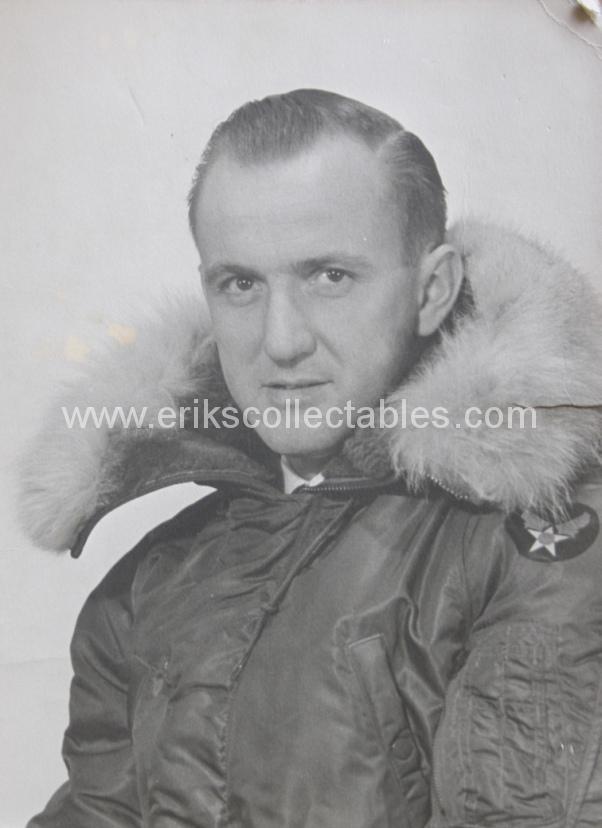
Gerrit wearing a USAF cold weather parka in Thule, Greenland
Gerrit was born in 1929 in Deventer, Holland. In the early 50s he studied Hotel Management in Switzerland and soon after emigrated to the US where he became a citizen, after his retirement he returned to Deventer in the Netherlands our mutual home town. During his period in the US he studied medicine but if he ever practised is unclear.
To be honest much of his life remained unknown which probably added to the “mystique” around his travel and activities abroad. He always seemed to work in troubled locations. After Vietnam came Persia and after that Congo just before the local revolutions happened that ended in changing the names of these countries.
The Cold War
In the ’50s and ’60s of last century the tension between the western world and the east, especially the Soviets was building up. The war in Korea, the Cuba crisis and later the Vietnam war were al very visible examples of this. The cold war was also one of fear for a Nuclear war with Ballistic Missiles flying over the oceans. If you could stop the enemies missiles you could win this potential war….
BMEWS – Ballistic Missile Early Warning System
In order to find and after shoot down enemy missiles the US started the BMEWS project in 1959 which was completed in 1964. The main contractor for the entire project was RCA, short for Radio Corporation of America. The contract was close to 500 million USD initially. They were building enormous radar sites with linked computer systems. There was a total of 12 radars at several sites, Thule being the biggest with 5 of these radars the location was known as the J-Site. Next to the Radars there were jets for interception and NIKE missiles but I will get back to that later.
Gerrit in front of the BMEWS Radars in Thule
In the years that Gerrit worked in Thule (63/64/65) everything was aimed at completing the project as soon as possible in order to guarantee the USA a higher level of safety against the Soviet threat….
As mentioned he worked for RCA in the field service, probably in the role of facility manager (he later had several more of these type of roles in other locations).
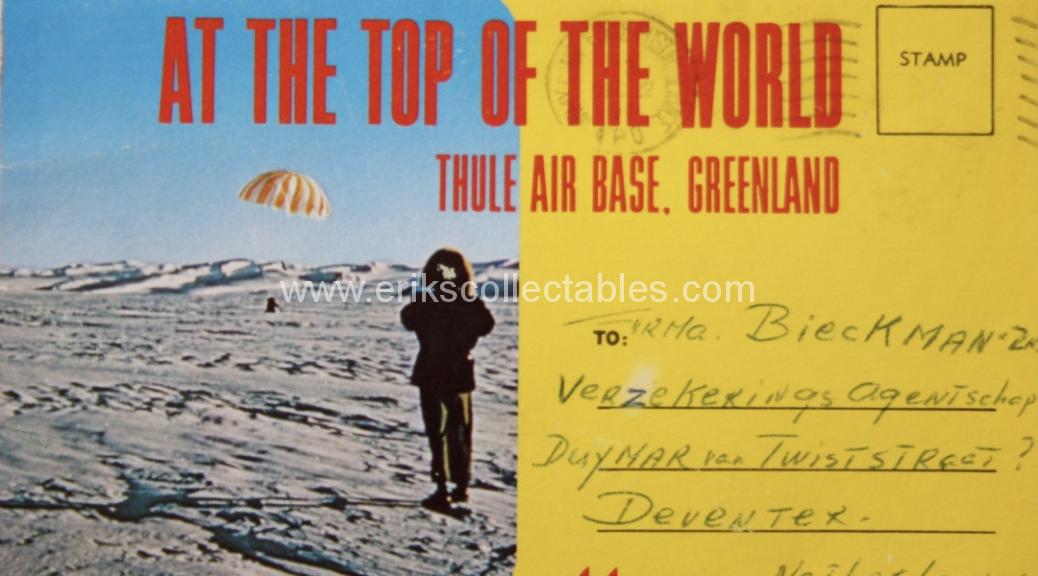
Here his address at the time as stated in the postcard also seen at the top of this blog.
And here a folder for new RCA arrivals at the Thule BMEWS project. On the inside he describes the location of his sleeping quarters in spring so this is probably from 1963. The location of the dot on the inside corresponds with the map on the outside.
Thule Air Base – 4683rd Air Defense Wing
Obviously Thule was an Air Base next to the BMEWS radar station. In the period Gerrit lived here (’63/’65) the 4683rd Air Defense Wing was stationed there. This unit was formed in 1960 and discontinued in 1965 so Gerrit witnessed most of its lifetime.
Thule Times of 1964 with the Wing Commander and the Base commander
They flew with the Convair F-102, Delta Dagger as pictured below in Thule.
NIKE Missile base
I am not sure how secret these things were back in that period but Gerrit was always proud of his Security Clearance (he said the highest a civilian could get). I did not see any of the NIKE missile pictures until after he passed away and I received his box of Greenland pictures….
Several pictures of the NIKE Hercules missiles, ready for action…
Next to the Jets and Missiles there were other planes….
People had to be brought, supplies had to be brought so plenty of other planes on the Air Base like these:
DC3 and it’s big brother, a C137 Stratoliner
On ski’s
Or Danish visitors:
Probably a Catalina, adapted with ski’s.
And of course the Fire Brigade in case of problems….
And there were helicopters too!
A HH43 – Huskie Helicopter
Prized possessions of an Arctic Traveller
Gerrit lived as a civilian on the Air Base. It seems that in his role he had acces to military supplies and also to the military shop, the so called Base Exchange (BX). A place it seems were also luxury items like Omega watches could be bought or ordered.
Next to the photo’s I have some of his most prized possession of that time, his parka, knife and watch. I will discuss them here as they are quite unique…at least to me!
In most photo’s he can be seen wearing his N3B US Air Force cold weather parka. Next to the Parka I have the matching trousers and a pair of aviators fur lined boots…
He also had a Marbles Jet Pilot survival knife that he kept on using in the Vietnam war. Marbles designed the knife but they did not get the Defense Contract. So probably this is a private purchase from the Base Exchange. In any case it is a rare knife by now.
And here is Gerrit wearing and using the knife! First in his dormitory with the parka on the chair, the knife on the table, used to open a can? And plenty of Kodak films in the drawer…
And here worn on the belt during his trip to Dundas
And my personal favorite, as it can still be used, his Gold Omega Seamaster. Bought January 1963 on the Base Exchange!
Dundas Mountain
Gerrit somehow got the opportunity to make a trip with the local inhabitants, the Inuit or as they often were called in that time Eskimo’s. Today there are companies offering dog sled tours in that area but looking at these photo’s it was not a commercial business yet in the 60s. Dundas mountain is quite near to the Thule site so it appears on many pictures. As the picture below show the trip started from BMEWS itself, four of the five radars can be seen here and of course the dog led sled!
As I have no details on the trip itself from Gerrit it was good te see that on some pictures he made captions of what we can see!
The caption reads: An Eskimo from Dundas with gun and screen for the seal hunt
It seems he made the trip with some unknown friends from the base.
He mentions one of the dogs by name and says he often took it into his truck
Probably this one?
Two photo’s of “locals”, really love these, they could be in a period National Geographic…
Also during his time in Vietnam Gerrit always had good relations with local people. Not being in the military himself probably gave him some more possibilities for this.
The family that took him on the trip?
Skinning after the hunt, pole fox?
Dundas from the seaside…
This wildlife booklet must have helped, he studied it well. He brought even some items with him that are no longer here like a Narwal tooth, from the unicorm of the seas…
Life on the base
In the years Gerrit was in Thule the base was still quite new and still being built. It was not a place of luxury but of a very simple life, work, eat, sleep, repeat….
Here some pictures of that simple life in the harsh conditions of the Arctic.
Construction still ongoing!
As on any base there was also a Chapel for the churchgoing part of the staff. And of course Xmas specials on the menu.
Dormitories were quite simple with small rooms. Not sure if private rooms were available to all personnel?
The barracks in summertime, looking very new
Outside of the dormitory and inside.
Just enough place for a bed, a small table and some personal belongings…
Weather conditions were very harsh, even in spring and summer
Describing weather conditions and leaving his Jeep near the other Barracks for better protection against the snow.
And of course US Mail!
Later after the 1968 accident with a B-52 there was radiation but no idea what the radiation could have been before 1965?
And the ubiquitous sign post found on every base far from the States!
This is a group of documents to Adolph Straub from 1851 who was a Stabs Auditor (Military Judge) in the Kingdom of Lombardy-Venetia which was in Austrian hands at that moment. Fieldmarshall Count Radetzky was the commander / viceroy of that region from 1848 until his death in 1858.
And on the following page from the ranklist of 1851 we find Straub:
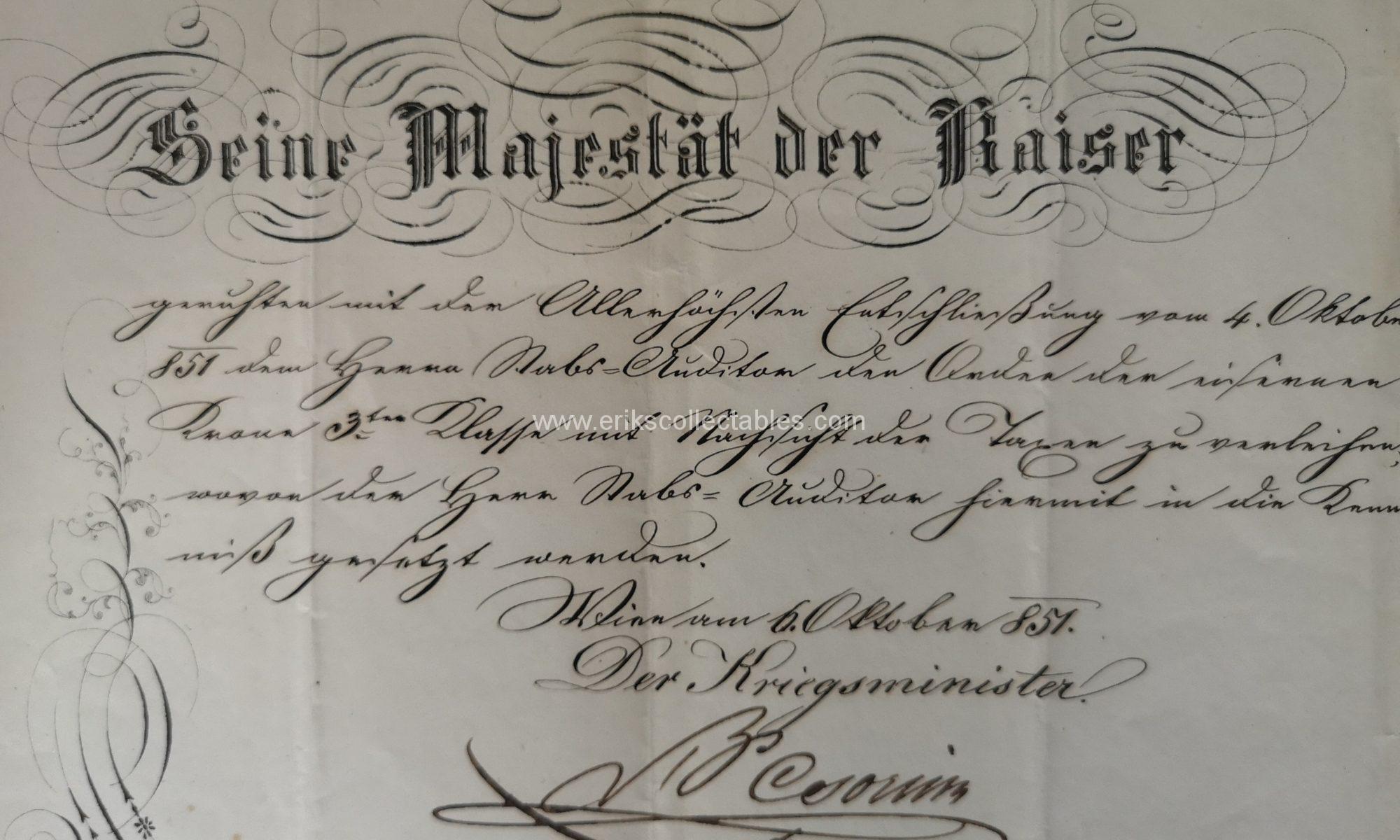
Stabs-Auditor (Military Judge) Adolph Straub was awarded the Iron Crown Order 3rd class in 1851. Officially the number of recipients was limited to 50 in the original statutes but this was no longer the case in 1851 nevertheless it still was a rare order.
Below the formal award document signed by the Minister of War Feldzeugmeister Csorich.
Fieldmarschall Radetzky as commander of Straub also communicated with him regarding the award which leads to the letter below to Straub including the original signature of Radetzky and the use of his personally marked paper (often more generic paper was used in general communications!).
So this group of documents if for an important order but also with some very rare signatures in Austro-Hungarian history.
Worldwar 1 started with the declaration of war against Serbia by the Austro-Hungarian empire in 1914 and was the start of the Serbian campaign. This campaign was largely unseccesfull until the attempt that started on October 7th, 1915. This last campaign ended on November 24th of the same year.
In this last campaign against Serbia were the following forces: the Bulgarian First Army commanded by Kliment Boyadzhiev, the German Eleventh Army commanded by Max von Gallwitz and the Austro-Hungarian Third Army commanded by Hermann Kövess von Kövessháza, all three under the control of the German Field Marshal August von Mackensen.
WW1 period map from internet
Until the end of WW1 the Banat region was part of Hungary which was again part of the Austro-Hungarian empire. The small city of Fehertemplom, or in German Weisskirchen, was in that region and bordered with Serbia. After the war as a result of the Trianon treaty the region would be split and Fehertemplom would become part of Serbia.
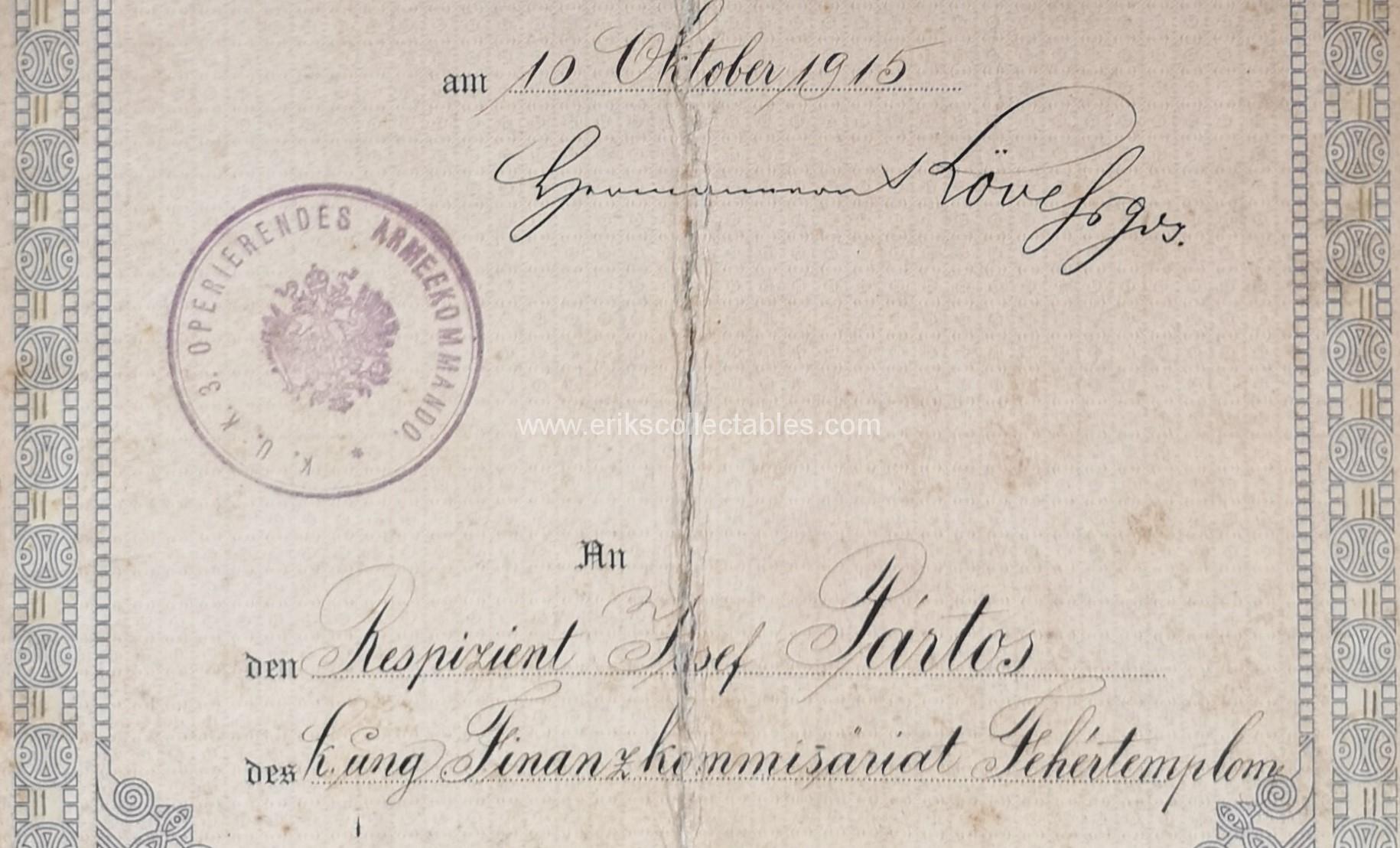
Josef Pártos was a finance official in the rank of Respizient in the Royal Hungarian Finance Commission of the city of Fehertemplom.
He received two separate document for a “Belobende Anerkennung” roughly a “mention in despatches”. This is more or less one step below the merit medal (often known as Signum Laudis based on the text on the reverse of the medal) and in this case also in the face of the enemy. So with wartime ribbon and swords if the medal indeed was given (swords were added only later in the war to the ribbon).
What he exactly did to earn this commendation is a mystery and probaby will remain so (no military records). But it must be quite unique for a finance person to qualify! Based on location and date it most probably was linked to the final Serbian campaign that started on October 7th 1915 especially as the first document is awarded by the 3rd Army command (one of the 3 armies involved in that action as discussed above) and hand signed by its Commander Kövess von Kövessháza!
Photo with signature of Kövess – from internet
The second document is from the regional command of Banat.
For this man, sergeant Deli Jószef, I still have to research the background of his medals but below his full entitlement.
From the 1939 Vitéz yearbook
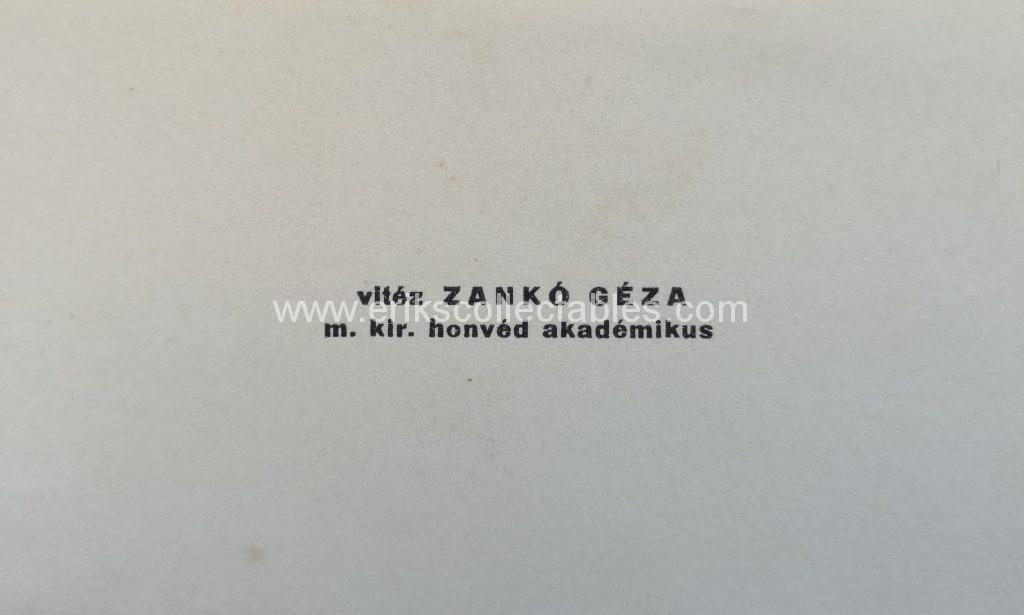
Before the war he completed his compulsory service in the 44th KuK Infantry Regiment reaching the rank of sergeant in the reserve and also qualifying as a sharpshooter. His name originally was Doszpod!
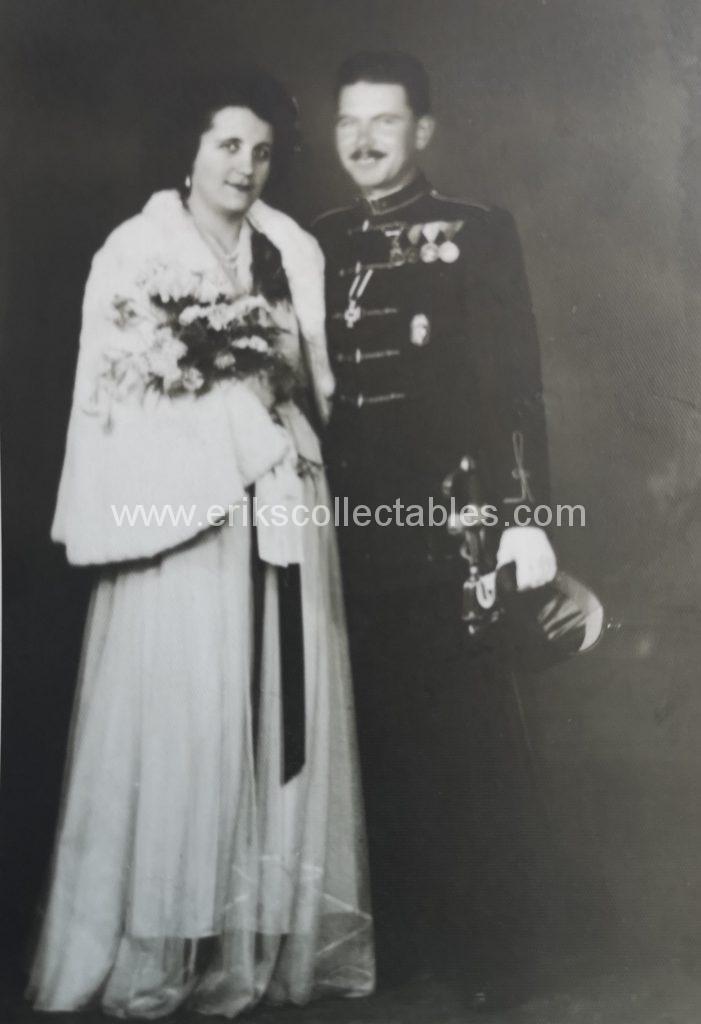
Deli and his wife in the first years of the war based on his uniform. He already has the two Silver Bravery Medals.
In 1924 he became a viéz and in that process changed his name to Deli! If the applicant had a non Hungarian name one of the requirements was to change the name to a typical Hungarian one. This was the reason some did not apply as they did not want to change their names! This often leads to difficulties in researching vitéz backgrounds, if the name was changed, as the original name is not recorded!
The original diploma in poor condition as found
And the same document after professional restoration
In the 1920s he became not only a vitéz but he also applied for the grant of land which he indeed received as one of about 5500 of the more than 24.000 vitéz.
Grand diploma for the grant of land in prestine condition!
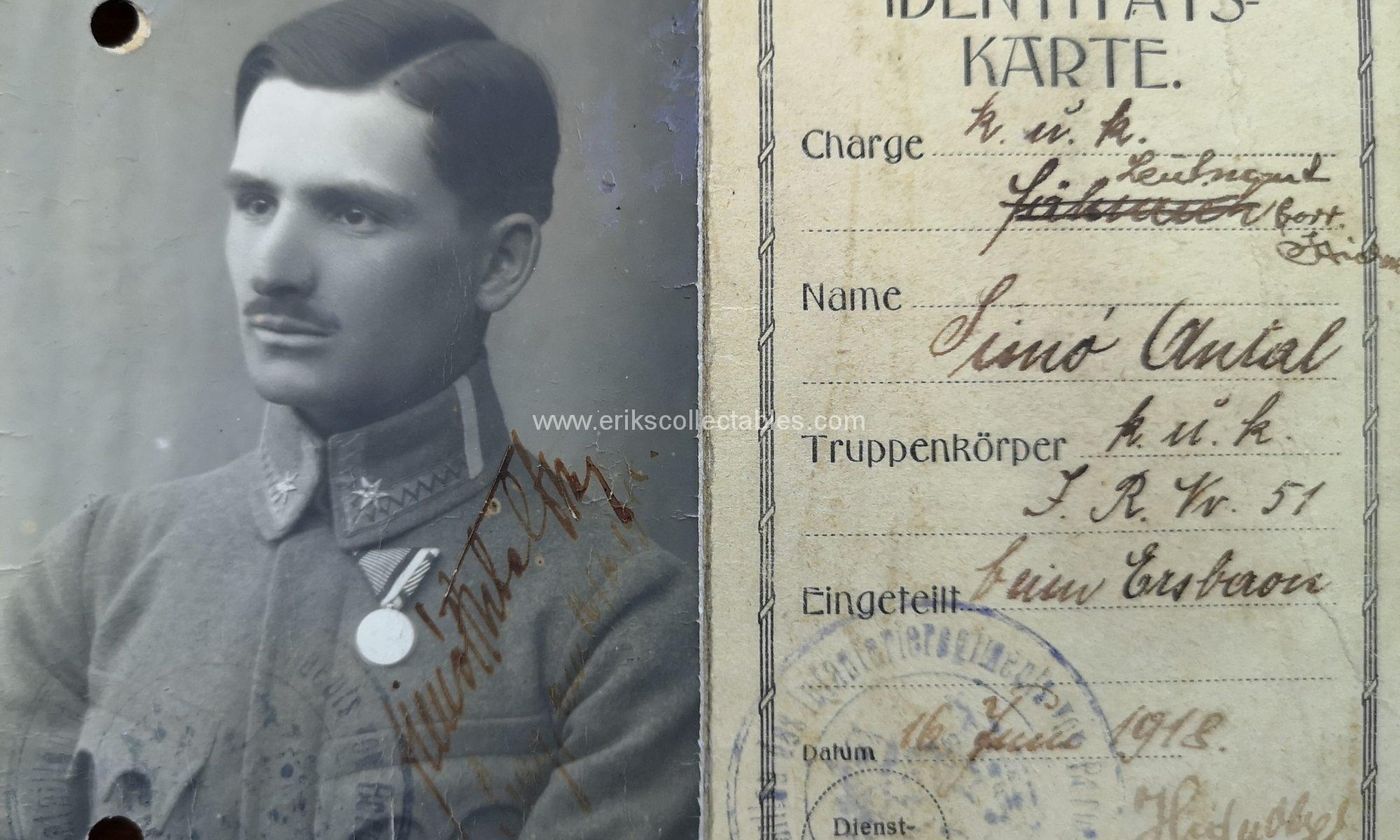
This group consists of the documents of Antal/Anton Simó, lieutenant in the reserve of KuK Infantry Regiment 51. As he lived in the Transylvania region he became a Rumanian citizen after WW1 as a consequence of the Trianon treaty.
In 1941 as a result of the last Hungarian re-annexation action Transylvania became part of Hungary and he became a Hungarian citizen again. All the Austro-Hungarian medals could be worn and used in Hungary but obviously not in Rumania.
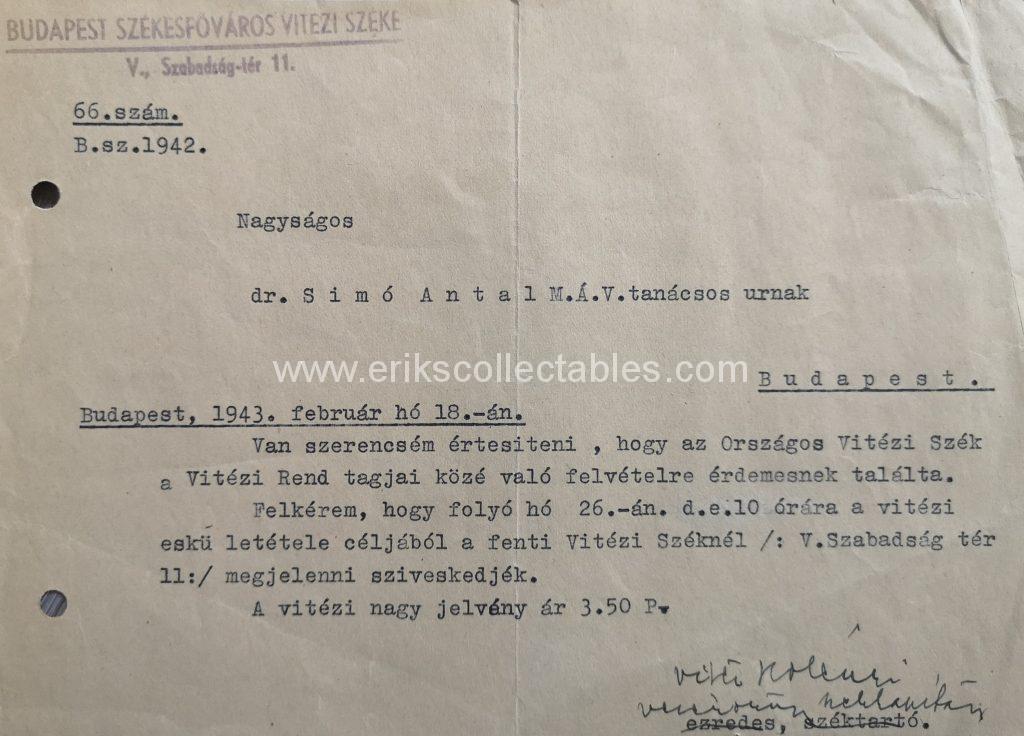
So in 1941 he could apply for all his relevant WW1 medals and also apply for the vitéz order as a Hungarian citizen. He also moved to Budapest and worked for the Hungarian railways. (MÁV).
His ID card from 1918 showing him with the 2nd class Bravery medal and with the rank and photo of fähnrich, later crossed out and changed in Leutnant. As all officers in training he first went through the nco ranks in which period he was eligible for the Bravery Medals to the ranks below officer!
His Bravery medal 2nd class would be awarded for actions in 1916 as described below in the request form. The request forms come from the Hugarian Military Archives!
From the Hungarian Military Archive.
Text of the request:In Annerkennung tapferen Verhalten vor dem Feinde. Im Gefechte vom 7. und 8. Juli 1916 Sudlich Podgaino Ubernahm er nach Verwunding des Zugskommandanten das Kommando in dem Zeitpunkt als der Feind bereits an der innersten Hinderniszone war und drangte denselben durch seine Entschlossenes tapferes Aufträten wobei er an der spitze sienes Zuges Kämpfte zuruck. Bracht ihm durch geschickte Feuerleitung grosse Verluste Bei.
Translation:In recognition of brave conduct in the face of the enemy. In fight from 7th and 8th of July 1916, south of Podgaino. He took over command, after the commander became injured, at the moment that the enemy already was at the innermost defense line and forced them back, by his convincing brave action, in which he fought at the front. Inflicted great losses to the enemy by his adequate fire direction.
From the history book of the Worldwar, book II, 1920: 7. Juli griffen zwei neue russische Korps im Räume Karczewo-Wygoda das Kolozsvärer Infanterieregiment Nr. 51 an, ‘das bei Tuganowiczi und Podgaino stand, heldenmütig die Stellung hielt und alle Angriffe erfolgreich abwies. Am 8. Juli 2 Uhr vormittags erfolgte ein erneuter heftiger Angriff, welcher den ganzen Tag andauerte. Vor der Front der 51er lagen über 2000 Tote, ohne daß das tapfere Regiment auch nur einen Schritt zurückgewichen wäre.
Translated:On July 7th two Russian corps attacked in the area of Karczewo-Wygoda the 51st Infantryregiment from Kolosvar that bravely held the line near Tuganowiczi and Podgaino and rejected the attack succesfully. On the 8th of July at 14.00 hrs a new attack was launched that lasted the entire day. In front of the 51st there were more than 2000 death without the Regiment retreating even a step.
And the documents and texts relating to his first class Bravery Medal
Tapferes Verhalten vor dem Feinde: In der Durchbruchsschlacht am 24./X. 1917 bei (Punkt) 778 nördl Dol. Kal stürmte er mit der 1. Welle der 7. fkomp bis über die 2. fdl. Linie, wo er infolge schwerer Verwundung abbleiben musste. Er gab ein mustergültiges Beispiel seiner Mannschaft.
Request form and detail from the Hungarian Military Archives
Translation of text:Brave conduct in the face of the enemy. In the breaktrough fight on the 24th of October 1917 at point 778 north of Dol. Kal. he stormed with the first wave of the 7th field company beyond the 2nd enemy line, where he, as a result of a major injury, had to stay behind. He was an example to his men.
The villages Kal and Dol Kal can be found at the position (roughly) 46°5′ North and 31°24′ East
The date of this action is the start of the 12th Isonzo battle in Italy! In October 1917 the Kolozsvárer IR.51 took part in the Isonzo / Karfreit breakthrough. The villages are Dol (east of Selo) and Kal (im Cepovantale). The regiment (three battalions) was together with IR.64 a part of the 69th Infantry Brigade. The regiment held a sector in the Cepovan Valley (Capovantal) on the Bainsizza Plateau.
Official document/certificate confirming his both Bravery medals
As stated his other medals would be added only after 1941:
Karltroop cross certificate
Wounded medal with one stripe on the ribbon.
Hungarian WW1 commemorative medal
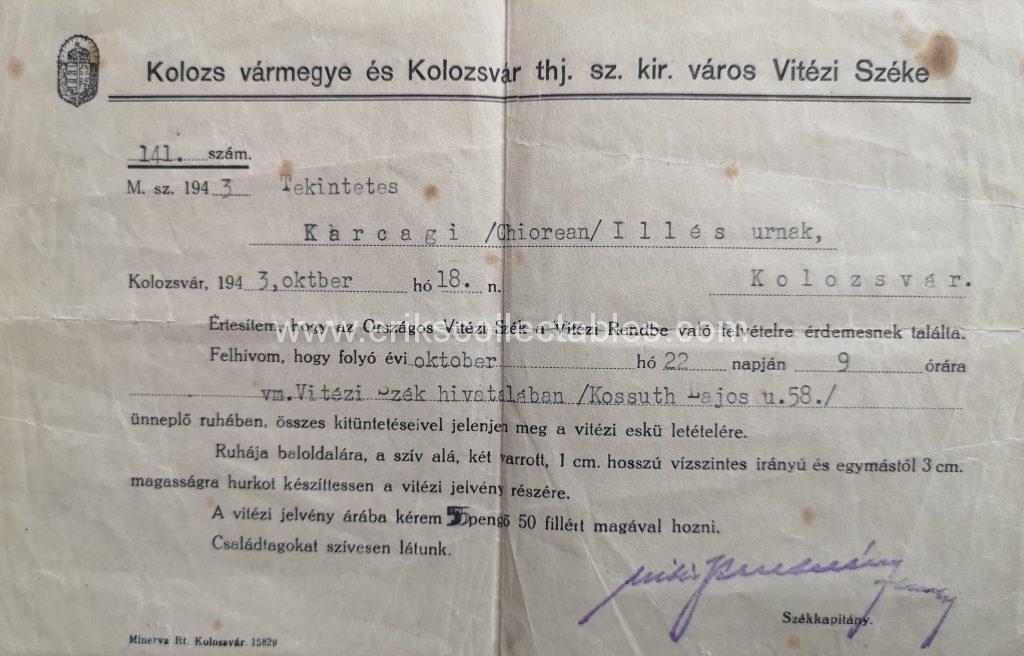
And finally his invitation to the vitézi rend award ceremony in 1943.
His entitlement in 1943 would have looked like this (these are not his medals as the group only existed of the papers).
With many thanks to the Hungarian Military Archives for helping with the relevant materials that made this blog possible!
And a last document from the military archives – his military pass post from the 1950s
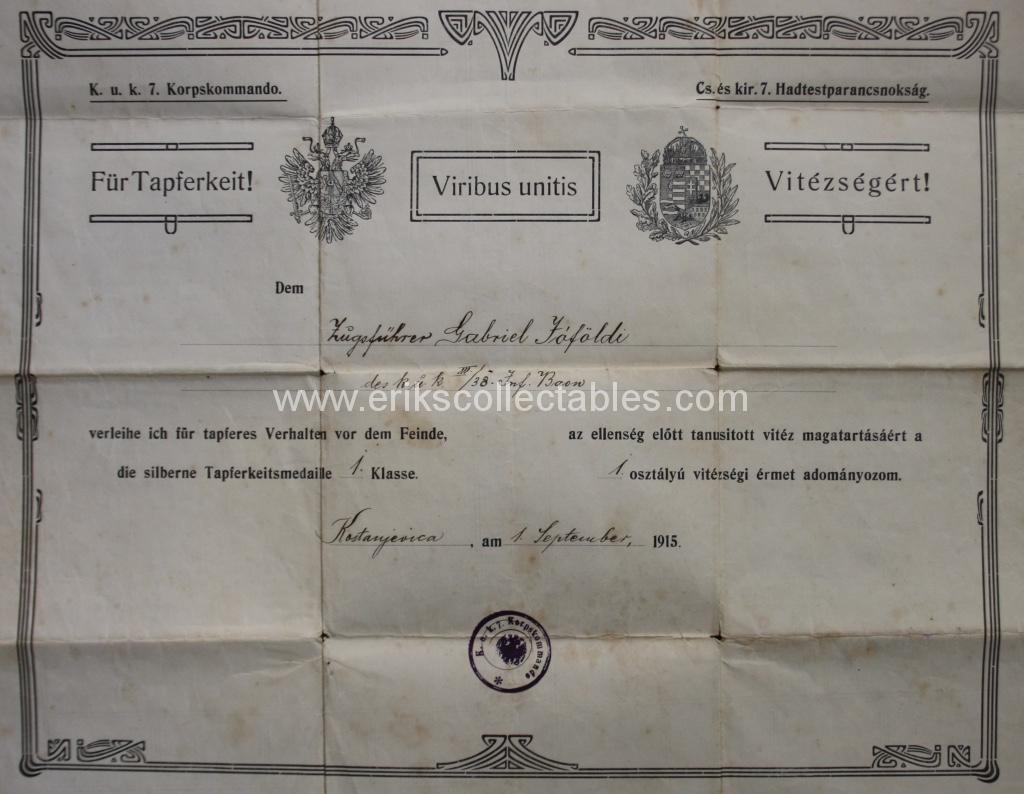
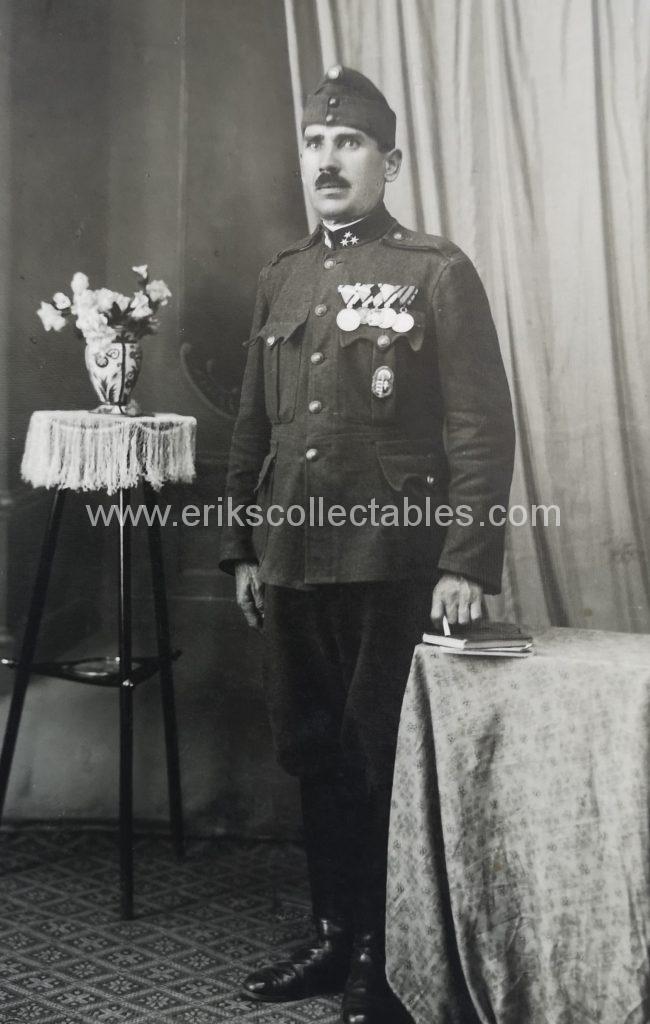
These are the documents and medals of sergeant in the reserve vitéz Jóföldi Gábor.
Complete WW1 entitlement including vitéz order and certificate
The following information comes from the history of the 38th KuK regiment by József Doromby :
Photo from the regimental book.
“He was born in 1885 in Bogyiszló. In 1907-09 he fulfilled his military duties in Bilek. He was involved in the mobilization and trained as a reserve NCO until January 15, 1915. After that he went to the Serbian front, and from there on May 13, to the Italian front. He went to Doberdo, Italy and then he was taken back to the Serbian front and then again to the Italian battlefield, from where in April 1916 he was taken sick to the hospital. After his recovery, he was commanded to the Russian, Romanian and finally again to the Italian front. Wife: Judit Bencze; children: Judith, husband. Mrs. János Sánta, Gábor, Lidia, husband. Mrs. Józsefné Németh, Ferenc. “
The piece in the book also give his full medal list as shown above. He did not qualify for the Wounded Medal as his period in hospital was due to illness, not wounds received in battle.
His Silver Bravery Medal 1st class would be the basis for his later (1929) introduction into the vitéz order. Below the full size diploma which is quite rare as most units only handed out the small certificates for in the legitimation capsule.
Below some other papers, his 1919 release from service papers, the certificate for his Karltroop cross and his Hungarian WW1 remembrance medal.
He was mobilized again for WW2 (Igazolvány lap in the top middle) but probably did not see any action due to his age.
All papers and medals came from the family and are a real group. Below a “Kappenabzeichen” of the 38th KuK Infantry Regiment in which he served (my collection but not part of his estate!)
With thanks to Zoltán Sőregi for finding the regimental information!
Sergeant in the 44th Infantry Regiment (Erzherzog Albrecht Nr. 44). Awarded with the Austro Hungarian Golden Medal for Bravery. The highest possible award in the Austro-Hungarian Army for ranks below officer.
For his actions he was awarded the Hungarian title vitéz and the order in the interwar period you can read more about the Vitézi Rend in the earlier blog.
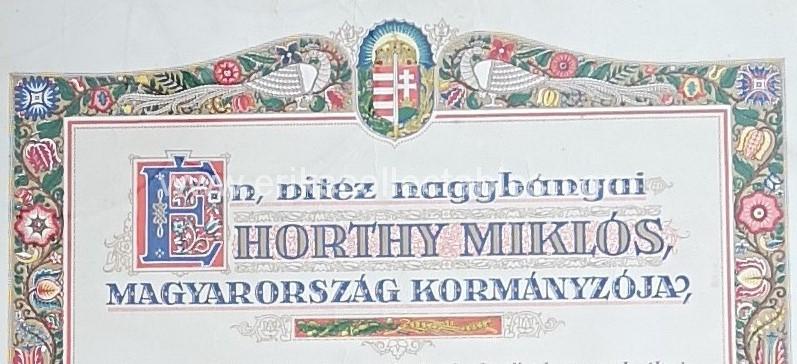
Grand diploma of the order, handsigned by Regent Horthy.
Below the excerpt from the 1939 Vitéz Albuma:
Awards as stated in the list in the yearbook:
Golden Bravery medal
Silver Bravery medal 1st Class, 2 times
Bronze Bravery medal
Karl Troop cross
The short version of his citation as recorded in the Golden Medal award records in the Austrian Military Records
Im Gefechte vom 12/3 auf den 13/3 (1915) am Brdo Bewies er beispeillose Unerschrockenheit u. heldenhafte Tapferkeit. Kam bis auf 40x vor der fdl Stellung. Trat den Ruckzug trozt des Befehls erst nach 2 Stunden als letzte abt der Angr. Gruppe an.
Which translates as follows:
In the fights of 12/3 and 13/3 in Brdo he showed unprecedented fearlessness and heroic Bravery. Came up to 40x before the enemies position. Retreated, despite the order, only after 2 hours as the last of the attacking group.
His feats where also published in a Hungarian book (A MAGYAR NEMZETARANYKONYVE 1914-1918.” Budapest, 1921. – Golden book of the Hungarian nation 1914-1918 ) which describes the action as follows:
“He ran forward in the killing adverse drum-fire of the enemy as the head of his platoon and during the assault he exhorted his comrades. The regiment met irreplaceable and heavy losses, so sergeant Janos Horvath got the order to withdraw his fellows from the first line. Horvath was forty paces off the enemy and he sent back a message that they will not leave the line as long as the wounded comrades of the neighboring unit (3rd Bosnians) have not been recovered. Finally he withdrew his men two hours later and he was the last soldier who left the front line.”
His Vitézi Rend Award which is numbered and has the initials of Horvath.
And the certificate that belongs to the award
Replacement Golden Bravery Medal (gilded bronze in the Karl version, interwar period). This came directly from the family but is a replacement. The original will have been a real gold FJ type that probably was sold for mentary reasons as happened very often. Next to this his large Silver Bravery Medal with bar for the 2nd award. The Bronze Bravery Medal and the Karl Troop cross were no longer part of the group so I have not included them either.
Free public transport travel cards to the winners of the Golden Bravery Medal including his photo ID with signature.
The original award request forms as they remained in the Hungarian military archives!
One of my main collecting themes used to be this Vitéz order. At that time I even ran a quite extensive website with information on the order, variations etc. This is a short, condensed, version of that information.
Hungary was a defeated country after the Great War. The war was lost, neighboring countries invaded, a communist revolution took place and a for Hungary very unfortunate Trianon treaty was signed. Admiral Horthy became the Regent (a historic Hungarian title) of this troubled nation in 1920.
This was the moment for a new order to celebrate the heroes of a lost war and re-establish a feeling of national pride. The Order of the Valiant* (in Hungarian, Vitézi Rend) or Knighthood of the Heroes was the first and probably the most important Hungarian order established after the Great War and had a substantial social impact.
*(The word vitéz has several meanings in the dictionary. As noun: warrior, soldier, champion, hero, knight and as adjective: valiant, gallant, brave, fearless of danger. Therefore giving the name of the order an exact translation is difficult. The two translations used here I have seen used in several documents therefore I use them as well.)
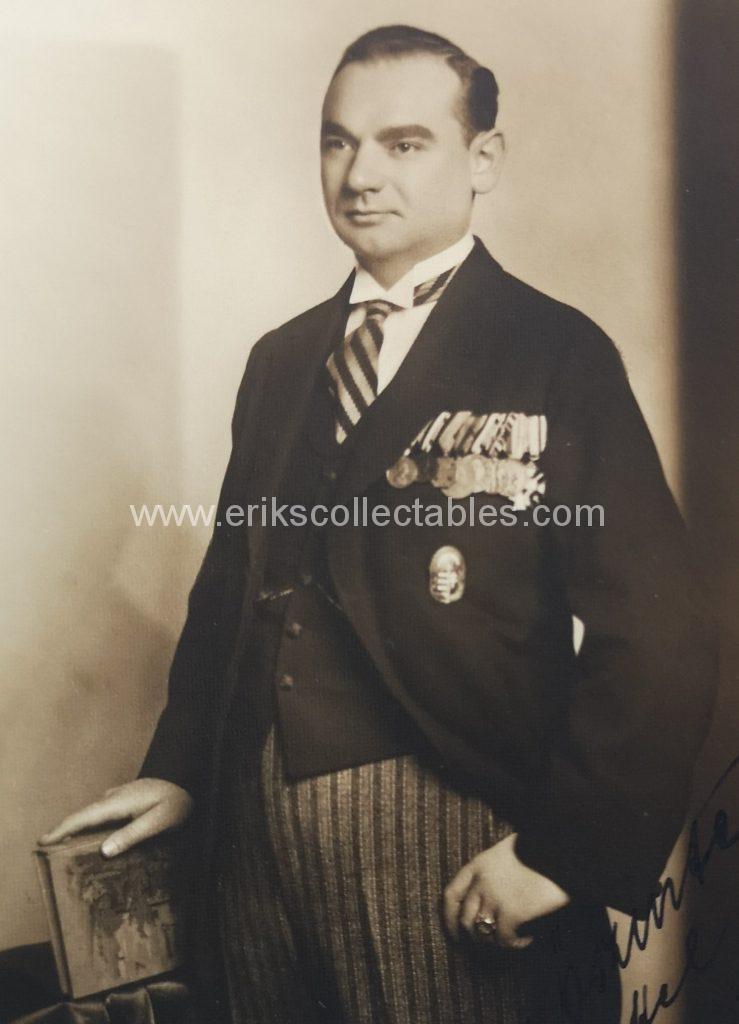
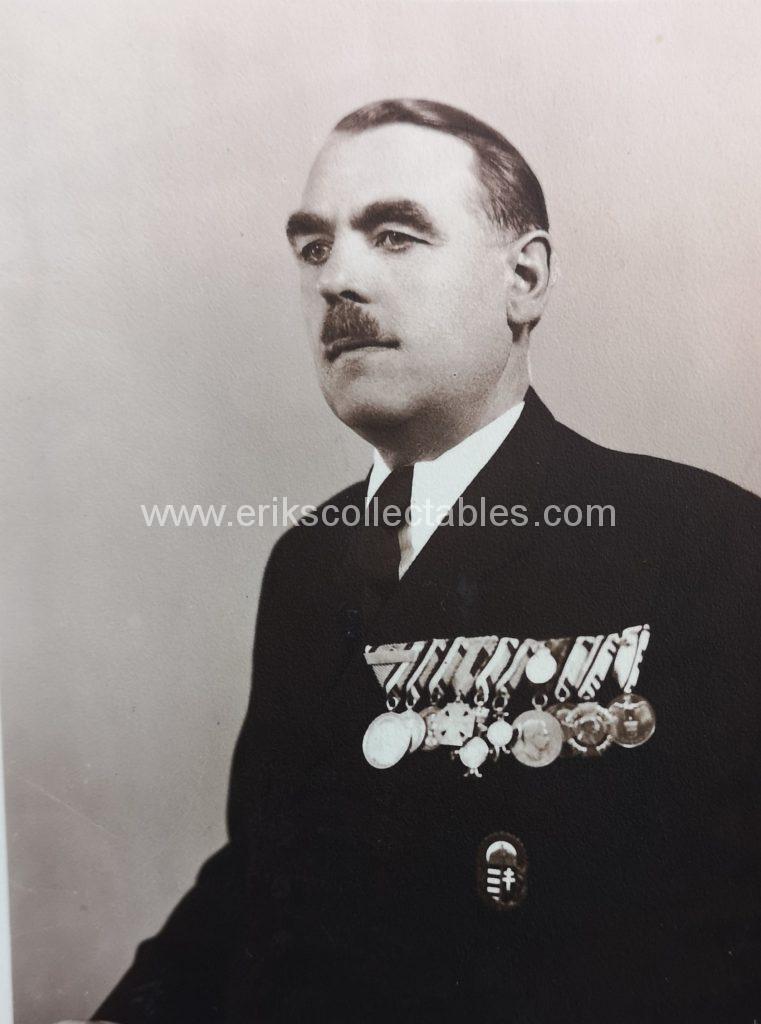
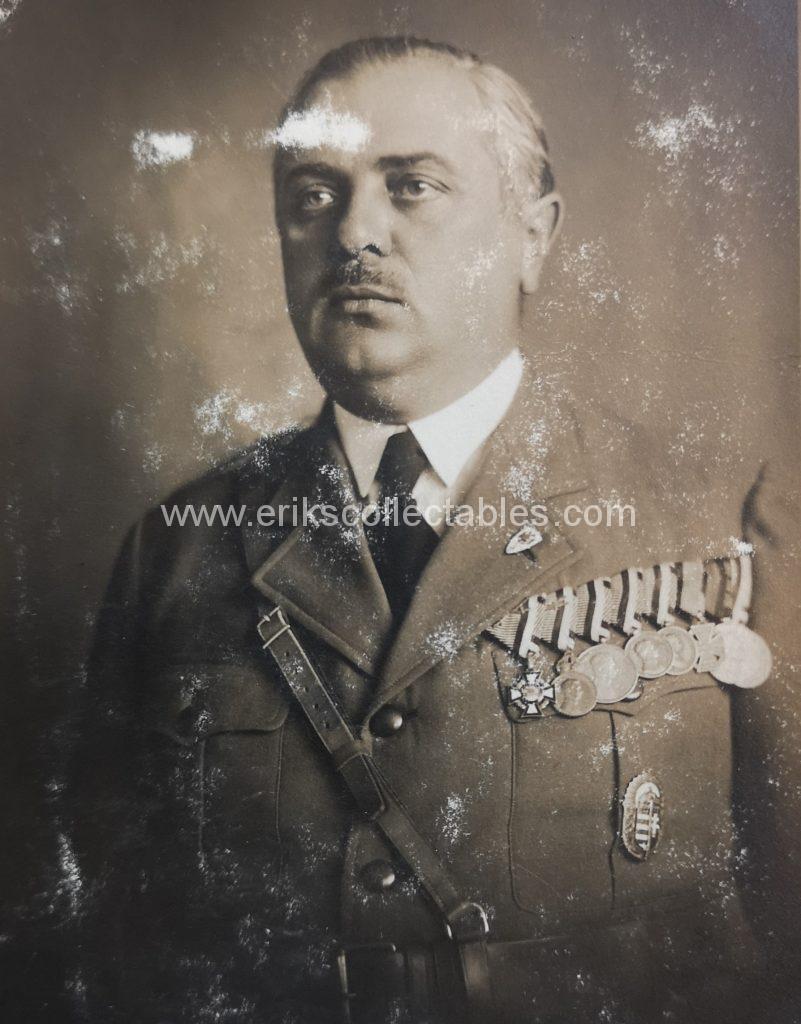
Some awardees, first one an nco in the interwar Hungarian uniform and the last in the veterans organization uniform (and based on the medals he became an officer during WW1).
The order was established in 1920 (Prime Ministerial Edict Nr 6650/1920) by the Government under Prime Minister Count Teleki and Admiral Horthy, the Regent of Hungary from 1920 till 1945. The latter also became the Captain of the order from its institution untill its formal ending in 1945 (According to the rule 529/1945 but it was 1948 before it was practically disbanded).
One of the main differences with most other awards that it is based on the requirement of previous award. The awardees needed to have received a certain level of medal before they could apply. At the beginning this would be for WW1 but later in WW2 the same requirements would have to be fulfilled.
This way of working made if possible to acknowledge exceptional deeds of Bravery from a previous period as part of an empire that no longer existed. These deeds would otherwise have passed unknown and unrewarded in a country that fought on the losing side of the war.Now these same deeds could be used to establish a new “established warrior class” in the post WW1 Hungary.
The medal requirements were more or less the same for both world wars. The small silver medal for bravery (96.000 awarded in WW1 to Hungarians) in the case of enlisted men, and the large silver medal for bravery (26.000 awarded in WW1 to Hungarians) for the rank of NCO. The Merit Medal / Signum Laudis was the minimal requirement for the rank of Lieutenant and this goes up based on rank, for higher ranks higher grades of medals were expected. The small silver medal for bravery only very seldom led to actual awards of the vitéz order. It was too common to bestow the title on all owners of these. It was just that, a minimal requirement.
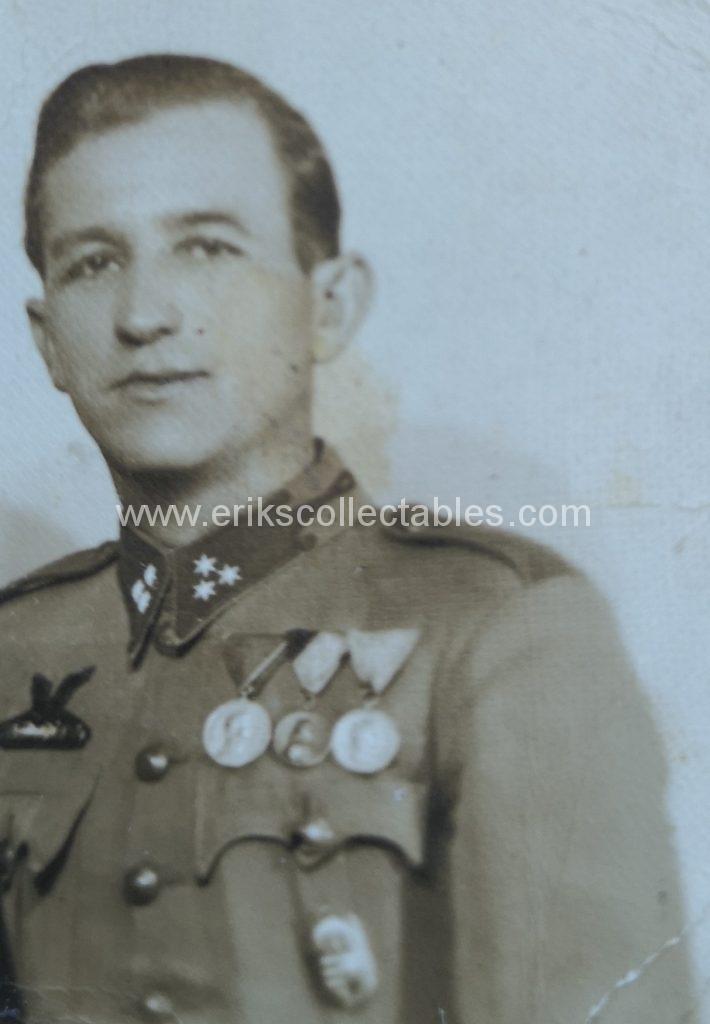
Below a WW2 period officer and a nco, both meeting the criteria based on their own medalsso no way of telling if they were inherited vitéz awards or their own.
The men had to apply for the order through a quite extensive procedure at the end of which they would be granted the order when all requirements had been met. One of these requirements that is interesting is the use of Hungarian name. For those applicants having a German or Slavic name (both not uncommon) this would also mean they had to change their name. During research this can be troublesome if the original name is not known!
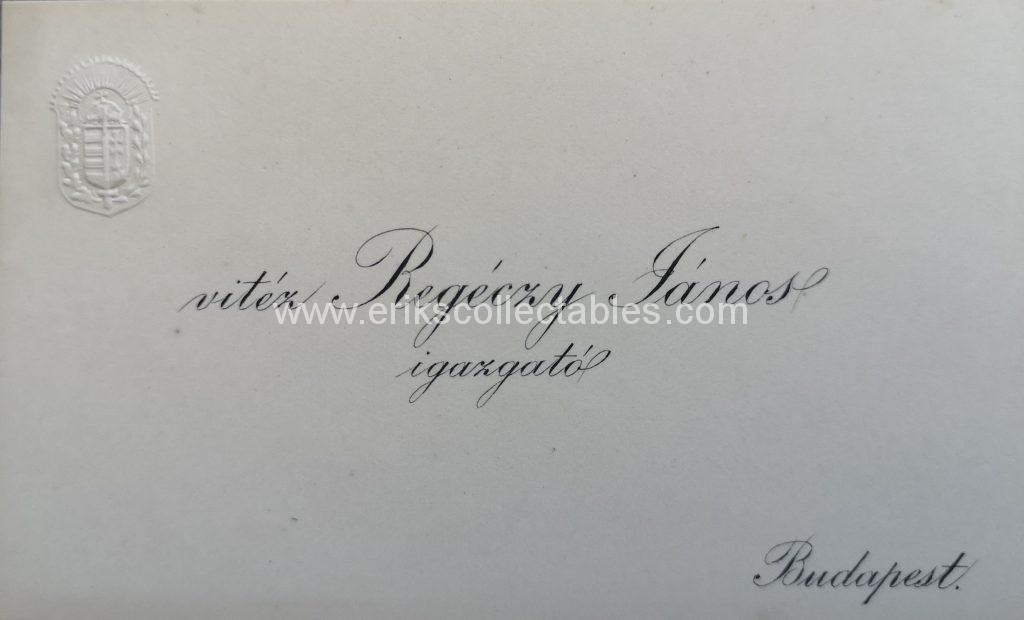
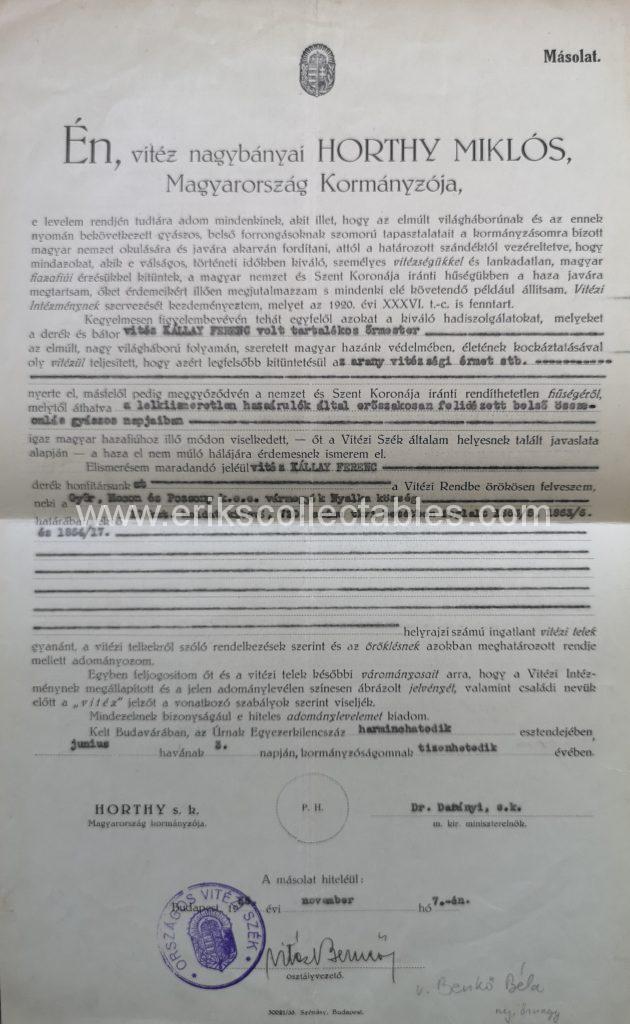
Part of the award of the order was the granting of the title of vitéz. This title was used as a prefix to the (family) name as can be seen in the namecards below.
This title could only be inherited by the oldest son. If this oldest son was of sound physical and mental condition he would inherit the title at the age of 17. In this way the order can be compared to a nobility especially as the title was accompanied by a grant of land of approximately 10 hectares.
Group of new, mainly inherited, awardees
The awards were granted in a great yearly ceremony by the Regent, Admiral Horthy, himself. The ceremony originally took place in Budapest on the Margit Sziget, a small island in the Danube, located between Buda and Pest. Later this was changed to a more symbolic location. This was in Székesfehervar, a city renowned for the coronation of the early kings of Hungary and also as their burial location. The award ceremony was held at the exact same place, in the ruins of the original church of the coronations. The awardees were “knighted” with a large sword during this ceremony. The same sword that is depicted in the badge of the order. During the war the ceremonies were much smaller and held in different locations.
Below two invitations for award ceremonies in 1943. Left for the central one of february 1943 and right a local version held in Transylvania in october 1943. As you can see the war years 41/42/43 had only very small amounts of awards. For 1943 in total 300 awardees. Many of these were for people from the regained territories like Transylvania who could not have applied before 1941. This is the case in both invitations below. It also shows the awardee had to pay for the badge themselves!
The granting of land to the vitéz members was part of a land reform executed by István Nagyatádi Szabó. In the early ’20s much land was still in the hands of a few and it was part of a modernization of land ownership that was badly needed to become a more balanced and modern nation. The actual grants were quite limited though, around 20% would actually get the grant of land (roughly 5500 grants of land of the almost 24.000 total awards). The land reform was more difficult and time consuming than was anticipated.
The vitézi rend had a very formalised structure with national and regional chairs, communities and much more, even their own order uniform as can be seen in the photo below.
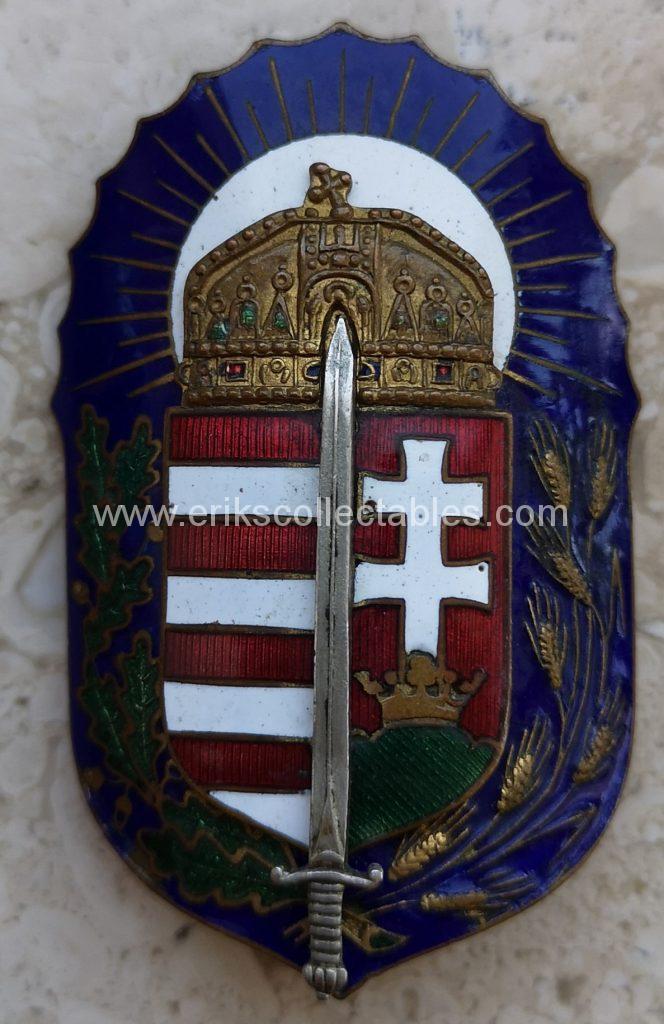
Badges
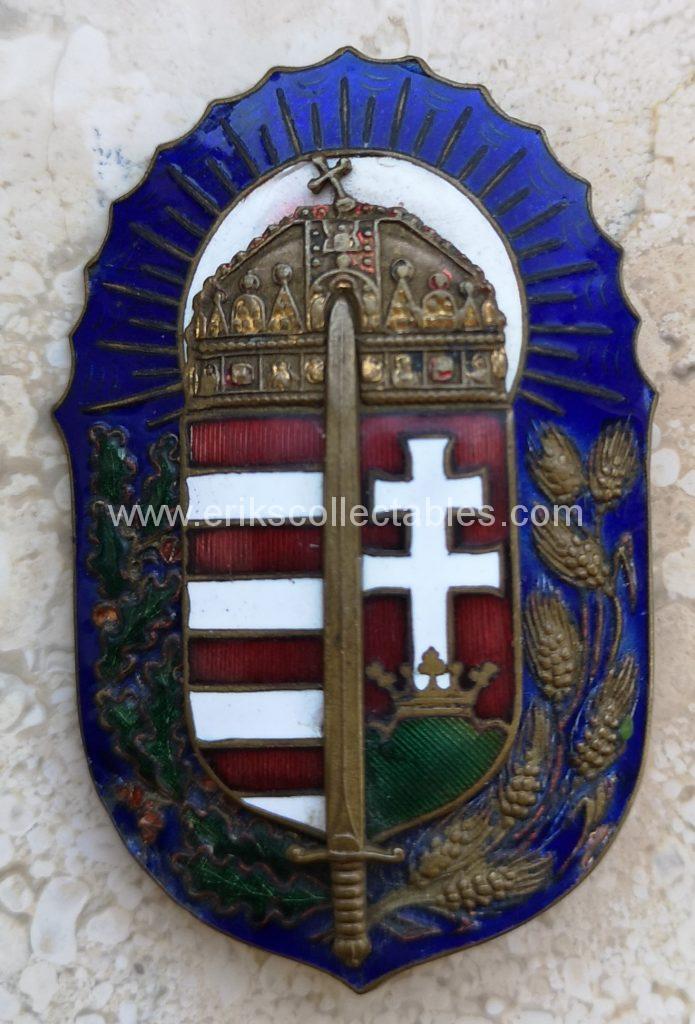
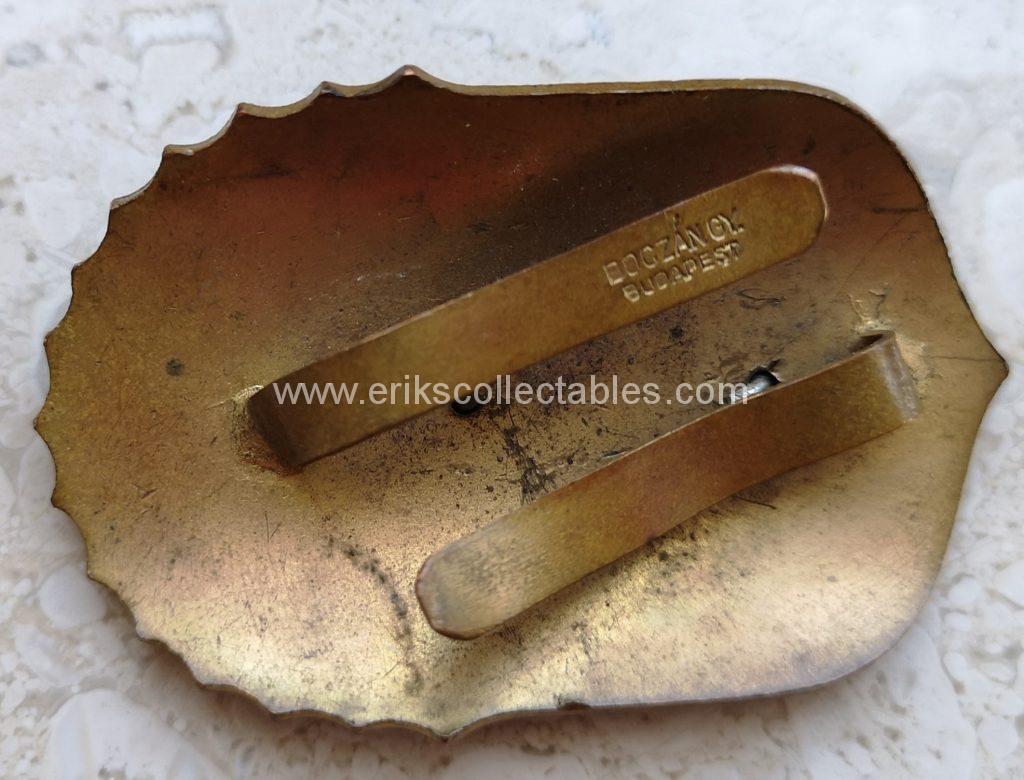
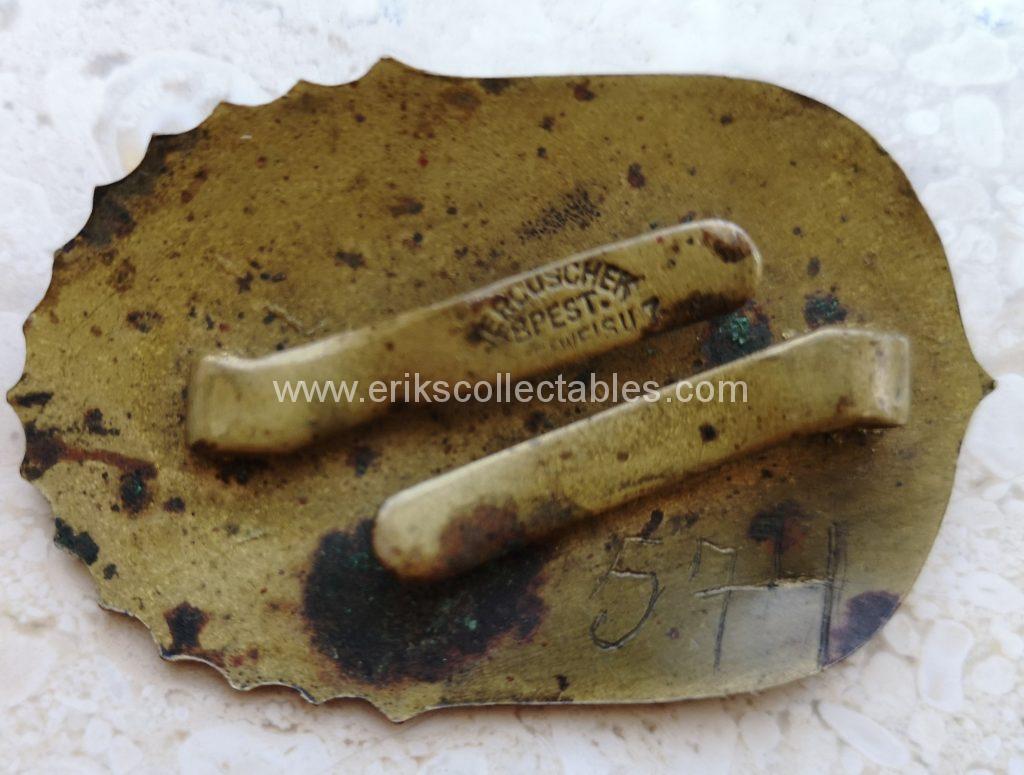
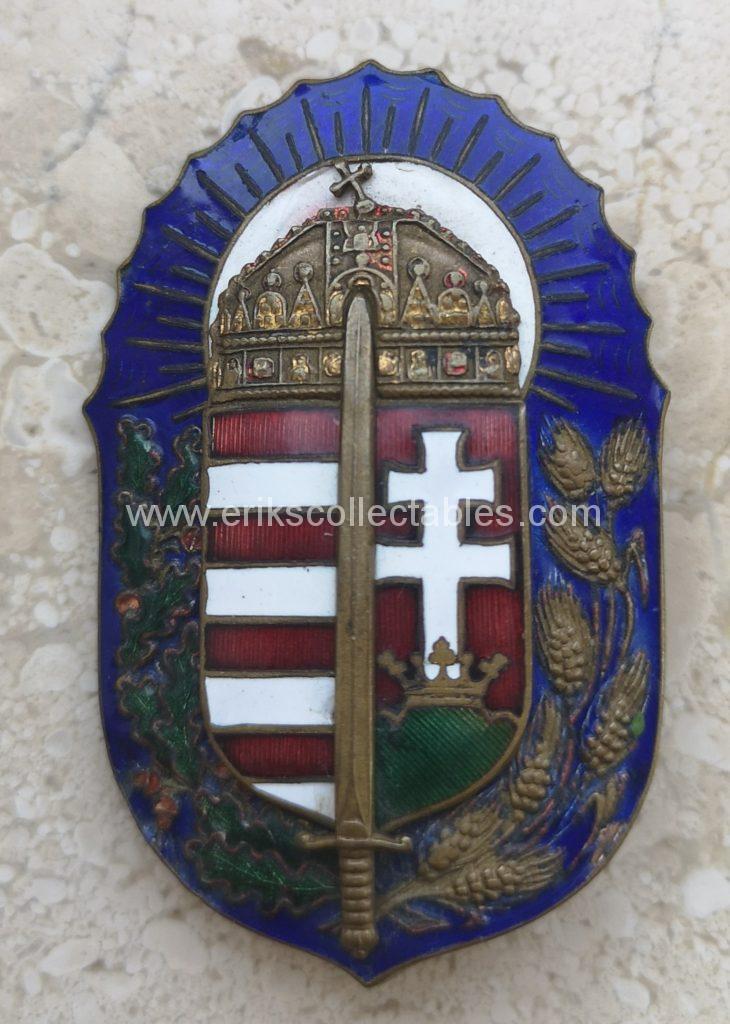
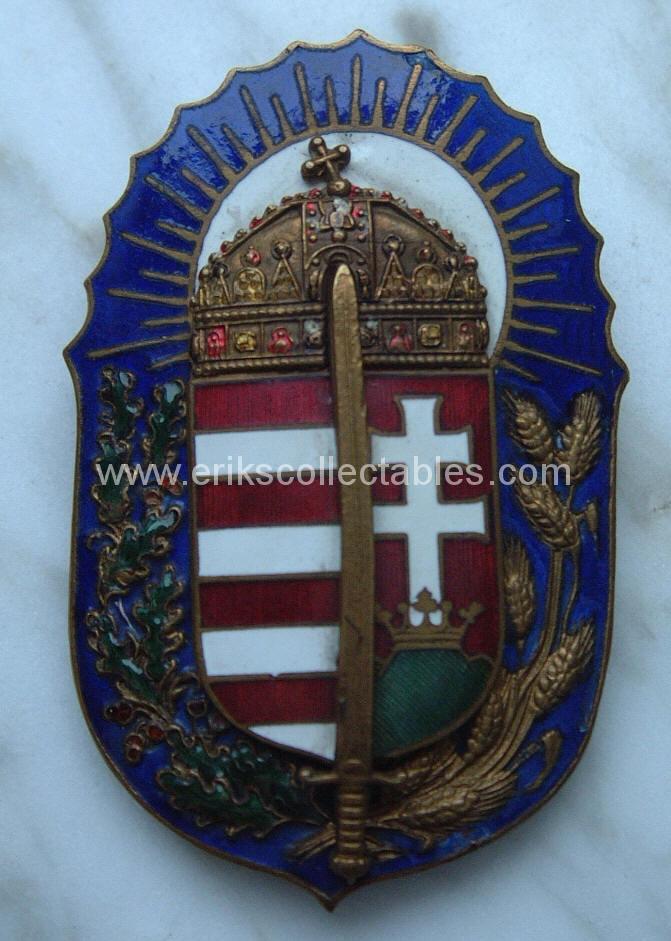
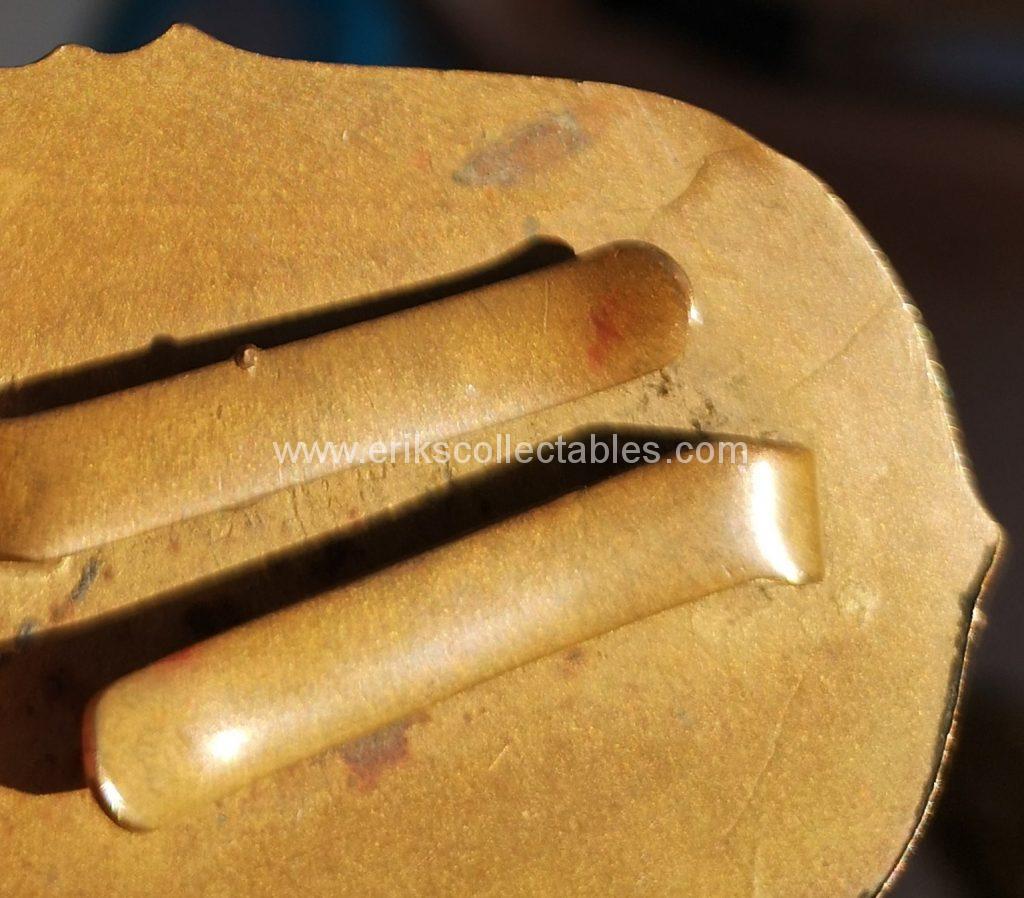
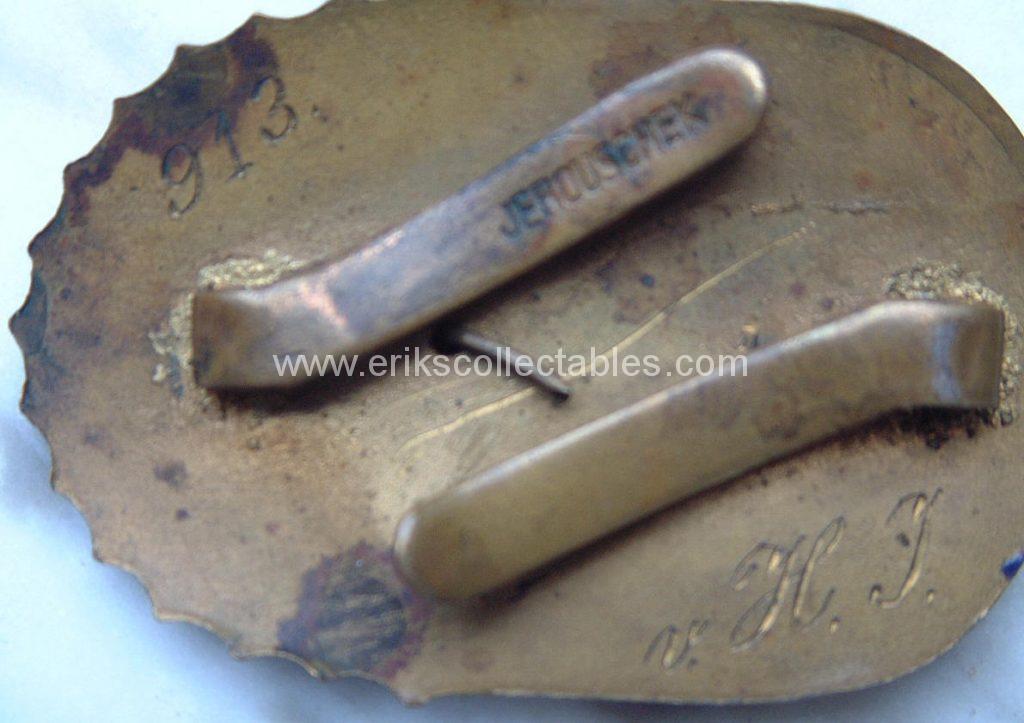
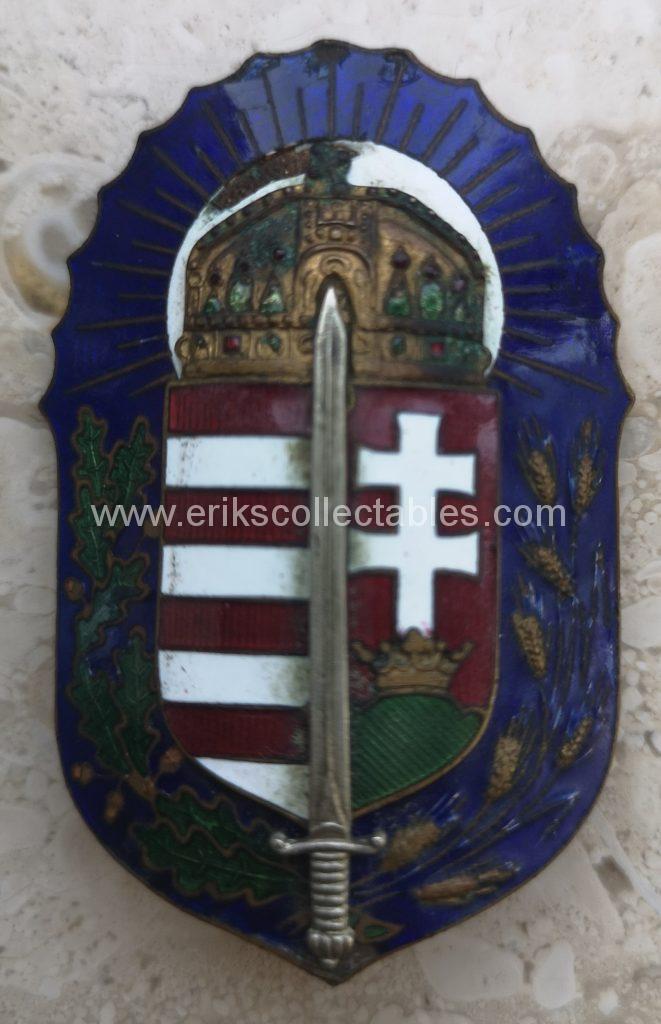
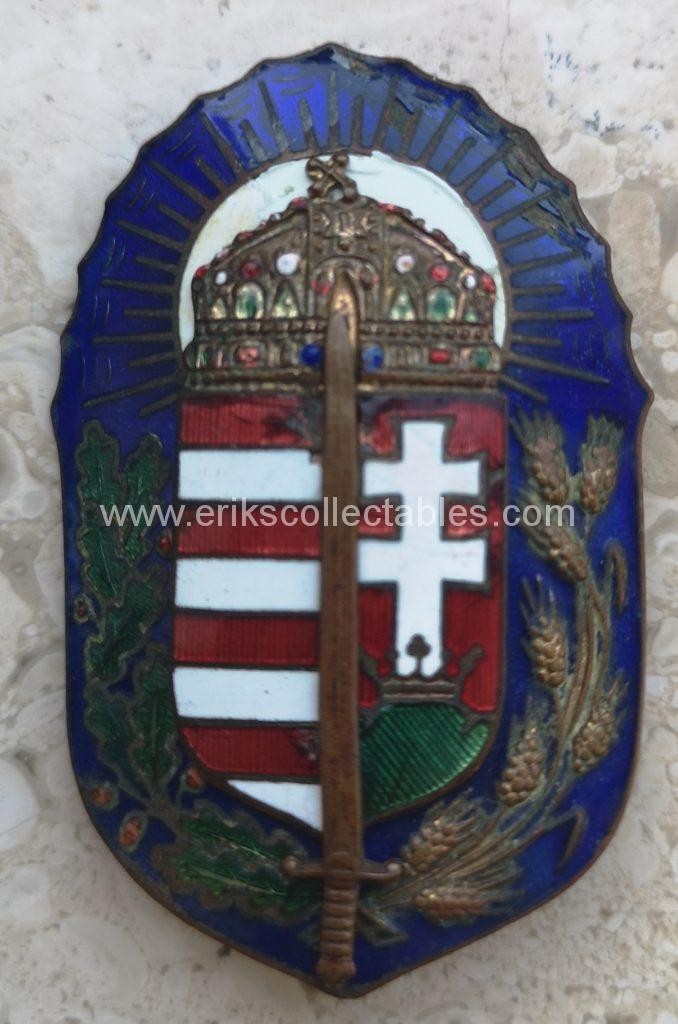
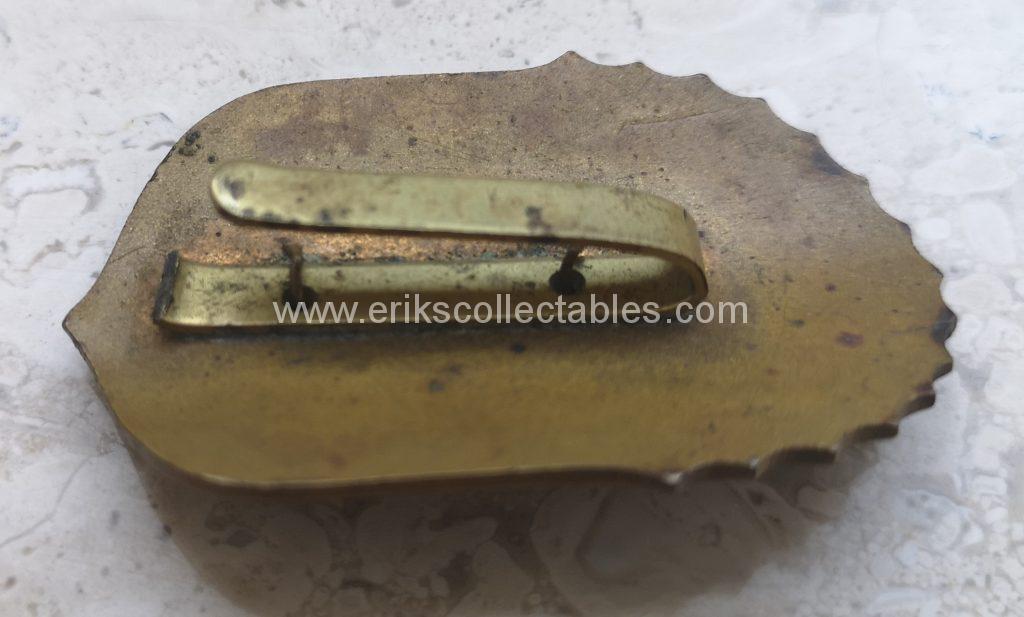
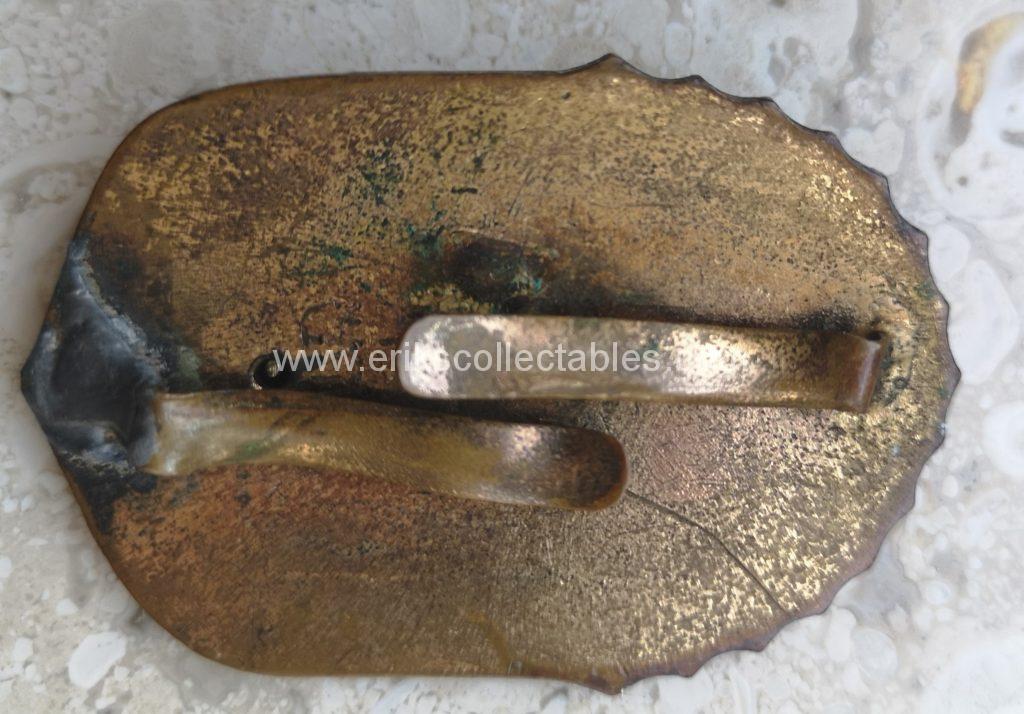
There were 5 makers in total but the two most common variations by Boczán Gyula and Jerouschek are shown below. The other, rarer, makers are Gál, Walther and Boczán Károly. The swords of both Boczán makers are silver coloured. There are some other distinguishing factors also next to the actual markings of the maker. In the case of Jerouschek there are several variations of the markings due to the long period of production of more than 20 years.
Two more Jerouschek variations of the award, first marked under the prongs and the second with a different naming than the version above on the prong.
And two version that seem to be unmarked. The first one also has a different way of attachment of the prongs which identifies it as a version made by Boczán Károly despite the missing prong with the actual markings. The other is most probably made by Gál and marked under the prongs which is not visible. I do not have a Walther variation in my collection unfortunately.
The badges were not numbered officially but many were privately named or numbered. The numbering of awards started with two sets of numbers, one for officers and one for other ranks. This numbering system changed in the 1930s when many awardees also would receive a new certificate with the new/different number. That way a badge with only a number often will leave several possibilities open. (officer/non officer/first group of numbers/second group of numbers). Only with the higher numbers it is clear it will be a rank below officer and the 2nd group of numbers!
Documents
Each award would exist out of the actual award (to be paid by the awardee) and a full size diploma shown below. There was no distinction between officers and lower ranks in this system, both in the award and the diploma.
Very early 1922 diploma of the award, handsigned by Horthy, to a sergeant.
Another quite early, 1924, diploma of the award to a sergeant.Diploma to an officer (partially professionally restored) from 1929
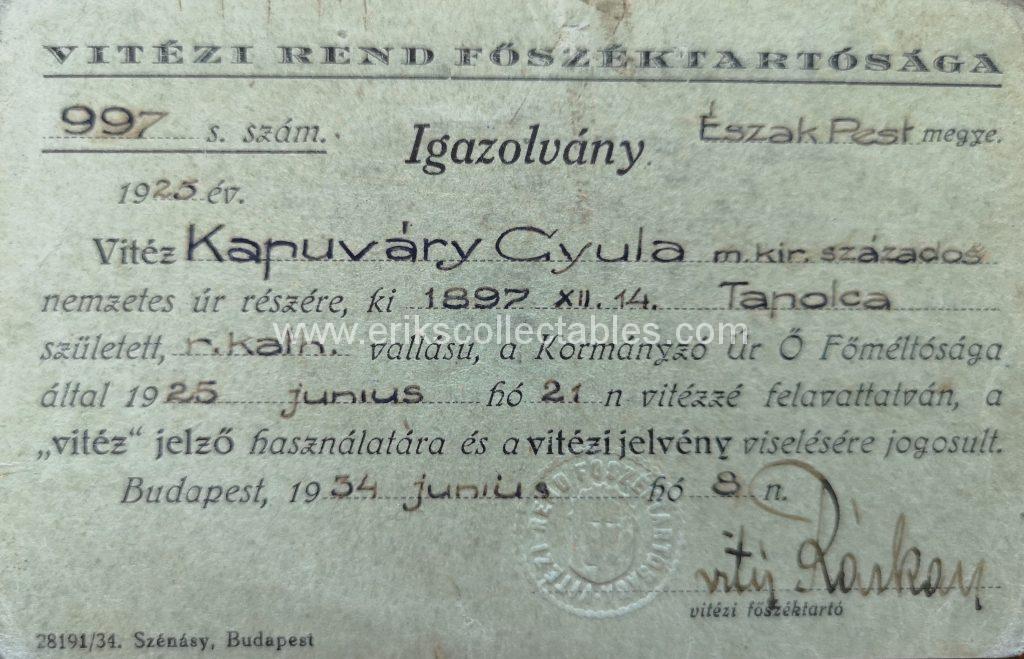
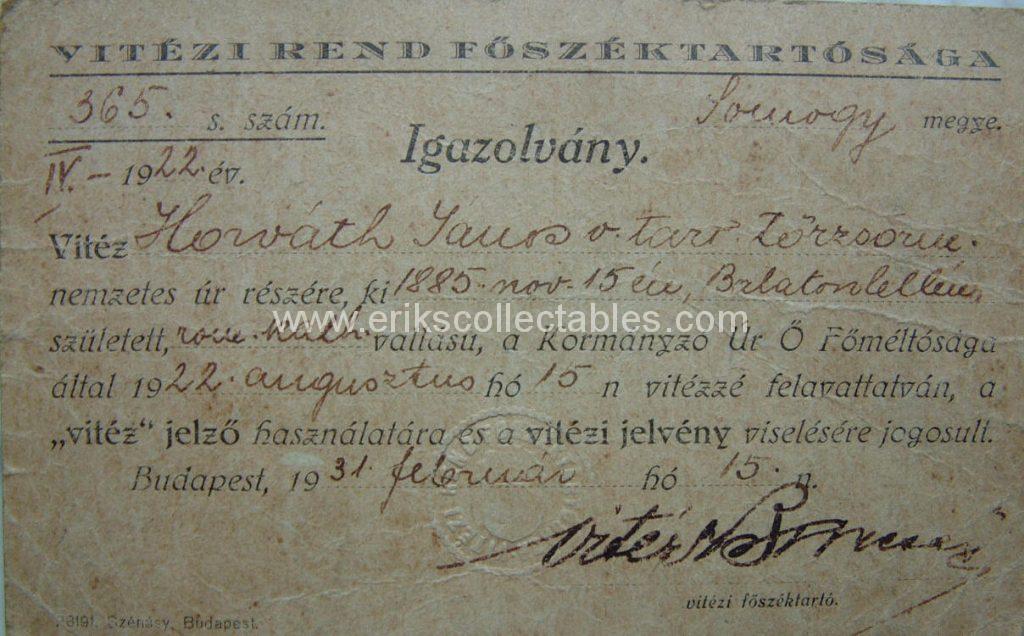
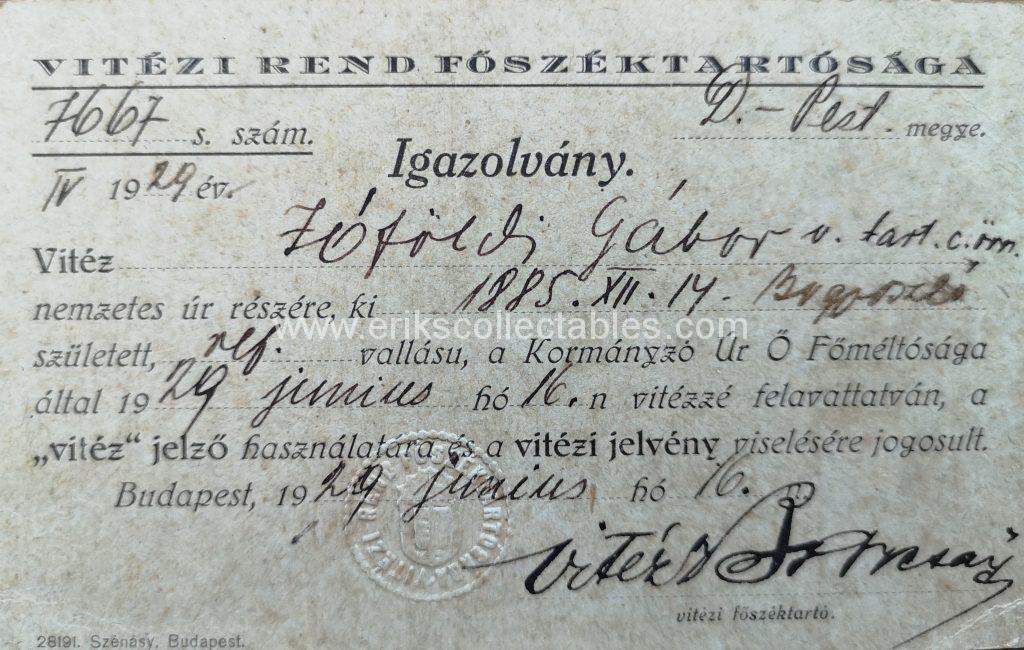
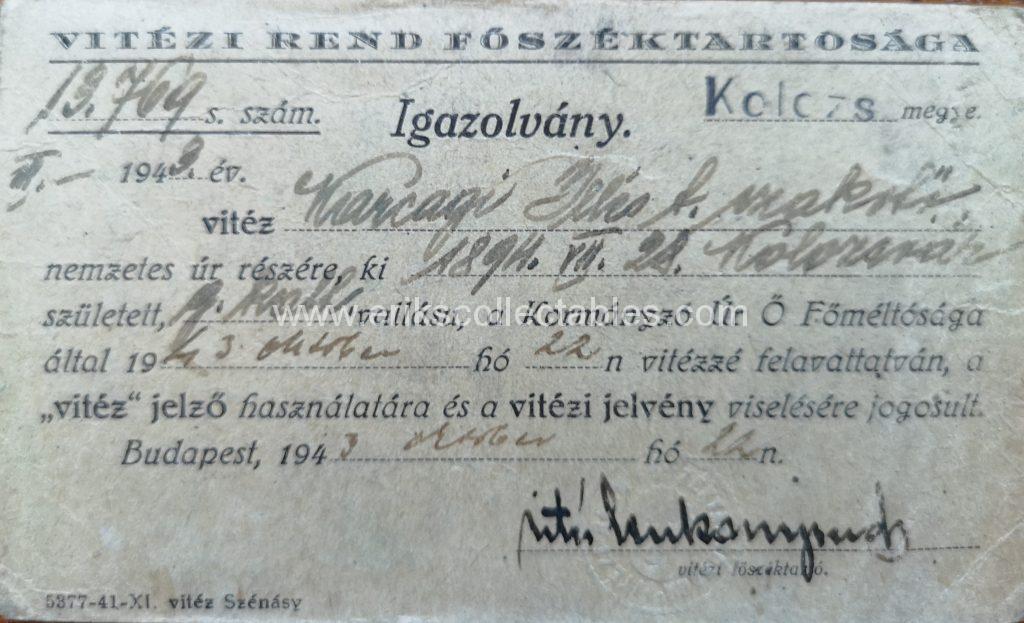
Next to the diploma a smaller size certificate was used as proof of ownership of the award/title in daily use. Below 4 examples of the certificate or in Hungarian: igazolvány. The first one is to an officer.
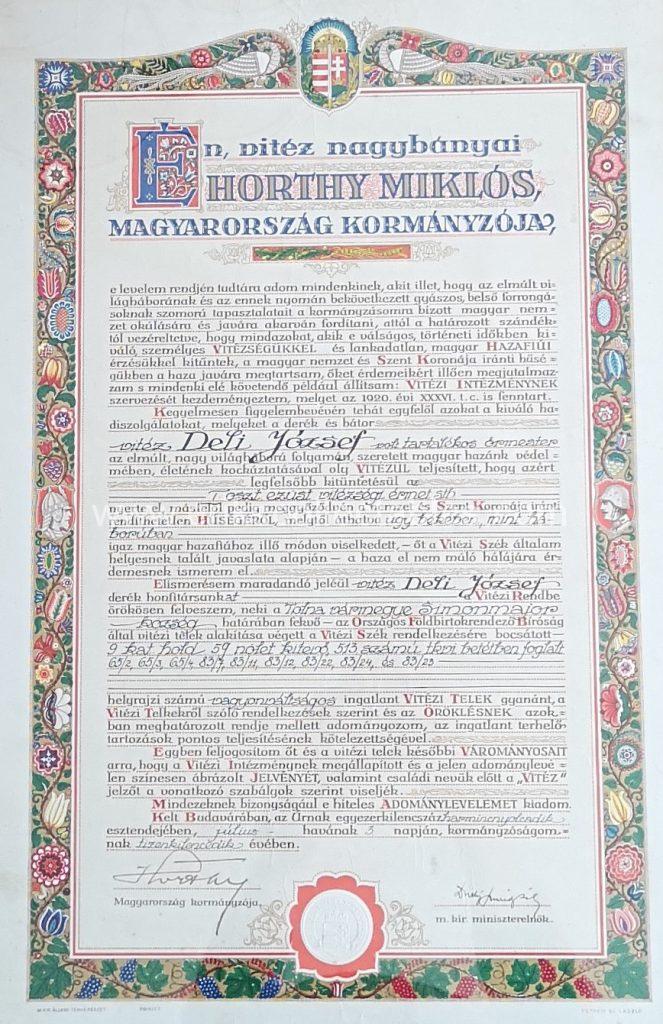
The grant of land received its own diploma as seen left. Next to it a replacement document for a lost original diploma.
Full size diploma in colour
There were even courses for new land owners as shown by the document below. Designed by the same person as the diploma of the order.
Statistics
Some statistics about the number of orders, reproduced with kind permission of vitéz Dr. János Szentváry-Lukács.
Officers 4.358 awards, NCO’s 11.136 awards, Enlisted Men 7.326 awards.
The number of estates granted to award winners was only 5561 which amounted to a total of 88.000 hectares. This was mainly due to the low amount of land available for the new vitéz knights. Land was donated on a voluntary basis by landowners and local governments. Overview of the number of awards per year and the cumulative total per year.
Post 1945
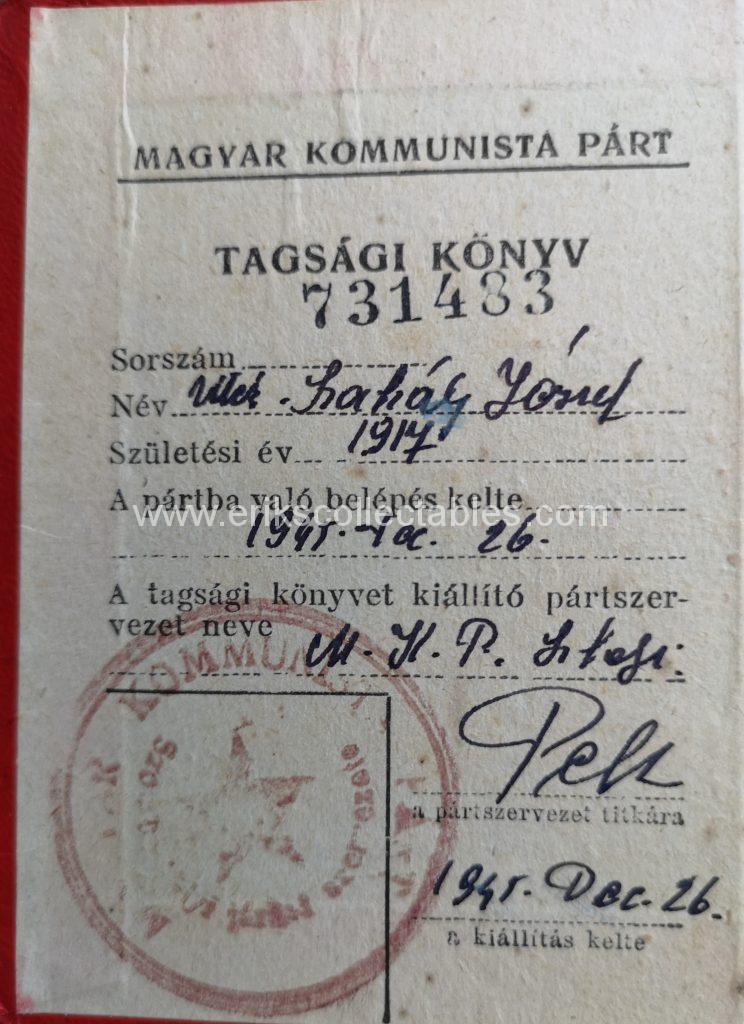
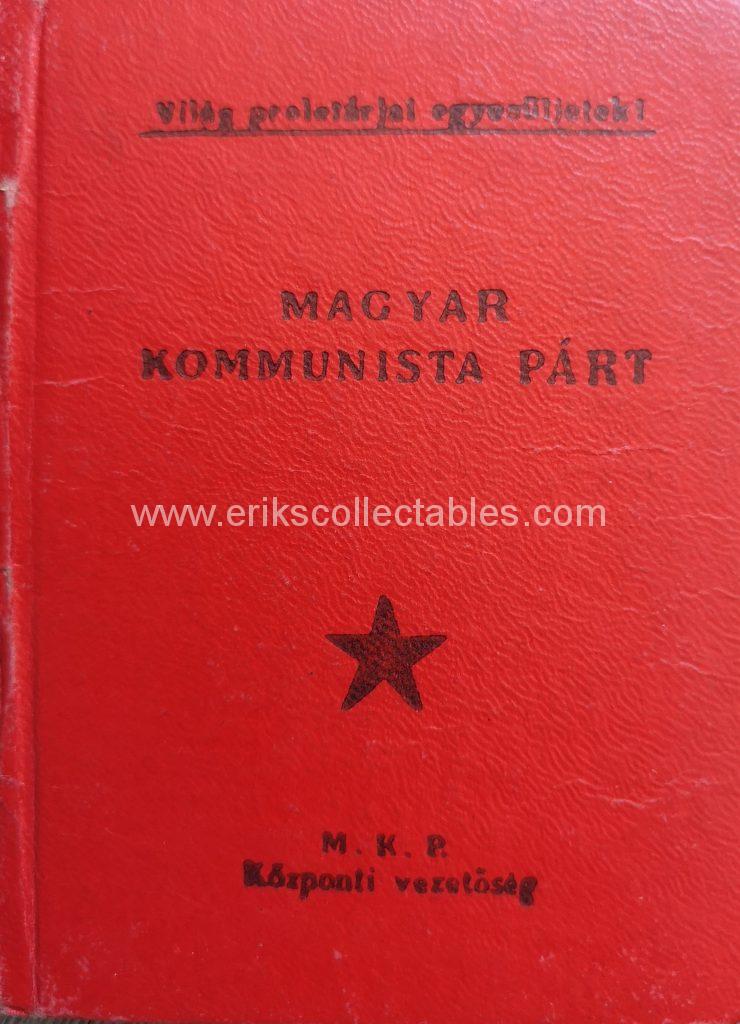
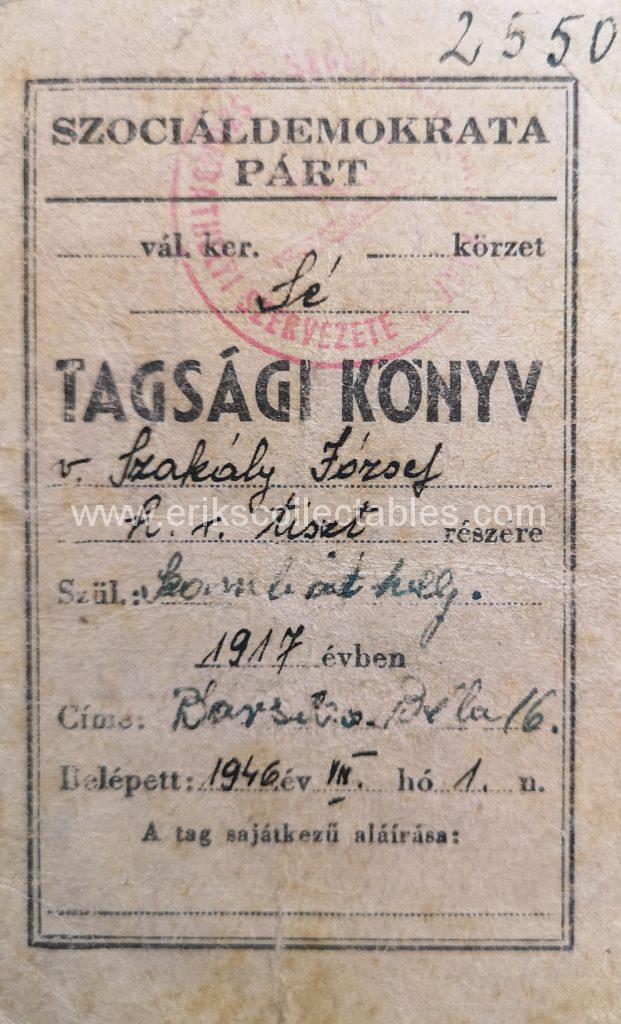
After the Russians had “liberated” Hungary in 1945 the order no longer fitted the communist views and was disbanded. According to the rule 529/1945 but it was 1948 before it was practically and fully disbanded
A few examples that show the title did not immediately disappear after the war was over. The title is still used as a prefix on these communist party booklets….
The order has been re-instituted after the war (first in exile and later also in Hungary) but this is blog is only about the historic order.
For more info read the Vitéz Stories blogs with some more info on specific members of the order.
Recently a very good and extensive book was published by Szabolcs Árkosi, A Vitézi Rend Nagy Albuma 1920 -1948. The book is in Hungarian but also has great photo content.
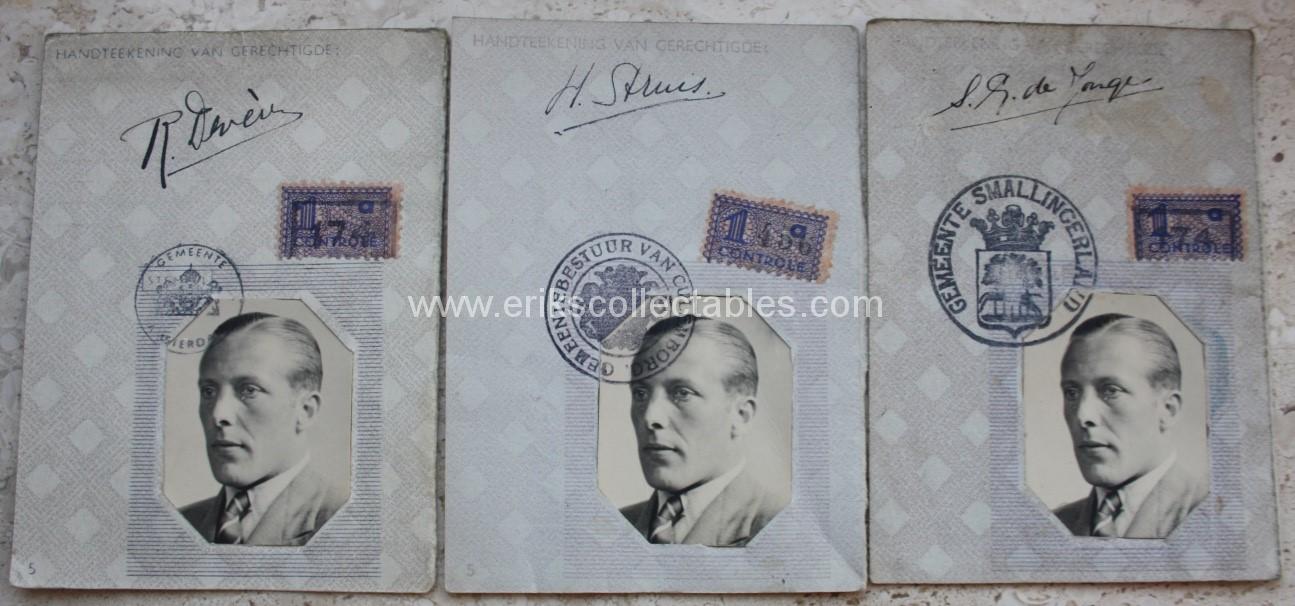
Raadsel. Deze groep is nog steeds een beetje een raadsel. Een set van drie persoonsbewijzen en wat foto’s van dezelfde man als een officier (in opleiding) voor de oorlog.
De foto’s van hem als officier zijn de sleutel naar zijn naam. Hij is een deelnemer aan de internationale militaire vijfkamp en de bijbehorende medaille helpt om de juiste man te vinden.
Het is G. Struijs en hij is geboren in 1911. Voor de oorlog wordt hij opgeleid tot officier, reserve 1e Luitenant der Artillerie per 1 januari 1937. Na de oorlog doet hij wederom dienst, dit keer in Indonesië. Zijn laatste rang is die van reserve Majoor der Artillerie per 1 november 1949.
De oorlogsperiode zelf blijft een raadsel. Geen van de PB’s bevat zijn echte naam alhoewel er één wel in de buurt komt.
Alles roept actief verzet maar verdere informatie is er niet. De rechter variant (Gemeente Smallingerland) heeft een controlezegel die bij Amsterdam hoort en is daardoor herkenbaar als een vervalsing. Ook het watermerk is zwakker dan bij de twee andere PB’s. Of de andere twee “origineel” zijn met alleen een “nieuwe” persoon of dat het volledige vervalsingen zijn is nog niet duidelijk.
Tijdens zijn dienst als officier kreeg hij de volgende medailles:
– Vijfkampkruis NOC – Bronzen NOC medaille – Oorlogsherinneringskruis met gesp ‘Nederland Mei 1940’ – Ereteken voor Orde en Vrede met 3 gespen – Officierskruis XX
Verder is er nog een G Struijs die het Verzetsherdenkingskruis gekregen heeft maar dat blijkt niet om dezelfde persoon te gaan!
Met dank aan John Stienen en Theo Schalke voor de input!
Voor mij is de speurtocht hier doodgelopen maar als er mensen zijn met meer info dan houd ik mij aanbevolen!